Bead Mill Machine Applications in Paint, Ink, and Coating Industries
In industries where color quality, texture, and consistency define product performance, particle size control plays a critical role. Paints, inks, and coatings all depend on precise dispersion of pigments and additives to achieve smooth application and stable formulation. This is where modern grinding technology becomes essential for manufacturers aiming for high-quality output.
A bead mill machine is widely used in these industries because it delivers fine particle reduction and uniform dispersion. Its ability to process materials continuously while maintaining consistent quality makes it a key piece of equipment in production lines where precision matters.
Importance of Particle Size in Surface Coating Industries
In paint, ink, and coating formulations, particle size directly affects performance. Poor dispersion can lead to issues such as uneven color, reduced gloss, poor adhesion, and instability in storage.
Smaller and more uniform particles help improve:
- Color brightness and consistency
- Smoothness of application
- Stability and shelf life
- Surface finish quality
Bead milling ensures that pigments and additives are broken down into fine, evenly distributed particles that meet strict industry standards.
How Bead Milling Improves Paint Production
Paint manufacturing requires efficient dispersion of pigments into a liquid base. Traditional mixing methods often fail to achieve the required fineness, leading to visible graininess or inconsistent shades.
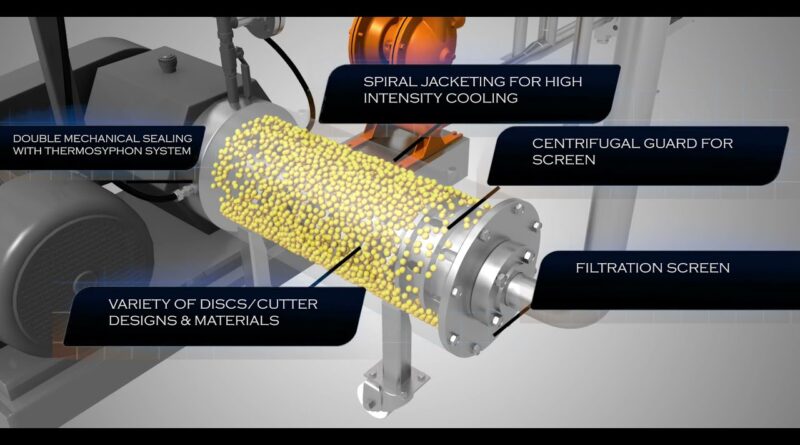
Bead mills solve this issue by using high-energy grinding media that continuously break down pigment clusters. As the material passes through the grinding chamber, intense shear and impact forces ensure uniform particle distribution.
This results in paints with:
- Better coverage
- Improved color strength
- Enhanced smoothness
- Reduced settling over time
Manufacturers also benefit from faster processing times and higher batch consistency.
Role of Bead Mills in Ink Manufacturing
Ink production demands extremely fine and stable dispersions to ensure smooth printing performance. Whether for packaging, publishing, or digital printing applications, ink quality depends heavily on particle uniformity.
Bead mills help achieve:
- Sharp and vibrant print output
- Stable viscosity during printing
- Reduced clogging in printing equipment
- Consistent performance across batches
By breaking down pigment particles to very fine levels, bead milling ensures that inks flow smoothly and adhere properly to different printing surfaces.
Applications in Coating Industry
Coatings are used to protect surfaces while also enhancing appearance. From industrial coatings to decorative finishes, the quality of dispersion directly influences durability and performance.
Bead mills are used to process resins, pigments, and additives used in coatings. This improves:
- Surface hardness and durability
- Gloss and visual appeal
- Resistance to wear and corrosion
- Uniform film formation
The ability to achieve consistent particle size helps coating manufacturers meet strict performance standards across different applications.
Advantages of Using Bead Mills in These Industries
The widespread use of bead milling technology in paint, ink, and coating production is due to its practical benefits:
- High efficiency in pigment dispersion
- Consistent and uniform particle size
- Suitable for continuous production systems
- Improved product stability and shelf life
- Reduced processing time compared to traditional methods
- Ability to achieve fine and ultra-fine grinding results
These advantages directly translate into better product quality and improved manufacturing efficiency.
Key Process Considerations
To achieve optimal results, several processing factors must be carefully controlled during bead milling:
- Selection of appropriate bead size and material
- Adjustment of rotor speed and energy input
- Control of feed rate for stable processing
- Temperature management during operation
- Proper formulation of raw materials
Each of these factors influences final product quality and consistency.
Conclusion
The paint, ink, and coating industries rely heavily on precise particle size control to ensure high-quality results. Bead milling technology has become an essential part of this process due to its ability to deliver fine dispersion, consistent performance, and efficient production.
By using a bead mill machine, manufacturers can achieve improved color quality, smoother finishes, and more stable formulations. As industry standards continue to rise, bead milling remains a key technology for producing advanced surface coating products with reliable performance and superior appearance.