
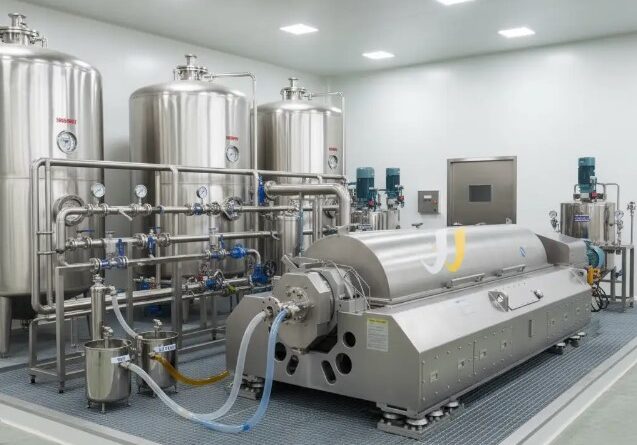
How Does a Decanter Centrifuge Manufacturer Design Equipment for Continuous Solid-Liquid Separation?
Continuous solid-liquid separation requires equipment that can operate steadily while handling changing feed conditions. Industries such as wastewater treatment, mining, chemical processing, and food production often need reliable separation without frequent interruptions.
A decanter centrifuge manufacturer designs equipment around the physical properties of the material and the required separation results. Bowl dimensions, rotational speed, scroll design, differential speed, drive systems, and wear protection all influence how effectively the centrifuge performs during continuous operation.
Understanding Continuous Separation
Unlike batch separation methods, a decanter centrifuge processes incoming slurry continuously. The feed enters the rotating bowl, where centrifugal force separates heavier solids from the liquid phase.
The separated solids move toward the discharge end through the scroll conveyor. Meanwhile, clarified liquid exits through a separate outlet.
This arrangement allows the machine to maintain a steady processing cycle without stopping after each batch.
Starting With Process Requirements
Equipment design begins with an understanding of the application. Manufacturers need accurate information about the slurry before selecting the appropriate centrifuge configuration.
Key factors include:
- Feed flow rate
- Total solids concentration
- Particle size
- Solid and liquid density
- Slurry viscosity
- Temperature
- Corrosiveness
- Abrasiveness
- Required separation efficiency
These characteristics determine the mechanical and operational requirements of the machine.
Designing the Bowl
The bowl provides the primary separation chamber. Its diameter, length, internal geometry, and rotational speed influence centrifugal force and residence time.
A larger bowl may support greater processing capacity, while the bowl’s length can affect the available separation area. Manufacturers must balance these dimensions according to the application’s throughput and separation requirements.
Operating speed also matters. Higher rotational speeds generate greater centrifugal force, which can improve the separation of fine particles under suitable conditions.
Engineering the Scroll Conveyor
The scroll conveyor transports separated solids toward the discharge section. Its geometry must complement the bowl and the characteristics of the material being processed.
Manufacturers consider scroll pitch, flight design, differential speed, and wear protection when developing the conveyor configuration.
The design should provide reliable solids movement without creating excessive mechanical load or unnecessary energy consumption.
Controlling Differential Speed
Differential speed refers to the speed difference between the rotating bowl and the scroll. This parameter affects solids residence time and the movement of material through the centrifuge.
A lower differential speed may provide more time for solids to release liquid, potentially producing a drier cake. A higher differential speed can move solids through the machine more quickly.
The appropriate setting depends on the feed characteristics and the desired balance between capacity, dryness, and liquid clarity.
Optimizing the Feed Zone
The feed zone introduces the slurry into the rotating bowl. Its design can affect how smoothly the material enters the separation area.
Poor feed distribution may create turbulence and interfere with separation. Manufacturers therefore pay attention to feed acceleration and distribution when designing the inlet arrangement.
A suitable feed zone helps the slurry enter the separation chamber with minimal disruption.
Selecting the Drive System
Continuous operation places consistent demands on the drive system. The motor and associated components must provide sufficient power for both bowl rotation and solids transport.
High-solids feeds may create additional torque requirements, particularly when the machine handles dense or difficult materials.
Manufacturers evaluate these operating conditions when selecting drive components. Proper sizing supports stable performance and helps reduce unnecessary mechanical stress.
Incorporating Wear Protection
Continuous processing exposes internal components to repeated contact with solids. Abrasive slurries can accelerate wear, particularly around the feed zone, scroll flights, and solids discharge area.
A manufacturer may incorporate wear-resistant materials or replaceable protection in areas that experience significant abrasion.
The selected protection should correspond to the actual characteristics of the feed rather than follow a one-size-fits-all approach.
Choosing Suitable Construction Materials
Material selection also affects long-term reliability. Some applications involve corrosive chemicals, elevated temperatures, or other conditions that may affect standard construction materials.
Manufacturers can select suitable materials for components exposed to the process stream.
Shenzhou Machinery considers equipment requirements for industrial separation applications. Discussing the chemical and physical properties of the feed helps engineers determine an appropriate construction approach.
Managing Solids Discharge
Continuous separation requires consistent solids removal. The discharge system must transport concentrated solids without creating blockages or excessive mechanical resistance.
Manufacturers consider the expected solids characteristics when designing this section. Sticky, dense, abrasive, or fibrous materials may require different design considerations.
Reliable discharge contributes directly to uninterrupted operation.
Designing for Stable Liquid Discharge
The liquid phase also requires controlled removal. The centrifuge must allow clarified liquid to exit efficiently while maintaining the desired separation zone.
Manufacturers may consider liquid depth, outlet configuration, and operating conditions when optimizing liquid discharge.
These adjustments help maintain consistent separation as feed conditions change.
Considering Energy Efficiency
Continuous equipment consumes energy throughout its operating period, so efficiency matters for long-term operating costs.
Manufacturers can consider motor selection, drive efficiency, machine capacity, and operating parameters when developing the system.
Proper equipment sizing also helps avoid unnecessary energy consumption. An oversized machine may require more power than the process actually needs, while an undersized unit may struggle to meet throughput requirements.
Adding Control and Monitoring Features
Modern continuous separation systems may incorporate controls that help operators monitor and adjust operating conditions.
Depending on the application, the control system may monitor variables such as bowl speed, differential speed, torque, vibration, temperature, or motor load.
These features can help operators identify changing process conditions and respond before performance problems become more serious.
Designing for Maintenance Access
Continuous operation does not eliminate the need for maintenance. Instead, maintenance planning becomes particularly important because unexpected downtime can disrupt production.
Manufacturers should consider access to bearings, wear components, lubrication points, and other service areas during the design process.
Practical maintenance access can reduce service time and help operators return equipment to operation more efficiently.
Testing Equipment Before Operation
Testing provides an opportunity to verify equipment performance before full-scale operation. Depending on the project, manufacturers may use laboratory testing, pilot trials, or factory inspections.
Testing can help identify suitable operating parameters and reveal how the machine responds to the actual feed material.
This information becomes particularly useful when the slurry contains unusual solids or when separation requirements are demanding.
Designing for Different Industries
Continuous solid-liquid separation occurs across many industries, but each application presents different challenges.
Wastewater Treatment
Wastewater facilities often need reliable sludge processing with consistent throughput. Equipment selection may focus on solids recovery, cake dryness, polymer use, and operating stability.
Mining and Mineral Processing
Mining applications may involve dense and highly abrasive solids. Wear protection and robust construction often receive particular attention.
Chemical Processing
Chemical applications may require careful material selection because corrosive substances can affect equipment components.
Food Processing
Food applications may place greater emphasis on suitable construction materials, cleaning requirements, and process compatibility.
The Role of Manufacturer Expertise
The design of a continuous centrifuge involves more than choosing a bowl size. Engineers must consider how individual components interact throughout the separation process.
A manufacturer with application knowledge can evaluate the entire system and recommend specifications based on actual operating conditions.
Shenzhou Machinery provides industrial separation equipment for different processing applications. Evaluating its technical capabilities, equipment configuration, and application support can help buyers determine whether its solutions align with their project requirements.
Final Thoughts
A decanter centrifuge designed for continuous solid-liquid separation must balance throughput, separation efficiency, mechanical reliability, energy consumption, and maintenance requirements.
Manufacturers achieve this balance by analyzing the feed material and adapting key components such as the bowl, scroll, feed zone, drive system, discharge sections, and wear protection.
For businesses investing in continuous separation equipment, understanding the design process makes it easier to compare suppliers and select a machine suited to the demands of long-term industrial operation.