
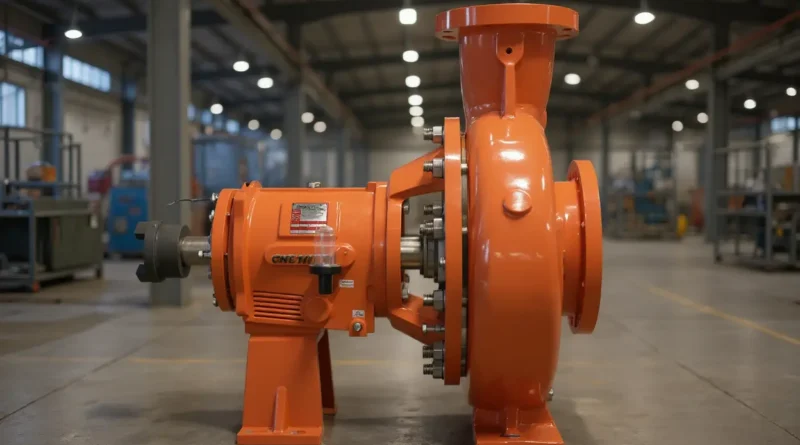
How to Select the Correct Centrifugal Slurry Pump Size
Selecting the correct pump size is essential for achieving reliable slurry transport, controlling energy consumption, and minimizing wear. Unlike clean-water applications, slurry service involves suspended solids that can significantly affect hydraulic performance and component life.
When choosing a centrifugal slurry pump, the selection should be based on the complete operating condition rather than flow rate alone. Factors such as total head, slurry concentration, particle size, specific gravity, and pipeline characteristics all influence the appropriate pump size.
Start With the Required Flow Rate
Flow rate is one of the first parameters to establish. Determine how much slurry needs to be moved within a specific period and whether the required capacity is constant or variable.
Avoid selecting a pump solely because its maximum flow exceeds the process requirement. A pump operating far from its best efficiency point may consume more energy and experience unnecessary wear.
If the application has different operating conditions, consider the normal, minimum, and maximum flow rates before making the final selection.
Calculate the Required Total Head
Total dynamic head represents the pressure the pump must generate to move slurry through the system. It includes more than the vertical lifting distance.
The calculation should account for:
- Static elevation
- Pipeline friction
- Pipe length and diameter
- Valves and fittings
- Equipment pressure losses
- Changes in operating conditions
An accurate head calculation helps ensure that the selected pump can deliver the required flow at the actual system resistance.
Evaluate Slurry Specific Gravity
Slurry is heavier than water when it contains a significant concentration of solids. This increased density affects the power required to achieve a particular flow and head.
Specific gravity should therefore be included when determining pump power requirements. Ignoring slurry density can result in an undersized motor or unsuitable operating performance.
Consider Solid Concentration
The amount of solids in the slurry has a major effect on pump selection. Slurry concentration can be expressed by weight or by volume, and the appropriate calculation depends on the application.
Higher concentrations generally increase hydraulic resistance and can accelerate wear. Accurate concentration data allows the pump and drive system to be selected more effectively.
Check Particle Size and Characteristics
Particle size is another critical consideration. Large, hard, or sharp particles can cause significantly more wear than small, soft particles.
Before selecting a pump, determine the maximum particle size as well as the general distribution and characteristics of the solids. The pump’s passage and impeller design should be suitable for these conditions.
For applications involving highly abrasive solids, material selection becomes particularly important because pump size alone does not determine service life.
Review the Pipeline System
The pipeline has a direct impact on pump sizing. A long or narrow pipeline can create substantial friction losses, while excessive bends, valves, and fittings can further increase system resistance.
Review the entire pipeline layout instead of calculating pump requirements from elevation alone. A system curve can then be developed to show how much head is required at different flow rates.
Use the Pump Performance Curve
Once the flow, head, and slurry characteristics are known, compare the requirements with the pump’s performance curve.
The desired operating point should fall within a practical portion of the pump’s operating range. Operating too far from the best efficiency point can contribute to vibration, recirculation, increased wear, and higher energy consumption.
Performance curves should also be reviewed under the actual slurry conditions whenever applicable rather than relying exclusively on clean-water data.
Match the Motor to the Pump
Correct pump sizing must include the drive system. The motor needs sufficient power to handle the required flow, head, slurry density, and operating conditions.
Allowing an appropriate margin can help accommodate normal process variations, but excessive oversizing should be avoided. An unnecessarily large motor can increase initial and operating costs without providing a meaningful benefit.
Consider Wear and Maintenance
Pump sizing should also take expected wear into account. A pump handling highly abrasive slurry may require more frequent inspection and replacement of wear components than one handling fine, low-concentration solids.
Consider the accessibility of wear components, expected operating hours, and the consequences of maintenance downtime. A slightly different pump configuration may provide better long-term value if it reduces maintenance interruptions.
Avoid Common Sizing Mistakes
Several common mistakes can lead to poor pump performance. These include:
- Selecting the pump based only on flow rate.
- Ignoring slurry specific gravity.
- Underestimating pipeline friction losses.
- Failing to account for maximum particle size.
- Using clean-water performance data without considering slurry effects.
- Oversizing the pump to create unnecessary capacity.
- Choosing a motor without verifying the actual power requirement.
A complete evaluation of the application helps prevent these problems before installation.
Confirm the Operating Range
Before finalizing the pump size, check whether the system’s normal operating point is stable and whether future process changes are expected.
If flow demand is likely to increase, the selection may need to accommodate that change without forcing the pump to operate outside its efficient range. Variable-speed operation may also be worth considering where process requirements fluctuate significantly.
Final Thoughts
Selecting the correct centrifugal slurry pump size requires a combination of hydraulic calculations, slurry analysis, and system evaluation. Flow rate and head provide the starting point, but solid concentration, particle size, specific gravity, pipeline losses, and operating conditions are equally important.
A properly sized pump can deliver the required capacity while helping control energy use, component wear, and maintenance demands. Taking the time to evaluate the complete system before selection is one of the most effective ways to achieve dependable slurry pumping performance.