
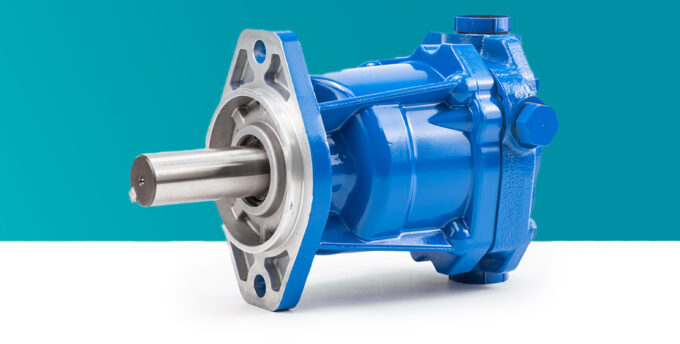
How Hydraulic Motor Manufacturers Support Industrial Applications
Hydraulic motors play an important role in many industrial systems by converting hydraulic energy into controlled mechanical rotation. They are used where equipment requires reliable torque, variable speed, and the ability to operate under demanding loads.
A hydraulic motor manufacturer supports these applications by producing motors with different designs, performance characteristics, and installation configurations. Manufacturers also contribute through technical guidance, quality control, testing, and product development.
Providing Motors for Different Industrial Requirements
Industrial machinery does not operate under identical conditions. Some systems require high torque at low speeds, while others prioritize higher rotational speed, compact dimensions, or continuous operation.
Manufacturers therefore produce different motor types and sizes to accommodate varying hydraulic pressures, flow rates, displacement requirements, and duty cycles.
Common applications include:
- Material-handling equipment
- Conveyor systems
- Agricultural machinery
- Construction equipment
- Industrial processing machinery
- Winches and lifting systems
- Mobile hydraulic equipment
Selecting the appropriate motor depends on the specific requirements of each application rather than simply choosing the largest or most powerful option.
Supporting System Design
Hydraulic motors are part of larger hydraulic circuits that may include pumps, valves, filters, reservoirs, cylinders, hoses, and control systems. The motor must work efficiently with these components to deliver the expected performance.
Manufacturers can assist engineers by providing technical specifications, performance data, dimensional drawings, and operating recommendations. This information helps designers determine whether a motor is compatible with the rest of the hydraulic system.
Meeting Different Torque and Speed Requirements
Torque and rotational speed are two important considerations in industrial motor selection. A motor intended for a conveyor may have different requirements from one used in a heavy-duty winch or agricultural machine.
Hydraulic motor manufacturers offer different displacements and configurations to address these variations. Understanding the relationship between hydraulic flow, pressure, displacement, torque, and speed helps engineers select a suitable motor for the intended workload.
Improving Equipment Reliability
Industrial equipment may operate for long periods under substantial mechanical and hydraulic loads. Motor reliability can therefore have a direct effect on machine availability and maintenance requirements.
Manufacturing quality, accurate machining, suitable materials, proper assembly, and effective sealing all contribute to dependable operation. Consistent production processes are especially important when motors are installed across multiple machines.
Providing Application-Specific Solutions
Standard motors may be sufficient for many applications, but some industrial equipment has unique space, mounting, or performance requirements. Manufacturers may offer customized configurations to accommodate these conditions.
Depending on the manufacturer and application, customization can involve shaft dimensions, mounting arrangements, ports, displacement, or other design characteristics. Any modification should be evaluated carefully to ensure compatibility with the hydraulic circuit.
Quality Control and Product Testing
Manufacturing support also involves verifying product performance before motors reach customers. Quality-control procedures can include dimensional inspection, material checks, assembly inspection, pressure testing, and performance testing.
Testing helps identify manufacturing issues and confirms that products meet established specifications. For industrial users, consistent quality can be particularly important when equipment is operated continuously or in demanding environments.
Technical Support and Documentation
Proper installation and operation are essential for hydraulic motor performance. Manufacturers can support users by supplying installation instructions, technical data, maintenance recommendations, and troubleshooting information.
Clear documentation can also help maintenance teams identify operating limits and service requirements. This reduces uncertainty when motors need to be installed, inspected, or replaced.
Supporting Maintenance and Replacement
Industrial machinery eventually requires maintenance, even when components are properly selected and operated. Replacement motors and service components can help equipment return to operation without requiring extensive system modifications.
Availability of compatible parts is therefore an important consideration when evaluating a manufacturer. Consistent product identification and technical documentation can make replacement planning easier.
Adapting to Changing Industrial Needs
Industrial machinery continues to evolve as manufacturers seek better efficiency, automation, durability, and control. Hydraulic motor manufacturers must respond by improving product designs and developing solutions for increasingly specialized applications.
This can include improvements in efficiency, compact construction, control characteristics, materials, and manufacturing processes. The most suitable solution depends on the equipment’s operating conditions and performance objectives.
Conclusion
Hydraulic motor manufacturers support industrial applications in several ways beyond simply producing motors. They provide different motor designs, technical information, customized configurations, quality-control processes, testing, and maintenance support.
For industrial users, choosing a suitable motor begins with understanding the application’s pressure, flow, torque, speed, duty cycle, and environmental requirements. Matching these factors with an appropriate motor design can help improve equipment reliability, performance, and long-term operating efficiency.