
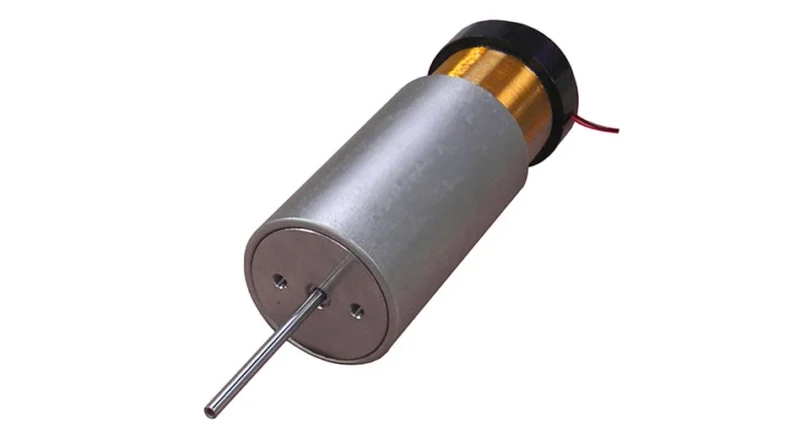
Voice Coil Actuator Force Control and Motion Accuracy Explained
Voice coil actuators are widely used in precision engineering systems where accurate force control and smooth motion are essential. Their ability to convert electrical energy directly into linear mechanical force makes them highly effective in applications requiring fine positioning and dynamic response. From semiconductor equipment to medical devices, these actuators play a key role in achieving high-performance motion control.
In modern motion systems, a voice coil actuator is often chosen for its direct-drive structure and linear force characteristics. Unlike traditional mechanical systems that rely on gears or lead screws, this actuator type produces force through electromagnetic interaction between a coil and a magnetic field. This results in highly responsive motion with minimal mechanical delay, making it ideal for systems that demand both precision and speed.
Understanding Force Control in Voice Coil Actuators
Force control is one of the most important capabilities of a voice coil actuator. The force generated is directly proportional to the current flowing through the coil, allowing for highly predictable and adjustable output.
This linear relationship enables engineers to design control systems that can finely tune force output in real time. As a result, voice coil actuators are commonly used in applications where controlled pressure, tension, or positioning force is required.
Unlike traditional motors, which often require complex mechanical conversions to regulate force, voice coil systems offer direct and immediate control, improving efficiency and responsiveness.
How Motion Accuracy is Achieved
Motion accuracy in voice coil actuators depends on a combination of mechanical design, control systems, and feedback integration. Because these actuators operate without mechanical contact between moving and stationary components, they eliminate backlash and reduce friction-related errors.
Key factors contributing to motion accuracy include:
- Direct-drive operation: Eliminates mechanical transmission errors
- High-resolution feedback systems: Enable precise position correction
- Stable magnetic field design: Ensures consistent force output
- Low moving mass: Improves responsiveness and reduces overshoot
- Closed-loop control integration: Maintains exact positioning under varying loads
These characteristics allow voice coil actuators to achieve micron-level and even sub-micron positioning accuracy in advanced systems.
Importance of Feedback and Control Systems
To achieve optimal performance, voice coil actuators are typically integrated into closed-loop control systems. Sensors such as encoders, laser displacement sensors, or capacitive probes provide real-time position feedback.
The controller continuously adjusts current input based on this feedback, ensuring that the actuator reaches and maintains the desired position or force level. This dynamic adjustment is essential in environments where conditions change rapidly or where extreme precision is required.
Without such feedback systems, even small variations in load or temperature could affect performance and reduce accuracy.
Applications Requiring High Force Precision
Voice coil actuators are used in a variety of industries where precise force and motion control are critical. These include:
- Semiconductor wafer positioning and lithography systems
- Optical lens focusing and adaptive imaging systems
- Medical devices requiring controlled force application
- Precision testing and measurement equipment
- Robotics systems with delicate manipulation tasks
In each of these applications, consistent force output and repeatable motion are essential for maintaining system reliability and performance quality.
Conclusion
Voice coil actuators provide a powerful solution for applications requiring precise force control and high motion accuracy. Their linear force characteristics, combined with advanced feedback systems, enable exceptional performance in demanding engineering environments. As industries continue to push toward higher precision and automation, these actuators will remain a fundamental component in modern motion control systems.

