
Questions to Ask Before Partnering with a Paper Lunch Box Supplier
Choosing a packaging partner is an important decision for restaurants, catering companies, takeaway outlets, and food delivery businesses. Paper lunch boxes must meet practical requirements for strength, food protection, convenience, and presentation. A supplier’s ability to provide consistent products and dependable service can directly affect daily operations and customer satisfaction.
Before establishing a business relationship with a Paper Lunch Box Supplier, buyers should ask questions that reveal the supplier’s product quality, manufacturing capabilities, pricing structure, and delivery reliability. Gathering this information helps businesses compare potential partners and avoid problems after placing an order.
1. What Materials Are Used to Manufacture Your Lunch Boxes?
Material quality influences the strength, durability, and performance of paper lunch boxes. Buyers should ask whether the supplier uses suitable food-grade paperboard and what thicknesses or material options are available.
It is also important to understand whether the packaging includes protective coatings or barriers. Some meals contain oil, moisture, or sauces that can weaken untreated paper. The supplier should explain which products are suitable for these applications and identify any usage limitations.
2. Are Your Products Suitable for Food Contact?
Food-contact suitability should be a priority when selecting packaging. Ask the supplier whether the materials, inks, adhesives, and coatings used in the products meet applicable food-contact requirements.
Request relevant specifications, test reports, or compliance documentation where available. Businesses should also clarify whether particular containers are suitable for hot foods, cold meals, or products with high moisture content.
Clear documentation helps buyers make informed decisions and select packaging appropriate for their menus.
3. What Types and Sizes of Paper Lunch Boxes Do You Offer?
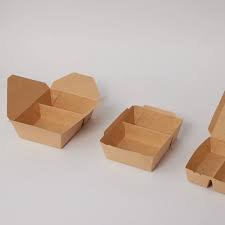
Different food businesses have different packaging needs. A restaurant selling rice meals may require deeper containers, while a catering company may need multi-compartment boxes to separate food items.
Ask about the supplier’s available product range, including:
- Single-compartment lunch boxes
- Multi-compartment food containers
- Different capacities and dimensions
- Foldable or flat-packed designs
- Boxes with secure lid and closure features
- Packaging for different food types
A broad product selection can make it easier to source multiple packaging formats from one supplier.
4. Can You Provide Samples Before a Bulk Order?
Product samples allow buyers to evaluate packaging quality before committing to a large purchase. Request samples in the exact size, material, and design being considered.
Test the containers with representative menu items to check their structural strength, closure performance, and resistance to grease or moisture. Also examine whether the boxes are easy to assemble and convenient for staff to handle.
Sample testing can reveal practical issues that may not be obvious from photographs or product descriptions.
5. What Is Your Minimum Order Quantity?
Minimum order quantity (MOQ) affects purchasing decisions, especially for small businesses or companies introducing new packaging designs. Ask whether the supplier has different MOQs for standard and customized products.
It is also useful to understand whether larger orders qualify for different pricing arrangements. Buyers should compare the required quantity with their expected consumption and available storage space before committing.
6. Do You Offer Custom Printing and Branding?
Customized packaging can help businesses build brand recognition and create a consistent presentation. Ask whether the supplier can print logos, brand colors, product information, or other design elements.
Discuss the following details before approving customization:
- Available printing methods and colors
- Artwork file requirements
- Design and proof approval procedures
- Printing charges and setup costs
- Additional production time
- Minimum quantities for customized orders
Always review a sample or approved proof to confirm that the final design matches expectations.
7. How Do You Maintain Product Quality?
Consistent quality is essential when ordering packaging regularly. Ask the supplier about its quality control procedures and how products are inspected during manufacturing.
Useful questions include whether the supplier checks paperboard thickness, box dimensions, folding accuracy, printing quality, and closure performance. You can also ask how defective products are identified and handled before shipment.
A supplier with clear inspection procedures is better positioned to maintain consistency across production batches.
8. What Is Your Production Capacity and Lead Time?
Production capacity determines whether a supplier can handle your required order volume. Ask how many units can be manufactured within a given period and whether production schedules change during busy seasons.
You should also request realistic lead times for standard and customized products. If your business depends on regular packaging deliveries, discuss whether repeat orders can be planned in advance.
Understanding production limitations helps prevent unexpected shortages and scheduling problems.
9. What Are Your Pricing and Payment Terms?
Pricing should be evaluated alongside product quality and service. Request a detailed quotation that explains the unit cost, customization charges, packaging expenses, and shipping fees.
Ask whether pricing changes with order quantities and how long a quotation remains valid. It is also important to clarify accepted payment methods, deposit requirements, and payment deadlines.
Transparent pricing makes it easier to calculate the total purchasing cost and compare different suppliers fairly.
10. How Do You Handle Shipping and Delivery?
Delivery reliability is important because packaging shortages can disrupt daily food service operations. Ask about shipping methods, estimated delivery times, carton quantities, and transportation arrangements.
Clarify how the supplier protects products against moisture and physical damage during transit. You should also understand the procedure for reporting damaged shipments or missing quantities.
For businesses ordering internationally, customs requirements and shipping responsibilities should be discussed before confirming the order.
11. What Environmental Information Can You Provide?
Businesses increasingly consider environmental factors when choosing food packaging. Ask whether the supplier offers products made with recycled or responsibly sourced paper materials and whether relevant claims can be supported with documentation.
It is important not to assume that every paper lunch box is automatically recyclable or compostable. Coatings, adhesives, food contamination, and local waste management facilities can influence disposal options.
A reliable supplier should provide clear information about material composition and any applicable environmental certifications.
12. What Customer Support Is Available After the Order?
A good business relationship should continue after payment and delivery. Ask how the supplier handles product complaints, replacement requests, order changes, and questions about packaging specifications.
Find out whether you will have a consistent contact person and how quickly the company typically responds to customer inquiries. Clear after-sales procedures can make it easier to resolve issues and coordinate future purchases.
When comparing providers such as Uchampak, businesses should consider the quality of communication and product support alongside manufacturing capabilities and packaging options.
Conclusion
Asking the right questions before partnering with a paper lunch box supplier helps businesses understand what they are purchasing and what level of service they can expect. Material quality, food-contact suitability, product variety, customization, pricing, production capacity, and delivery arrangements should all be evaluated.
Requesting samples, reviewing relevant documentation, and clarifying order terms can reduce purchasing risks. By choosing a supplier that offers transparent information and consistent quality, food businesses can establish a reliable packaging supply for their ongoing operations.