
Custom Outdoor Neon Sign vs Traditional Signage: Key Differences Explained
In today’s competitive business environment, signage plays a crucial role in shaping customer perception and driving foot traffic. Whether it is a small retail shop or a large commercial outlet, the right signage can significantly influence visibility and brand recognition. Businesses often compare modern illuminated options with conventional boards to determine which solution delivers better long-term value.
Among the most popular modern choices is the LED-based neon-style display, which has gained attention for its brightness, efficiency, and design flexibility. A well-designed custom outdoor neon sign is increasingly replacing traditional signage in many industries due to its ability to combine strong visual appeal with energy-efficient performance.
Visual Impact and Customer Attention
One of the biggest differences between neon-style signage and traditional boards is visual impact. Traditional signage often relies on printed graphics, paint, or vinyl materials that are visible only under adequate lighting conditions. While effective during the day, their visibility can significantly decrease at night.
In contrast, modern neon-style lighting maintains high brightness in both daylight and nighttime environments. This ensures continuous visibility, helping businesses attract attention even after sunset. The glowing effect naturally draws the human eye, making it especially effective in busy commercial streets.
Traditional signage may appear static and less dynamic, while illuminated designs offer a more engaging and modern appearance that enhances brand identity.
Energy Efficiency and Operational Costs
Energy consumption is another major factor when comparing signage types. Traditional illuminated boards may rely on fluorescent tubes or older lighting systems that consume more electricity and require frequent maintenance.
Modern neon-style solutions use LED technology, which is significantly more energy-efficient. This results in lower electricity bills and reduced long-term operational costs. Additionally, LED systems generate less heat, improving safety and extending the lifespan of internal components.
Over time, businesses benefit from reduced maintenance expenses and fewer replacements, making LED-based signage a more cost-effective option.
Durability and Maintenance Requirements
Traditional signage materials such as painted boards, acrylic prints, or metal panels can degrade over time due to exposure to sunlight, rain, and pollution. Colors may fade, surfaces may crack, and overall appearance may deteriorate, requiring periodic refurbishment.
Neon-style signage, however, is designed with durability in mind. It typically uses flexible tubing, sealed LED systems, and weather-resistant materials that protect against environmental damage. These features ensure that the sign remains functional and visually appealing for a longer period.
Maintenance requirements are also lower. Traditional signs often need repainting or replacement, while modern illuminated systems generally require only occasional cleaning and inspection.
Design Flexibility and Branding Options
Traditional signage offers limited customization, often restricted to printed layouts or fixed shapes. While suitable for basic branding, it may not fully capture a business’s creative identity.
Modern neon signage provides significantly greater design flexibility. Businesses can customize fonts, colors, shapes, and lighting effects to align with their branding strategy. This allows for more expressive and visually distinctive signage that stands out in crowded marketplaces.
The ability to create unique designs helps businesses strengthen brand recognition and build a more memorable customer experience.
Installation and Versatility
Installation processes also differ between the two signage types. Traditional boards are often heavier and may require more complex mounting structures. They can also be less adaptable to different surfaces or architectural designs.
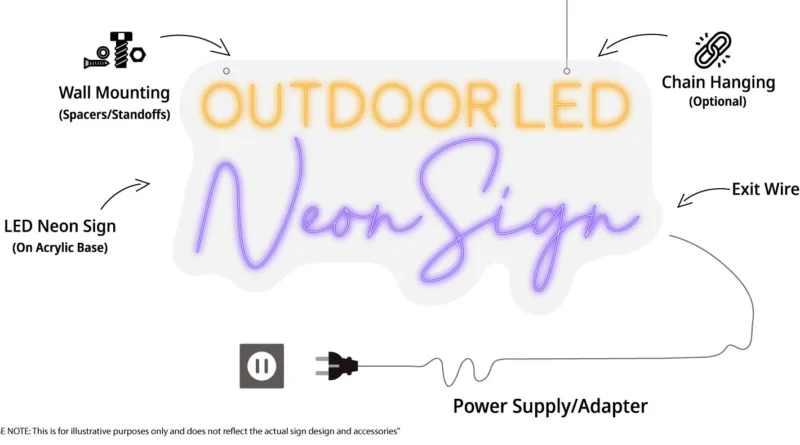
Neon-style signs are generally lighter and more versatile. They can be installed on walls, windows, or custom structures with relative ease. This flexibility makes them suitable for a wide range of business environments, including restaurants, retail stores, salons, and entertainment venues.
Their adaptability also allows businesses to reposition or redesign signage with fewer structural limitations.
Long-Term Value and Business Impact
When evaluating signage options, long-term value is a key consideration. Traditional signage may have lower upfront costs, but it often requires more frequent maintenance and replacement over time.
In contrast, modern neon-style solutions provide better durability, energy efficiency, and visual performance, resulting in stronger long-term value. A well-designed custom signage solution not only enhances visibility but also contributes to brand identity and customer engagement.
Businesses that invest in high-quality illuminated signage often experience improved foot traffic and stronger brand recall.
Conclusion
Both traditional signage and modern neon-style displays have their place in commercial branding, but they serve different needs. Traditional boards may be suitable for basic, low-cost visibility, while LED-based neon options offer enhanced brightness, durability, and customization.
For businesses aiming to stand out in competitive environments, modern illuminated signage provides a more impactful and efficient solution. By choosing a well-crafted display, companies can ensure consistent visibility and a stronger connection with their audience.