
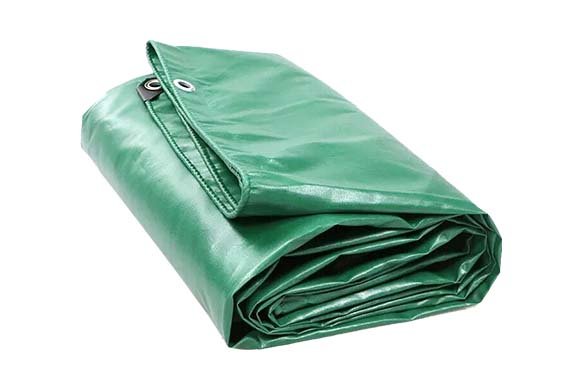
The Role of Advanced Technology in Modern PVC Tarpaulin Manufacturing
The manufacturing industry has experienced significant technological improvements over the years, and PVC tarpaulin production is no exception. As businesses demand stronger, more durable, and versatile covering materials, manufacturers are increasingly adopting modern equipment and advanced production techniques to improve product quality and manufacturing efficiency.
PVC tarpaulins are widely used in transportation, construction, agriculture, warehousing, and industrial applications. Meeting the different requirements of these industries requires careful material selection, precise processing, and consistent quality control. Modern PVC Tarpaulin Manufacturers rely on technological advancements to improve production processes and deliver materials that meet changing market expectations.
1. Advanced PVC Coating Technology
PVC coating is one of the most important processes in tarpaulin manufacturing. It involves applying a polyvinyl chloride layer to a suitable fabric base to improve its resistance to water, environmental exposure, and physical wear.
Modern coating equipment allows manufacturers to control coating thickness and application consistency more accurately. This helps produce materials with uniform surfaces and reliable protective properties.
Advanced coating methods can also support the development of tarpaulins with different performance characteristics depending on their intended applications.
2. Automated Fabric Production Processes
Automation has become an important part of modern textile and tarpaulin manufacturing. Automated machinery helps reduce manual errors, improve production speed, and maintain consistency across large manufacturing batches.
In PVC tarpaulin production, automated systems may assist with fabric handling, coating operations, material cutting, and finishing.
These technologies allow manufacturers to manage larger production volumes while maintaining better control over manufacturing specifications.
Automation also helps reduce unnecessary material waste and improves the overall efficiency of production facilities.
3. Precision Lamination Technology
Lamination is another important process used to manufacture PVC tarpaulins. It involves combining different material layers to achieve specific strength, flexibility, and protective characteristics.
Modern lamination equipment provides better control over temperature, pressure, and processing speed. These factors influence the bonding between material layers and the consistency of the finished product.
Proper lamination helps improve structural integrity and supports the production of tarpaulins suitable for demanding applications.
4. Computer-Controlled Cutting and Finishing
Accurate cutting and finishing are essential when producing PVC tarpaulins in different sizes and designs.
Computer-controlled cutting systems help manufacturers achieve precise dimensions while reducing material wastage. These systems are particularly useful for customized orders that require specific measurements or complex shapes.
Modern finishing technologies can also improve edge reinforcement, welding quality, and overall product appearance.
For businesses requiring large quantities of customized tarpaulins, precision equipment helps maintain uniformity across individual products.
5. Improved Heat Welding Techniques
PVC tarpaulin products often require strong seams to ensure reliable performance. Heat welding is commonly used to join PVC-coated materials without relying entirely on conventional stitching.
Modern hot-air and high-frequency welding equipment can produce consistent seams when operated under suitable temperature, pressure, and processing conditions.
Strong welded joints are particularly important for truck covers, industrial curtains, storage enclosures, and other applications where water resistance and structural reliability matter.
Technological improvements in welding equipment help manufacturers achieve better control over joint quality.
6. Advanced Quality Testing Equipment
Quality testing is essential for determining whether PVC tarpaulins meet the required performance specifications.
Modern testing equipment allows manufacturers to evaluate material characteristics more accurately and identify potential production problems.
Common quality assessments include:
- Tensile strength testing: Measures the force a material can withstand before breaking.
- Tear resistance testing: Evaluates how well the fabric resists the expansion of an existing tear.
- Coating adhesion testing: Examines the bond between the PVC coating and the base fabric.
- Water resistance testing: Assesses the material’s ability to prevent water penetration.
- UV resistance testing: Evaluates performance under controlled ultraviolet exposure.
These tests provide useful information for quality assurance and help manufacturers maintain consistent product specifications.
7. Digital Monitoring and Production Management
Digital technology is improving how modern manufacturing facilities monitor and manage production activities.
Computerized systems can collect information about equipment performance, production speed, temperature settings, and material usage.
This information helps production teams identify irregularities and make adjustments when necessary.
Digital monitoring can also support preventive equipment maintenance, reducing the likelihood of unexpected production interruptions.
Better production management ultimately helps manufacturers maintain more predictable manufacturing schedules.
8. Development of Specialized PVC Formulations
Technological progress is not limited to machinery. Improvements in material science also influence the development of modern PVC tarpaulins.
Manufacturers can work with different PVC formulations and suitable additives to achieve specific material characteristics.
Depending on the application, these formulations may be designed to improve flexibility, UV resistance, flame-retardant performance, or resistance to particular environmental conditions.
The suitability of each formulation depends on the intended use, applicable standards, and required testing.
This flexibility allows manufacturers to produce materials for a broader range of industrial and commercial applications.
9. Technology for Reducing Material Waste
Efficient resource management is becoming increasingly important in modern manufacturing.
Advanced cutting systems, automated material handling, and improved production planning can help reduce unnecessary fabric waste.
Manufacturers can also monitor raw material consumption to identify inefficient production stages and improve resource utilization.
Reducing material waste can lower manufacturing costs while supporting more responsible production practices.
Proper waste collection and disposal are also important considerations in facilities working with PVC materials.
10. Better Customization Through Modern Equipment
Customer requirements vary considerably across different industries. Some businesses need standard tarpaulin rolls, while others require finished products with specific dimensions, colors, and reinforcement features.
Modern manufacturing technology makes it easier to manage these variations without significantly disrupting production operations.
Digital cutting, controlled coating systems, and specialized welding equipment can support customized manufacturing requirements.
This capability is particularly useful for international buyers, distributors, and industrial businesses sourcing tarpaulins for specific applications.
11. How Advanced Technology Benefits Buyers
The adoption of modern manufacturing technology offers several practical advantages to customers.
These benefits may include:
- More consistent material specifications.
- Improved production efficiency.
- Better control over product finishing.
- Greater flexibility for customized orders.
- Reduced manufacturing defects.
- More reliable quality testing.
- Better management of large-volume orders.
However, advanced machinery alone does not guarantee superior products. Skilled operators, suitable raw materials, effective maintenance, and proper quality control remain essential.
Buyers should evaluate the manufacturer’s complete production capabilities rather than judging quality based only on equipment.
Conclusion
Advanced technology plays an important role in modern PVC tarpaulin manufacturing by improving coating processes, automation, lamination, cutting accuracy, welding quality, and product testing.
These developments help manufacturers respond to changing industry requirements while maintaining efficient production and consistent material performance.
For businesses sourcing PVC tarpaulins, understanding a manufacturer’s technology and quality management practices can support better purchasing decisions. The most dependable manufacturing operations combine modern equipment with technical expertise, suitable raw materials, and effective quality assurance to produce materials that meet real-world application requirements.