
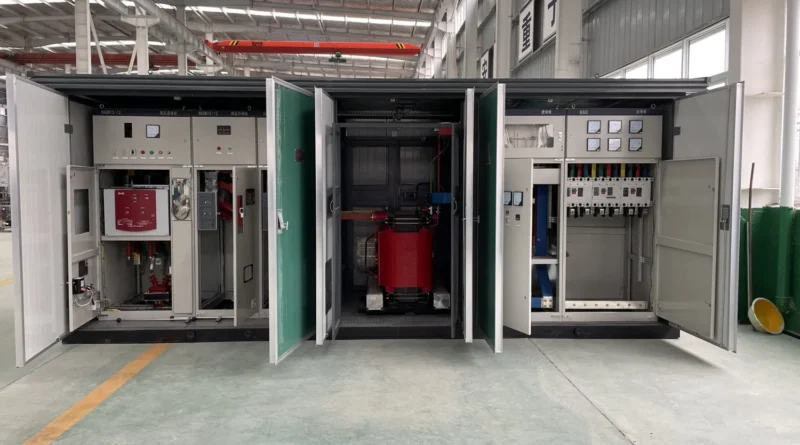
A Complete Guide to Export Substation Design, Equipment, and Applications
Export substations play an important role in modern power systems by transferring electricity from generating facilities to transmission networks. They are commonly used in renewable energy projects, industrial power plants, and large-scale electricity generation facilities where power must be delivered safely and efficiently to the grid. Proper substation design helps ensure stable voltage levels, reliable operation, and compliance with applicable electrical standards.
As electricity demand grows and renewable energy capacity expands, export substations have become increasingly important for connecting generation projects to the wider power network. A well-planned Export Substation supports efficient power transfer, provides essential protection functions, and helps maintain the reliability of the electrical infrastructure.
What Is an Export Substation?
An export substation is an electrical facility that receives power from a generating source and prepares it for delivery to a transmission or distribution network. The term is frequently used in renewable energy projects, including solar farms and wind power installations, where electricity generated on-site must be transferred to the grid.
The substation may increase the voltage from the generator or inverter output to a level suitable for grid connection. It also contains switching, protection, measurement, and control equipment that helps operators manage power flows and respond to electrical faults.
The specific configuration depends on the project’s generation capacity, grid connection requirements, transmission voltage, site conditions, and applicable utility standards.
How an Export Substation Works
The main function of an export substation is to transfer electrical energy from a generation facility to the receiving network while maintaining safe and reliable operating conditions.
In a typical renewable energy installation, the process follows several stages:
- Power generation: Solar panels or wind turbines generate electricity, which is converted into the required electrical form by power conversion equipment.
- Voltage transformation: Step-up transformers increase the voltage to reduce current and limit transmission losses for a given power level.
- Switching and isolation: Circuit breakers and disconnectors control electrical connections and allow equipment to be isolated when necessary.
- Protection and monitoring: Relays, instrument transformers, and control systems detect abnormal conditions and provide operational information.
- Grid export: The electricity passes through the grid connection point into the receiving transmission or distribution network.
Each stage must be coordinated with the others to ensure that the substation operates within the technical limits established by the network operator.
Key Equipment Used in Export Substations
An export substation contains several interconnected components. Each component performs a specific function that contributes to the safe transfer of electricity.
Power Transformers
Power transformers are among the most important components in an export substation. They increase the voltage from the generating facility to the level required by the grid connection.
Transformer selection depends on rated power, voltage ratio, impedance, cooling requirements, insulation design, and expected operating conditions. Engineers must also consider losses, temperature rise, short-circuit withstand capability, and the effects of harmonic currents where relevant.
Correct transformer sizing helps balance capital expenditure, operational efficiency, and future expansion requirements.
Circuit Breakers and Disconnectors
Circuit breakers interrupt electrical current during faults or other specified switching conditions. They help protect transformers, busbars, cables, and connected network equipment from damage.
Disconnectors provide visible or otherwise verified isolation where required by the equipment design and operating procedures. They are generally not intended to interrupt load current unless specifically designed and rated for that duty.
Both devices must be selected according to the system voltage, continuous current, short-circuit rating, and insulation requirements.
Busbars and Conductors
Busbars provide common electrical connection points between incoming circuits, transformers, and outgoing grid connections. They may be constructed from copper or aluminum, depending on the electrical and mechanical design requirements.
Their ratings must account for continuous current, temperature rise, short-circuit forces, and environmental conditions. Appropriate clearances and insulation coordination are also essential for maintaining electrical safety.
Instrument Transformers and Metering Equipment
Current transformers and voltage transformers provide scaled electrical signals for protection relays, monitoring equipment, and measurement systems.
Revenue metering equipment measures the electricity exported to the grid, helping support energy accounting and commercial settlement. Metering arrangements must satisfy the accuracy, communication, and verification requirements specified by the relevant utility or market operator.
Protection, Control, and Communication Systems
Protection relays identify abnormal electrical conditions, including overcurrent, earth faults, differential faults, and certain voltage or frequency disturbances. Depending on the system design, they can initiate circuit breaker operation to isolate the affected equipment.
Control and communication systems allow operators to monitor substation conditions, operate approved switching devices, and exchange information with the generating plant and grid control center.
Modern facilities may use supervisory control and data acquisition systems, digital protection equipment, and communication protocols to improve visibility and operational coordination.
Surge Arresters and Earthing Systems
Surge arresters help limit transient overvoltages caused by lightning or switching events. Their selection and placement depend on the insulation levels and exposure of the equipment being protected.
The earthing system provides a controlled path for fault current and helps limit dangerous touch and step voltages. Its design requires assessment of soil resistivity, fault-current magnitude, clearing time, and the physical layout of the substation.
Important Considerations in Export Substation Design
Designing an export substation involves more than selecting individual electrical components. Engineers must evaluate how the entire facility will perform under normal operating conditions, during faults, and throughout its expected service life.
Electrical System Studies
Electrical studies form the foundation of a reliable substation design. Typical assessments include:
- Load-flow studies: Evaluate voltage profiles, power flows, and equipment loading under expected operating conditions.
- Short-circuit studies: Determine fault-current levels and verify that equipment can withstand and interrupt the anticipated currents.
- Protection coordination studies: Ensure that protective devices operate in an appropriate sequence to isolate faults while minimizing unnecessary outages.
- Insulation coordination studies: Establish suitable insulation levels and overvoltage protection arrangements.
- Harmonic studies: Assess power quality where inverters, converters, or other nonlinear loads may affect the electrical network.
- Earthing studies: Evaluate ground potential rise and confirm that touch and step voltages remain within applicable safety limits.
The findings help determine equipment ratings, protection settings, and the overall substation configuration.
Grid Connection Requirements
An export substation must satisfy the technical requirements of the receiving network. These may include voltage and frequency operating ranges, reactive power capability, power factor requirements, fault ride-through behavior, and power quality limits.
Renewable energy projects may also need to demonstrate compliance with grid codes before receiving authorization to export electricity. Depending on the project, additional requirements may cover communication systems, remote control, disturbance recording, and operational data exchange.
Early coordination with the network operator helps identify these requirements before detailed engineering and equipment procurement begin.
Site Selection and Layout
The physical location of a substation affects construction costs, accessibility, environmental performance, and long-term maintenance.
Engineers should assess land availability, drainage, flood risk, soil conditions, transport access, noise, and the proximity of transmission lines. The layout must provide sufficient electrical clearances, safe access routes, equipment foundations, cable trenches, and space for maintenance activities.
Environmental conditions such as high temperatures, humidity, salt exposure, and dust may also influence insulation selection, enclosure protection, and equipment specifications.
Safety and Regulatory Compliance
Substation design must follow applicable electrical regulations, utility requirements, and recognized engineering standards. Depending on the project and jurisdiction, relevant standards may include IEC or IEEE requirements for transformers, switchgear, insulation coordination, and protection systems.
Safety measures can include interlocking arrangements, restricted access, warning signs, fire protection, emergency procedures, and appropriate personal protective equipment requirements.
Compliance should be verified throughout design, construction, testing, and commissioning rather than treated as a final-stage check.
Applications of Export Substations
Export substations support a wide range of power generation and industrial applications.
Solar Power Plants
Utility-scale solar farms use export substations to collect electrical power from inverter stations and increase voltage for delivery to the grid. The design must account for variable generation, inverter behavior, reactive power requirements, and the grid operator’s connection conditions.
Because solar output changes with sunlight and weather, equipment selection should reflect expected loading patterns and the plant’s intended operating profile.
Wind Farms
Wind power projects use export substations to transfer electricity from multiple turbines to the receiving network. Offshore wind projects may require offshore substations, subsea export cables, and onshore grid connection facilities.
These installations must account for demanding environmental conditions, specialized cable systems, and coordination between turbine controls and grid requirements.
Industrial Power Generation
Industrial facilities that generate electricity through combined heat and power systems, captive power plants, or other generation technologies may use export substations to supply surplus electricity to the grid.
The design must coordinate the facility’s internal electrical system with the external network, including protection settings, metering arrangements, and permitted export capacity.
Hydroelectric and Other Renewable Projects
Hydroelectric plants and other renewable generation facilities also require suitable grid connection infrastructure. Export substations transform and control electrical power before it enters the transmission network.
Their configuration depends on the generating equipment, site geography, transmission distance, and voltage level of the receiving system.
Testing and Commissioning of Export Substations
Testing and commissioning confirm that the installed substation meets its design requirements and is ready for safe operation. A structured commissioning process helps identify wiring errors, equipment defects, incorrect settings, and communication problems before energization.
Common activities include:
- Inspecting equipment installation, clearances, foundations, connections, and identification labels.
- Performing transformer tests and verifying insulation condition in accordance with the approved test plan.
- Testing circuit breakers, disconnectors, instrument transformers, and associated control circuits.
- Verifying protection relay settings, trip circuits, interlocks, and end-to-end protection functions where applicable.
- Testing metering accuracy, control systems, alarms, and communication links.
- Confirming earthing system integrity and completing required safety checks.
- Carrying out approved energization procedures and verifying operating parameters under controlled conditions.
The testing scope depends on the equipment, project specifications, and applicable standards. Test results and commissioning records should be documented for future maintenance and operational reference.
Maintenance Practices for Long-Term Reliability
Regular maintenance helps extend equipment service life and reduce the likelihood of unexpected outages. A well-planned program should be based on manufacturer guidance, equipment condition, operating history, and the criticality of the installation.
Important activities include inspecting transformers for leaks or abnormal temperatures, checking electrical connections, testing protective relays, examining circuit breaker mechanisms, and verifying the condition of surge arresters and earthing connections.
Thermal imaging, condition monitoring, oil analysis for oil-filled equipment, and periodic functional testing can help identify developing problems before they result in equipment failure.
Maintenance teams should also review alarms, disturbance records, and operating data to identify recurring issues and improve maintenance priorities.
Conclusion
Export substations are essential for connecting power generation facilities to transmission and distribution networks. Their role extends beyond voltage transformation to include electrical protection, switching, metering, monitoring, and compliance with grid connection requirements.
Successful projects depend on careful equipment selection, detailed electrical studies, appropriate site planning, effective protection coordination, and thorough commissioning. With a suitable design and consistent maintenance strategy, export substations can support efficient energy transfer, reliable power delivery, and the continued expansion of renewable and conventional electricity generation.


