
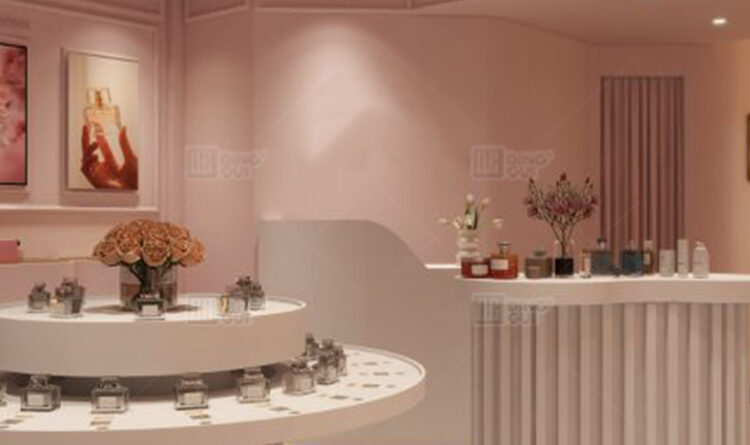
What Retailers Should Consider Before Buying a Perfume Showcase
Choosing the right display furniture is an important part of planning a fragrance retail area. A showcase needs to present bottles clearly while also fitting the available space, supporting daily store operations, and providing appropriate protection for merchandise.
Before purchasing a Perfume Showcase, retailers should look beyond appearance alone. Dimensions, materials, lighting, storage, security, maintenance, and future product changes can all influence whether a display remains useful over time.
Measure the Available Space First
The first step is to understand exactly where the showcase will be installed. Measure the available floor area, wall width, ceiling height, and surrounding customer pathways.
Remember to account for doors, entrances, counters, columns, electrical outlets, and other fixed features. A display that looks suitable on paper may become inconvenient if it restricts movement once installed.
Estimate Your Product Capacity
Consider how many fragrance bottles the showcase needs to accommodate. A small boutique collection may require a compact unit, while a larger assortment may need multiple sections or several levels of shelving.
Avoid selecting a display based only on the current inventory. Allowing some additional capacity can make future product additions easier to manage.
Check Bottle Dimensions
Perfume packaging can vary considerably. Some bottles are short and compact, while others are tall, wide, or unusually shaped.
Measure representative products before finalizing shelf dimensions. Sufficient vertical and horizontal clearance will make products easier to arrange and reduce the need for constant repositioning.
Choose Suitable Materials
Materials influence both appearance and durability. Glass, metal, wood-based panels, acrylic, and other materials may be combined depending on the desired design.
Consider how each material will perform under everyday retail conditions. Surfaces should be practical to clean and durable enough for frequent handling by staff and customers.
Evaluate the Glass
If the showcase uses glass, review its thickness, construction, visibility, and safety characteristics. Clear glass can provide excellent product visibility, while other treatments may be appropriate for specific design requirements.
The framing and hardware should also work effectively with the glass so that doors, panels, and shelves remain stable during regular use.
Decide What Type of Lighting You Need
Lighting can significantly affect how fragrance bottles appear. Before buying a showcase, determine whether you need general illumination, shelf lighting, accent lighting, or a combination.
Pay attention to brightness, color appearance, reflections, and the location of the fixtures. Lighting should make products easier to see rather than creating glare across the glass.
Consider Electrical Requirements
Integrated lighting may require wiring, power connections, drivers, switches, or control systems. These requirements should be considered before installation.
Understanding the electrical setup in advance can help prevent unexpected modifications to the store after the showcase arrives.
Review Security Features
Fragrances can represent valuable merchandise, so security may be an important consideration. Depending on the retail environment, features such as lockable doors, controlled access, secure hinges, and sturdy construction may be appropriate.
Security should protect products without making everyday customer viewing and staff access unnecessarily difficult.
Think About Customer Interaction
A showcase should allow customers to examine products comfortably. Consider viewing height, shelf depth, walking space, and the location of testers.
If customers need assistance from sales staff, make sure the display arrangement leaves enough room for conversations and product demonstrations.
Plan the Product Organization
Think about how fragrances will be grouped before selecting the internal layout. Products may be organized by brand, collection, fragrance family, size, or promotional status.
The shelf configuration should support this merchandising strategy rather than forcing staff to adapt their organization to an unsuitable display.
Look at Storage Options
Visible shelves are not always enough for a busy retail environment. Staff may need somewhere to keep additional stock, packaging, testers, cleaning supplies, or display accessories.
Consider whether concealed storage can be incorporated beneath or behind the main presentation area.
Check Accessibility for Staff
Employees need to clean, restock, rearrange, and inspect the showcase regularly. Doors, shelves, drawers, and storage compartments should therefore be accessible without complicated procedures.
A practical internal layout can save staff time during routine merchandising tasks.
Consider Maintenance Requirements
Glass surfaces can show fingerprints and dust, while lighting components may eventually require servicing. Ask how easy it will be to clean the showcase and access components that need maintenance.
A display that is simple to maintain is more likely to retain its intended appearance during long-term use.
Think About Flexibility
Retail assortments rarely remain exactly the same. New fragrances may be introduced, seasonal collections may rotate, and product packaging can change.
Adjustable shelves, modular sections, or flexible lighting can make it easier to modify the display without replacing the entire unit.
Match the Store’s Interior
The showcase should complement the existing retail environment. Consider finishes, materials, proportions, lighting style, and overall visual character.
A well-coordinated display can create a more consistent fragrance area without competing with other important parts of the store.
Consider Visibility From Different Directions
If the showcase is positioned in an open area, customers may approach it from multiple directions. Freestanding units may need to look finished from more than one side.
Wall-mounted displays have different requirements because the primary viewing direction is usually toward the front. The installation location should therefore influence the design.
Review Installation Requirements
Ask how the showcase will be delivered and installed. Large glass components, lighting connections, wall mounting, and access restrictions can all affect installation.
Understanding these requirements beforehand helps retailers prepare the site and avoid unnecessary delays.
Ask About Customization
Standard displays may work for some stores, but custom dimensions or internal configurations may be necessary when the available space or product assortment is unusual.
Discuss customization options such as shelf arrangement, finishes, lighting integration, storage, security features, and branding elements.
Compare Long-Term Value
Price is only one part of a purchasing decision. A lower-cost display may not provide the durability, flexibility, or functionality required for daily retail use.
Instead, consider the relationship between construction quality, expected lifespan, maintenance needs, capacity, and the practical value the showcase provides.
Work With an Experienced Manufacturer
The manufacturer can influence how effectively the different components are brought together. Retailers should review construction details, customization capabilities, materials, lighting integration, and after-installation support before making a decision.
DG Display Showcase is one example of a manufacturer retailers can consider when evaluating customized display solutions for fragrance products.
Questions to Ask Before Ordering
A short list of questions can help clarify the purchase:
- What are the exact external and internal dimensions?
- How many products can the showcase accommodate?
- What types of glass and structural materials are available?
- How is the lighting installed and maintained?
- What security features can be incorporated?
- Is concealed storage available?
- Can shelves be adjusted later?
- How will the showcase be delivered and installed?
- What maintenance is required?
- Can the design be customized to fit the store?
Final Thoughts
Buying a perfume display should be approached as a practical retail-planning decision rather than simply a furniture purchase. The right unit needs to balance product visibility, organization, customer access, security, durability, and the physical limitations of the store.
By measuring the space carefully, understanding product requirements, reviewing materials and lighting, and considering future changes, retailers can select a showcase that supports both presentation and everyday store operations.