
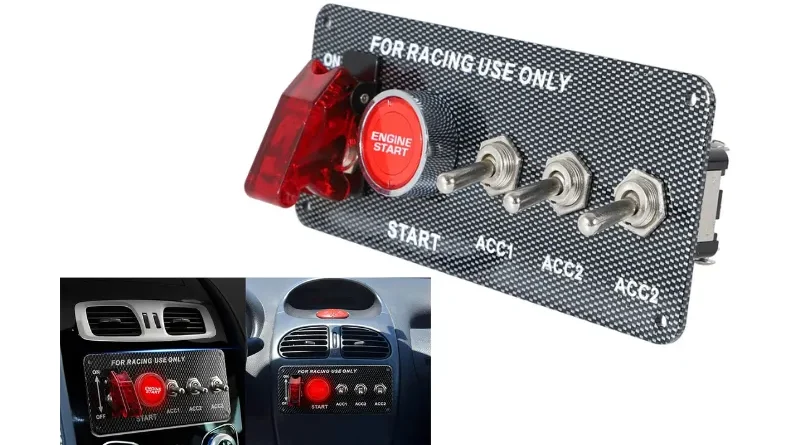
Switch Panel for Car: A Guide to Organizing Vehicle Accessories
Modern vehicles often use a growing number of electrical accessories, from auxiliary lighting and communication equipment to cooling fans and other aftermarket components. Managing these accessories with separate switches can quickly make the dashboard or center console look cluttered.
A well-designed Switch Panel For Car provides a centralized way to control multiple electrical accessories from one convenient location. With an appropriate panel, drivers can organize controls, simplify operation, and create a cleaner installation while keeping different accessories easier to identify and manage.
What Is a Car Switch Panel?
A car switch panel is a centralized control unit that houses multiple switches for vehicle accessories. Instead of installing individual switches throughout the cabin, several functions can be grouped together in one accessible panel.
Depending on the design, a panel may control accessories such as auxiliary lights, winches, air compressors, fans, or other compatible electrical equipment. The exact application depends on the vehicle and the electrical requirements of the accessories being installed.
Why Use a Switch Panel?
Cleaner Accessory Installation
Multiple aftermarket accessories can require multiple control points. A switch panel brings these controls together, helping create a more organized interior.
Easier Operation
Clearly labeled switches make it easier to identify and activate individual accessories while driving or working around the vehicle.
Better Organization
Grouping accessory controls into one location can reduce dashboard clutter and provide a more professional-looking installation.
Room for Additional Accessories
Some panels provide several switch positions, allowing vehicle owners to plan for future electrical accessories instead of installing a new control location every time an accessory is added.
Common Accessories Controlled by Switch Panels
A switch panel can be used for various vehicle accessories, depending on its electrical capacity and configuration. Common examples include:
- Auxiliary driving lights
- Fog lights
- LED light bars
- Interior lighting
- Cooling fans
- Air compressors
- Work lights
- Communication equipment
- Off-road accessories
- Other compatible electrical devices
Before connecting any accessory, its electrical requirements should be compared with the switch panel and wiring system.
Key Features to Consider
Not every switch panel is designed for the same application. Several factors should be evaluated before choosing one.
Number of Switches
Start by determining how many accessories you currently need to control. If future expansion is likely, selecting a panel with additional switch positions can provide more flexibility.
Switch Quality
Switches should be designed for repeated operation and appropriate for the environment in which they will be used. Durable switches can provide more dependable performance for frequently operated accessories.
Labels and Indicators
Clear labels help identify each function quickly. Backlit switches or indicator lights can also make controls easier to locate in low-light conditions.
Electrical Capacity
One of the most important considerations is the electrical load. The panel, switches, wiring, relays, and protection devices should be suitable for the connected accessories.
High-current accessories may require relays rather than being powered directly through the switch. Always follow the manufacturer’s wiring specifications.
Wiring and Electrical Protection
A switch panel is only as reliable as the electrical installation supporting it. Appropriate fuses, circuit protection, wiring sizes, connectors, and grounding should be used according to the accessory requirements.
Each circuit should be designed to handle its expected electrical load. Poorly sized wiring or inadequate protection can result in overheating, electrical faults, or accessory failure.
For complex installations, professional automotive electrical assistance can help ensure that the system is correctly configured.
Choosing the Right Mounting Location
The location of a switch panel affects both convenience and safety. Controls should be easy to reach without forcing the driver to take unnecessary attention away from the road.
Depending on the vehicle, a panel may be mounted on the dashboard, center console, overhead area, or another suitable location. The selected position should provide enough space for secure mounting and clean cable routing.
Switch Panels for Off-Road Vehicles
Off-road vehicles often use several electrical accessories, making centralized controls particularly useful. Lighting, compressors, winches, and other equipment may all need dedicated controls.
In these environments, durability becomes especially important. Dust, moisture, vibration, and rough terrain can place additional demands on switches and electrical connections.
A panel designed for the intended environment can help maintain reliable accessory control during demanding use.
Installation Considerations
Before installing a switch panel, review the vehicle’s electrical system and the requirements of every accessory.
Consider the following:
- Available mounting space
- Number of accessories
- Electrical load of each device
- Required fuse and relay protection
- Wiring routes
- Grounding points
- Switch labeling
- Access to the control panel
- Protection from moisture and excessive heat
- Future expansion requirements
Planning these details before installation can make the finished system cleaner and easier to maintain.
Maintenance and Troubleshooting
Periodic inspection can help prevent electrical problems. Check switches for physical damage, inspect wiring for wear, and make sure connectors remain secure.
If an accessory stops working, begin by checking the relevant fuse, wiring connection, switch, relay, and ground. Troubleshooting the circuit systematically can make it easier to identify the source of the problem.
Keeping the switch panel clean can also help preserve its appearance and functionality, especially in vehicles frequently exposed to dust or outdoor conditions.
How to Select a Switch Panel for Your Vehicle
The ideal switch panel depends on the vehicle, accessories, available installation space, and intended use. Before purchasing, create a list of every accessory that needs a control switch.
Then determine the electrical requirements and decide where the panel will be installed. This approach helps prevent choosing a panel with insufficient switch capacity or a design that does not fit the vehicle’s interior.
Conclusion
A switch panel for car accessories can provide a practical way to organize multiple electrical controls in one convenient location. It can reduce dashboard clutter, simplify accessory operation, and create a more structured electrical installation.
When choosing a panel, pay attention to switch quality, electrical capacity, protection requirements, mounting options, labeling, environmental durability, and future expansion. With careful planning and correct wiring, a centralized switch panel can make managing vehicle accessories considerably easier.