Electric Skid Steer vs. Diesel Models: Key Differences and Benefits
Choosing the right skid steer loader can have a significant impact on construction productivity, operating expenses, and long-term equipment performance. With advances in battery technology, contractors now have more options than traditional diesel-powered machinery. Electric and diesel skid steers both offer practical advantages, but their performance characteristics and operating requirements differ.
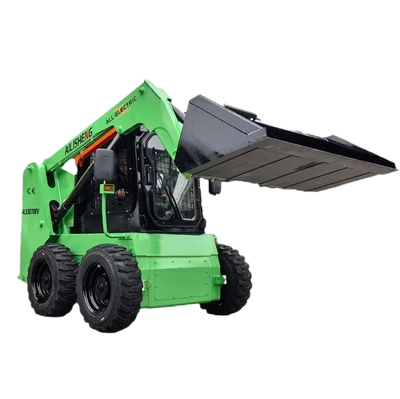
An electric skid steer uses battery-powered motors instead of a conventional diesel engine, providing an alternative for businesses looking to reduce direct emissions, operating noise, and certain maintenance requirements. Understanding the differences between these two machine types can help contractors select equipment that matches their project conditions and business objectives.
1. Power Source and Operating Technology
The most obvious difference between electric and diesel skid steer loaders is how they generate power.
Diesel models use internal combustion engines to produce mechanical power. This power drives the machine’s movement and supports hydraulic functions such as lifting, tilting, and operating attachments.
Electric models use rechargeable battery systems and electric motors. Depending on the design, separate motors may control travel and hydraulic functions.
Both technologies can support demanding construction applications, but their energy requirements and operating characteristics differ. Buyers should compare actual machine specifications rather than assuming one power source is suitable for every task.
2. Operating Costs and Energy Expenses
Operating expenses are an important consideration when purchasing construction equipment.
Diesel skid steers require regular fuel purchases, and operating costs can change with fuel prices and machine utilization.
Electric models use electricity for charging instead of diesel fuel. Depending on local electricity rates and charging efficiency, this may reduce daily energy expenses.
However, the actual cost difference depends on several factors:
- Local diesel and electricity prices.
- Daily operating hours.
- Machine workload.
- Battery capacity.
- Charging efficiency.
- Equipment utilization.
Businesses should calculate expected energy costs based on their working conditions before making a purchasing decision.
3. Maintenance Requirements
Maintenance affects equipment availability and long-term ownership costs.
Diesel skid steer loaders require regular engine servicing, including oil changes, fuel filter replacements, and inspections of engine-related components. Exhaust systems and other combustion-related parts also require attention.
Electric models generally have fewer engine-related maintenance requirements because they do not use conventional combustion engines.
However, electric equipment still needs regular inspections of batteries, electrical connections, hydraulic components, cooling systems, tires, and safety equipment.
Both machine types require preventive maintenance, but their servicing schedules and component requirements are different.
4. Noise Levels and Working Environment
Noise is a major consideration for construction projects in residential areas, commercial buildings, and indoor facilities.
Diesel skid steers produce engine noise during operation, which can contribute to workplace noise pollution.
Electric models generally operate more quietly because they do not have conventional combustion engines. This makes them attractive for projects where reducing noise is important.
Quieter operation can benefit:
- Indoor renovation projects.
- Warehouse operations.
- Residential construction.
- Commercial property maintenance.
- Construction near schools and hospitals.
Although electric models still produce noise from hydraulic systems, tires, and attachments, reduced engine noise can improve the overall working environment.
5. Exhaust Emissions and Environmental Impact
Diesel skid steer loaders release exhaust emissions during operation. Depending on the machine and applicable emission-control technology, these may include nitrogen oxides and particulate matter.
Electric models produce no direct exhaust emissions at the point of operation. This makes them useful for enclosed spaces and projects where local air quality is a priority.
Their overall environmental impact still depends on electricity generation, battery manufacturing, transportation, and battery disposal.
When charged using renewable electricity, electric machinery may offer additional opportunities to reduce its overall environmental footprint.
For contractors working toward sustainability goals, this difference can be an important purchasing consideration.
6. Performance and Power Delivery
Both electric and diesel skid steers are designed to handle material movement, site preparation, landscaping, and other construction tasks.
Diesel engines are well established in heavy equipment applications and can provide sustained power for demanding workloads.
Electric motors can deliver responsive torque and controlled power output. Depending on the model, this can support smooth movement and precise operation.
However, performance varies by machine design, battery capacity, motor configuration, hydraulic system, and operating conditions.
Buyers should compare rated operating capacity, travel speed, hydraulic flow, lifting performance, and other specifications to determine which model best meets their requirements.
7. Operating Time and Refueling or Charging
Diesel machines have an advantage when rapid refueling is important. Operators can typically replenish fuel quickly and return the equipment to work.
Electric skid steers require charging periods, which must be included in daily work schedules.
Battery runtime depends on workload, operating conditions, battery capacity, and attachment usage. Charging time also varies according to the battery system and charger specifications.
Businesses should consider:
- Expected working hours per shift.
- Battery capacity and estimated runtime.
- Available charging facilities.
- Charging speed.
- Opportunities for charging during breaks.
- Backup equipment requirements.
Diesel models may be more convenient for continuous operation in locations without reliable charging infrastructure, while electric models can work effectively when charging is planned properly.
8. Suitability for Indoor and Urban Projects
Indoor and urban construction sites often have restrictions involving noise, exhaust emissions, and equipment access.
Diesel skid steers may require additional ventilation and careful operating arrangements when used in enclosed environments.
Electric models are often better suited to indoor applications because they produce no direct exhaust emissions and generally operate more quietly.
Their compact design can also make them useful in warehouses, commercial renovations, underground parking areas, and other restricted workspaces.
For these applications, contractors should still consider floor load limits, ventilation requirements for battery charging, access dimensions, and workplace safety procedures.
9. Attachment Compatibility and Versatility
Skid steer loaders are widely used because they can support multiple attachments.
Both electric and diesel models may be compatible with buckets, pallet forks, sweepers, augers, grapples, and specialized tools.
This flexibility allows contractors to use one machine for different tasks rather than purchasing separate equipment for every application.
However, buyers should confirm hydraulic flow requirements, attachment weight limits, electrical compatibility, and manufacturer-approved operating conditions.
The availability of suitable attachments can influence how efficiently a machine performs across different projects.
10. Initial Purchase Price and Long-Term Investment
The initial purchase price of electric and diesel skid steers can vary significantly depending on brand, capacity, specifications, and included equipment.
Electric models may involve higher upfront costs in some markets because of battery technology and electrical systems. Diesel models may have more established pricing and a wider selection across different equipment categories.
However, purchase price alone does not determine the better investment.
Businesses should evaluate total ownership costs, including:
- Initial purchase price.
- Fuel or electricity expenses.
- Maintenance and repairs.
- Battery replacement, where applicable.
- Charging infrastructure.
- Insurance and operating costs.
- Expected equipment lifespan.
- Resale value.
A detailed cost comparison can help contractors identify which option provides better value over the expected service period.
11. Operator Comfort and Productivity
The working environment inside a machine can influence operator performance and productivity.
Diesel skid steers may produce more vibration and engine noise, depending on their design and condition.
Electric models can provide a quieter operating experience and may offer smoother power delivery.
Both types can include ergonomic seating, joystick controls, operator protection systems, and digital displays.
When comparing equipment, contractors should consider visibility, control layout, seating comfort, ease of entry, and available safety features.
Operator training is also essential to ensure safe and productive machine use.
12. Reliability and Equipment Availability
Reliability is important because unexpected equipment downtime can delay construction schedules and increase project expenses.
Diesel skid steers benefit from an established service ecosystem in many markets, including experienced technicians and widely available replacement parts.
Electric equipment may require specialized knowledge for battery and electrical system maintenance. The availability of qualified technicians and replacement components can vary by manufacturer and region.
Before purchasing either type, buyers should investigate warranty coverage, service response times, spare parts availability, and technical support.
A machine supported by a dependable service network can be a better long-term choice.
13. Which Type of Skid Steer Is Better for Your Business?
The right choice depends on the working environment, operating schedule, budget, and equipment requirements.
Electric skid steers may be suitable for:
- Indoor construction and renovation.
- Warehouse and industrial applications.
- Noise-sensitive urban projects.
- Businesses seeking to reduce direct exhaust emissions.
- Sites with reliable charging infrastructure.
- Operations where lower engine-related maintenance is valuable.
Diesel skid steers may be suitable for:
- Remote construction sites without reliable electricity.
- Long operating shifts requiring quick refueling.
- Heavy-duty applications where suitable diesel models are available.
- Businesses with established diesel maintenance facilities.
- Projects where charging downtime would be difficult to manage.
Neither option is automatically better for every application. Evaluating actual project requirements is the most effective way to select appropriate machinery.
14. Important Questions to Ask Before Purchasing
Before investing in a skid steer loader, contractors should gather detailed information from manufacturers or equipment suppliers.
Consider asking:
- What is the machine’s rated operating capacity?
- How long can it operate under typical working conditions?
- What are the charging or refueling requirements?
- Which attachments are compatible?
- What maintenance is required?
- What warranty coverage is included?
- Are spare parts and technical support readily available?
- What are the estimated long-term operating costs?
Comparing answers from different suppliers can help businesses make a more informed purchasing decision.
Conclusion
Electric and diesel skid steer loaders each offer advantages for modern construction projects. Diesel models provide familiar operating systems, quick refueling, and established service support, while electric models offer quieter operation, zero direct exhaust emissions, and fewer engine-related maintenance requirements.
The best choice depends on the type of work, operating hours, charging availability, performance requirements, and total ownership costs. By comparing these factors carefully, contractors can select equipment that supports productivity, meets site requirements, and delivers long-term business value.