
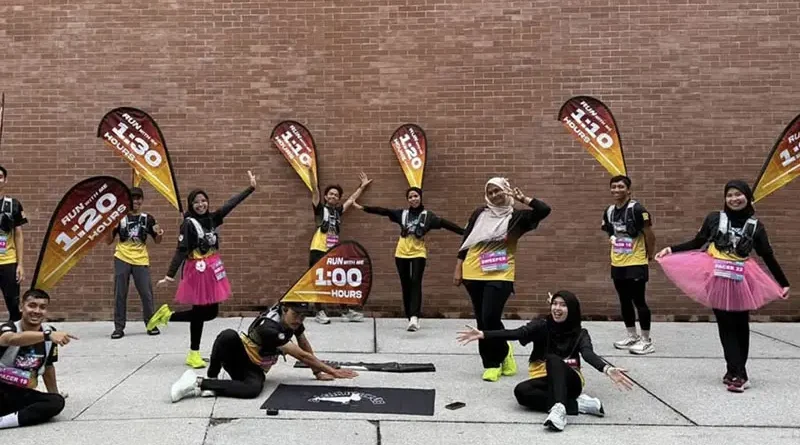
Why Pacer Flags Are Essential for Organizing Running Events
Organizing a successful running event involves much more than planning a route and arranging participant registration. Event organizers must also ensure that runners can identify their pace groups, locate important gathering points, and follow event instructions without confusion. Clear visual communication is especially important during large races, where hundreds or thousands of participants may gather in the same area.
One practical solution is using a Pacer Flag For Runners to make pace groups easier to identify. These flags provide visible markers that help participants locate their designated pacers and improve coordination before and during running events.
Understanding the Role of Pacer Flags in Running Events
Pacer flags are visual identification tools used to distinguish different running groups according to their target finishing times or running speeds. They are generally attached to lightweight poles and displayed above crowd level so participants can recognize them from a distance.
During marathons, half-marathons, charity runs, and community races, several pace groups may gather near the starting line. Without clear identification, participants can struggle to find the correct group.
Visible flags help simplify this process by providing an easily recognizable reference point for runners and event volunteers.
Why Pacer Flags Are Important for Race Organization
Pacer flags contribute to a more organized event environment by making essential information easier to communicate. Their benefits extend beyond simple group identification.
1. Easy Identification of Pace Groups
One of the main purposes of pacer flags is to help runners find groups that match their fitness levels and race goals.
For example, organizers can assign different colors or printed pace times to groups targeting specific finishing times. Participants can then locate their preferred group without repeatedly asking volunteers for directions.
This is particularly valuable at crowded starting areas where multiple groups assemble simultaneously.
2. Better Crowd Management
Large running events often experience congestion before the race begins. When runners know exactly where their pace groups are located, gathering areas can become easier to manage.
Organizers can assign separate locations to different pace categories and use flags to mark each section. This helps reduce unnecessary movement and makes pre-race arrangements more structured.
3. Improved Communication Between Runners and Pacers
Pacer flags create a visible connection between a pace leader and the runners following them. Participants can use the flag as a reference point when moving through crowded sections or when temporarily losing sight of their group.
This can be particularly helpful during the early stages of a race, when participants are adjusting to their intended running speed.
4. A More Organized Starting Area
The starting line is often one of the busiest parts of a running event. Clear visual markers help participants understand where to gather before the race begins.
By displaying different pace categories, organizers can create a more structured arrangement and help prevent runners from joining unsuitable groups.
Different Ways to Use Pacer Flags During Running Events
Pacer flags can support several aspects of race organization. Their usefulness depends on the event format, course layout, and number of participants.
Identifying Target Finishing Times
Organizers can print specific finishing times on flags to distinguish individual pace groups. Examples may include:
- 3-hour marathon group.
- 3-hour 30-minute marathon group.
- 4-hour marathon group.
- 4-hour 30-minute marathon group.
- 5-hour marathon group.
These labels allow participants to identify their preferred target more easily.
Marking Meeting and Assembly Points
Before a race begins, runners often gather at designated locations for instructions, warm-ups, and final preparations.
Pacer flags can mark these meeting points so participants know where to assemble. They can also help volunteers direct runners toward the appropriate areas.
Supporting Long-Distance Races
During longer races, maintaining a consistent pace becomes increasingly important. A visible flag helps runners recognize their pacer and remain connected with their group.
Although runners should always monitor their own effort and race conditions, pacer flags provide a useful visual reference throughout the event.
Assisting Event Volunteers
Volunteers can use pacer flags to identify specific groups and provide relevant information. This can make communication easier when several pace categories are operating within the same event area.
Choosing the Right Pacer Flags for Runners
Selecting suitable flags requires consideration of several practical factors. The right design should be easy to recognize, compatible with its supporting pole, and appropriate for the event environment.
Visibility and Flag Size
Flag dimensions influence how easily participants can recognize pace information. Larger flags may be useful at crowded outdoor events, while smaller designs can work well for compact races or indoor gatherings.
Organizers should consider viewing distance, crowd density, and the available installation space before choosing a size.
Clear Colors and Readable Text
Each pace group should have a design that is easy to distinguish from the others. Using contrasting colors and large lettering helps participants recognize their categories quickly.
Avoid complicated graphics and excessive information that could make the flag difficult to understand.
Durable Fabric Materials
Running events may take place in different weather conditions. Suitable flag fabric should maintain its appearance while allowing natural movement in the wind.
Material strength, printing quality, and resistance to outdoor exposure are important factors to review when selecting event flags.
Lightweight and Reliable Poles
The supporting pole should be lightweight enough for comfortable handling while providing appropriate support for the flag.
Fiberglass and aluminum are common materials used in banner pole systems. The best option depends on the flag dimensions, flexibility requirements, and manufacturer’s specifications.
Best Practices for Using Pacer Flags Effectively
Simply purchasing flags does not guarantee better event organization. Their placement and design should be planned according to the needs of participants.
Consider these recommendations:
- Use consistent identification: Assign clear colors or finishing-time labels to each pace group.
- Position flags above crowd level: Ensure participants can recognize them without unnecessary obstructions.
- Establish designated gathering areas: Give every pace group a clearly marked assembly location.
- Brief pacers in advance: Make sure pace leaders understand how flags should be displayed and used.
- Coordinate with volunteers: Share the flag identification system with event staff before race day.
- Check equipment before the event: Inspect poles, connectors, and flag attachments to ensure everything is ready.
- Consider weather conditions: Follow equipment guidelines and avoid using flags in conditions that could compromise safety.
These steps help create a consistent identification system that supports smoother event coordination.
Common Mistakes to Avoid When Using Pacer Flags
Poor planning can reduce the usefulness of even well-designed event flags. Organizers should avoid several common issues.
- Using similar colors for pace groups that need to be distinguished.
- Printing finishing times in lettering that is too small.
- Positioning flags where buildings, structures, or crowds block visibility.
- Choosing poles that are incompatible with the flag design.
- Failing to communicate the identification system to volunteers.
- Using unsuitable bases or ignoring outdoor weather conditions.
- Placing pace groups too close together in crowded starting areas.
Addressing these issues before race day can make the event easier for both participants and organizers.
How Pacer Flags Improve the Overall Runner Experience
A well-organized running event allows participants to focus on their performance rather than searching for basic information. When pace groups are clearly identified, runners can spend less time navigating the starting area and more time preparing for the race.
Pacer flags also contribute to a more welcoming atmosphere, especially for beginners who may be unfamiliar with organized running events. Clear group identification helps new participants feel more confident about finding an appropriate pace category.
For experienced runners, visible pace markers offer a convenient way to locate their preferred group and follow a planned race strategy.
Final Thoughts
Pacer flags are valuable tools for organizing running events because they make pace groups easier to recognize, support crowd management, and improve communication between runners, pacers, and volunteers.
By selecting visible designs, durable materials, suitable poles, and appropriate placement locations, organizers can create a more structured race environment. Whether managing a small community run or a large marathon, properly planned pacer flags can contribute to a smoother and more enjoyable experience for everyone involved.