
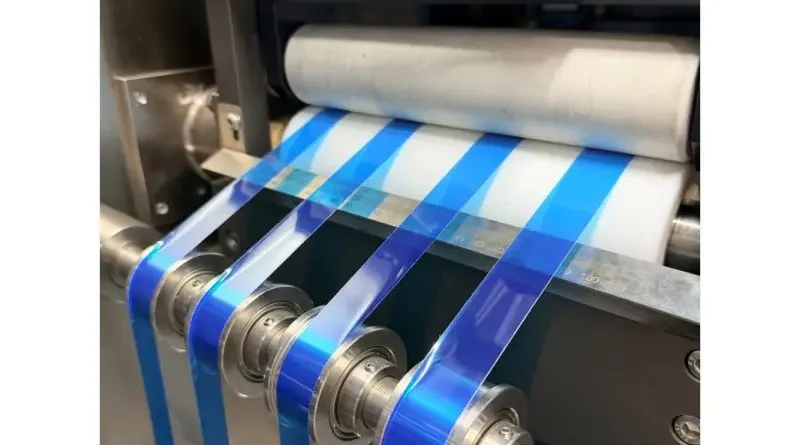
Understanding the Filling Process in Water Soluble Packaging Machines
The filling stage is one of the most important parts of automated soluble-film packaging. It determines how much product enters each package and must work in coordination with film forming, sealing, and cutting systems. A Water Soluble Packaging Machine integrates these operations into a controlled production cycle, allowing manufacturers to create individual doses with consistent dimensions and quantities.
Water-soluble packaging can be used for powders, liquids, gels, and other formulations, depending on the film and machine configuration. POLYVA manufactures packaging equipment designed for applications involving water-soluble films. Because different products behave differently during filling, the dosing system needs to be selected and adjusted according to the physical properties of the material.
What Happens During the Filling Process?
The filling process generally begins after the soluble film has been positioned and formed into a cavity. The machine then introduces a predetermined quantity of product into that cavity before another film layer is applied and the package is sealed.
The exact sequence can vary depending on the equipment design, package structure, and product being filled. However, the main objective remains the same: deliver a consistent dose without damaging or contaminating the surrounding film.
Step 1: Preparing the Film Cavity
Before filling begins, the machine forms the soluble film into a pocket or cavity. The cavity provides a defined space for the product and determines part of the finished package’s shape.
Proper forming is important because an uneven or incorrectly positioned cavity can affect filling accuracy and the final seal. Automated controls help maintain consistent cavity dimensions throughout the production cycle.
Step 2: Measuring the Product
The machine’s dosing system measures the required amount of product for each package. The measurement method depends largely on whether the material is a powder, liquid, gel, or another formulation.
For example, free-flowing powders may require a volumetric or auger-based dosing system, while liquids can be handled through pumps or other controlled dispensing mechanisms. The selected system must match the product’s flow characteristics and required dose.
Step 3: Dispensing Into the Cavity
Once the product has been measured, it is released into the formed film cavity. The dispensing process needs to be synchronized with the movement of the packaging film.
Controlled dispensing helps prevent product from landing outside the cavity. Keeping the surrounding sealing area clean is particularly important because contamination can interfere with seal integrity.
Step 4: Checking Filling Accuracy
Filling accuracy is a key quality consideration. If individual packages contain significantly different quantities, the finished product may not meet its intended specifications.
Depending on the production setup, manufacturers can use weighing systems, sensors, sampling procedures, or other quality-control methods to monitor dose consistency. Machine calibration is also important for maintaining reliable filling performance.
How Different Products Affect Filling
The physical properties of the product have a direct effect on the filling process. A dosing system that works well for one material may not be suitable for another.
Powder Products
Powders can vary considerably in particle size, density, moisture content, and flowability. Some powders flow freely, while others may form bridges or become compacted during handling.
The filling equipment therefore needs to control powder movement carefully to achieve repeatable doses and reduce unnecessary dust or spillage.
Liquid Products
Liquid formulations require accurate control of flow and volume. Factors such as viscosity, temperature, and foaming behavior can influence how the liquid moves through the dispensing system.
The filling speed must also be balanced with the need to keep the film’s sealing area free from product.
Gel Products
Gels can be more challenging to dispense because of their viscosity and tendency to adhere to equipment surfaces. Filling systems for these materials need to provide controlled movement and consistent release.
The formulation’s viscosity and temperature range should be considered when determining appropriate filling parameters.
Maintaining Film Integrity During Filling
Water-soluble film requires careful handling throughout the filling operation. Excessive mechanical force, unsuitable environmental conditions, or contact with moisture can affect the material.
Humidity control can be particularly important because some soluble films are sensitive to moisture. Keeping the production environment within the film manufacturer’s recommended conditions can help maintain stable processing characteristics.
Synchronization With the Sealing Stage
Filling does not operate independently from the rest of the packaging machine. The dosing system must work in synchronization with the film-forming and sealing mechanisms.
After the correct quantity of product has been dispensed, the machine needs to move the package into the sealing stage without unnecessary delays. Accurate timing helps maintain production speed while reducing the risk of product entering the sealing zone.
Common Filling Problems
Several issues can affect filling consistency in automated soluble-film packaging.
Common examples include:
- Inconsistent product flow
- Incorrect dosing settings
- Product buildup inside dispensing components
- Film movement or alignment problems
- Product contamination around the sealing area
- Changes in product temperature or viscosity
- Excessive humidity in the production environment
Identifying the cause of a filling problem usually requires checking both the product and the machine settings rather than adjusting the dosing system alone.
Improving Filling Efficiency
Manufacturers can improve filling performance by establishing consistent operating conditions and regularly checking equipment. Calibration should be performed according to the machine’s maintenance requirements and production specifications.
It is also useful to monitor product characteristics over time. Changes in moisture content, particle size, density, or viscosity can affect how material behaves during dosing, even when the machine settings remain unchanged.
The Role of Automation
Automation allows the filling process to be repeated with controlled timing and predefined parameters. Sensors and programmable controls can coordinate film movement, dosing, sealing, and cutting to create a continuous production cycle.
This reduces reliance on manual measurement and can make it easier to identify deviations from established production settings.
Conclusion
The filling process is central to the performance of water-soluble packaging systems. Accurate product measurement, controlled dispensing, stable film handling, and proper synchronization with sealing all contribute to consistent finished packages.
Because powders, liquids, and gels have different physical properties, the filling equipment and operating parameters need to be matched to the specific formulation. With appropriate machine configuration, environmental control, calibration, and quality monitoring, manufacturers can maintain reliable filling performance while supporting efficient automated production.


