
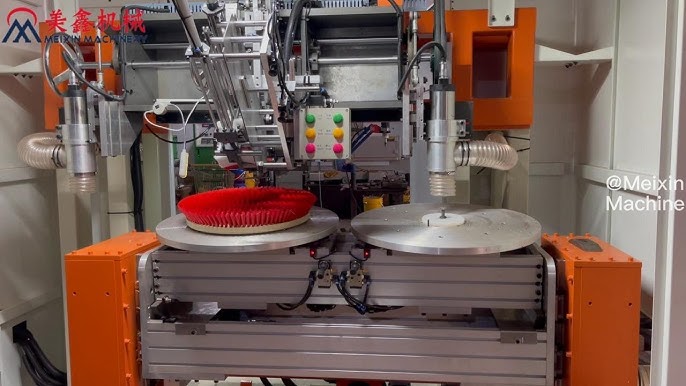
Factors to Consider Before Buying an Industrial Roller Brush Machine
Choosing an industrial roller brush machine is an important decision for manufacturers that need reliable and consistent brush production. The right equipment can influence production speed, brush quality, operating costs, and the ability to meet changing customer requirements.
Before comparing Industrial Roller Brush Machines For Sale, buyers should first understand their specific manufacturing needs. Factors such as brush size, production volume, automation, material compatibility, machine durability, and maintenance requirements can all affect the suitability of a particular machine.
Determine Your Production Requirements
The first step is to identify how many brushes you need to produce and how frequently the machine will operate. A machine designed for occasional production may not be appropriate for a facility running multiple shifts every day.
Consider your current production volume as well as potential future growth. Selecting equipment with sufficient capacity can prevent the need for an early upgrade as demand increases.
Check Brush Size and Specifications
Industrial roller brushes are available in different diameters, lengths, bristle densities, and configurations. The machine should be capable of producing the brush sizes required for your applications.
If your business manufactures several types of roller brushes, adjustable equipment can provide greater flexibility. This can reduce the need to purchase separate machines for different brush specifications.
Specifications Worth Checking
Before making a purchase, review whether the machine supports:
- Required brush diameters and lengths
- Different bristle materials
- Various core materials
- Desired bristle density and spacing
- Different drilling or tufting patterns
Understanding these specifications in advance can help prevent compatibility problems later.
Consider the Level of Automation
Automation can influence both production speed and consistency. Depending on the equipment, automated features may handle tasks such as positioning, feeding, drilling, tufting, or other repetitive operations.
However, the highest level of automation is not always necessary for every manufacturer. Consider the balance between production requirements, available labor, operator skills, and equipment complexity.
Evaluate Machine Precision
Precision is particularly important when producing roller brushes in large quantities. Small inconsistencies in hole positioning, bristle placement, or spacing can affect the final brush and create unnecessary waste.
Look for equipment designed to maintain repeatable results throughout production. Consistent manufacturing can help ensure that brushes meet the same specifications from one batch to another.
Review Material Compatibility
Different applications may require nylon, polypropylene, abrasive filaments, natural fibers, or other bristle materials. The machine should be compatible with the materials you plan to process.
The brush core is another important consideration. Plastic, wood, metal, and other core materials may require different machine settings or tooling. Confirm compatibility before purchasing equipment.
Examine Build Quality
Industrial machines are expected to withstand demanding working environments. A strong frame, reliable drive components, and durable mechanical parts can contribute to stable long-term operation.
Build quality can also affect vibration and accuracy. Equipment that remains stable during operation is better positioned to maintain consistent production results.
Consider Maintenance Requirements
Maintenance should be included in the purchasing decision rather than treated as an afterthought. Machines with accessible components can make routine inspection, cleaning, lubrication, and part replacement easier.
It is also worth checking the availability of replacement components and technical assistance. Efficient maintenance can help reduce unexpected downtime and keep production schedules on track.
Assess Safety Features
Industrial brush-making equipment may contain rotating components, drilling mechanisms, moving parts, and automated systems. Appropriate safety features are therefore essential for protecting operators.
Check for features such as protective guards, emergency-stop controls, and other appropriate safety mechanisms. Operators should also receive proper training before working with the machine.
Compare Operating Costs
The purchase price provides only part of the overall financial picture. Energy consumption, labor requirements, maintenance, tooling, replacement parts, and downtime can all contribute to the long-term cost of ownership.
A machine with a higher initial cost may be more economical over time if it offers better efficiency, durability, and lower maintenance requirements. Comparing total operating costs provides a more useful basis for decision-making.
Think About Future Production Needs
Manufacturing requirements can change as a business grows. New customers may require different brush dimensions, higher production volumes, or specialized configurations.
Choosing equipment with useful adjustment capabilities can provide greater flexibility in the future. This can make the machine a more practical long-term investment rather than a solution limited to current production needs.
Conclusion
Buying an industrial roller brush machine requires careful evaluation of both technical specifications and practical production requirements. Capacity, brush compatibility, automation, precision, durability, maintenance, safety, and operating costs should all be considered before making a final decision.
By clearly identifying current and future manufacturing needs, businesses can select equipment that supports consistent production and efficient operation while providing the flexibility needed for changing market demands.