Procolored’s new desktop machine prints, engraves and cuts without a single tool change
Most home studios run on three separate machines. A printer for color. An engraver for detail. A cutter for the final edge. Three footprints, three setups, three things to learn.
Procolored just folded all three into one box.
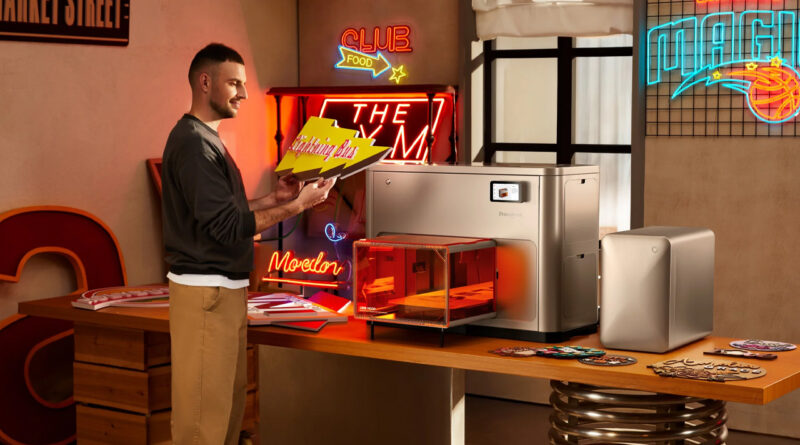
The X One is a desktop unit that handles full-color UV printing, laser engraving and precision cutting in a single device. No swapping tools between steps. No moving the project across the room to a different machine.
Built for people who don’t have a workshop
The pitch is simple. You’re a small studio, a side-hustle merch maker or just someone who likes building things at home, and you don’t have warehouse space to spread three machines across.
So the X One sits on a desk instead.
It can print full color directly onto skateboard decks, drinkware, phone cases, wood panels and acrylic, then engrave fine detail on top and cut a clean edge around the piece, all without unloading the material in between. That last part matters more than it sounds. Re-aligning a piece between three different machines is where most home projects go wrong. Every time you move a piece, you risk losing your registration, and a half-millimeter shift can ruin an otherwise finished product.
A touchscreen panel on the front runs the whole thing, which keeps the learning curve closer to “figure it out in an afternoon” than “take a course first.”
What’s actually inside the box
UV printing on a machine this size used to mean compromise. Either the color range was limited, or the print head couldn’t handle anything but flat surfaces.
The X One is built around a UV LED print engine, which cures ink instantly under light rather than letting it air dry. That’s what lets it print on uneven or textured materials without the ink running or smearing. Wood grain, embossed leather, curved drinkware. Surfaces that would choke a standard inkjet setup.
The laser engraving module sits next to it, handling fine detail work like text, line art and shading on wood, acrylic, anodized metal and leather. And the cutting tool finishes the job, trimming stickers, decals and shaped panels along a clean line without a separate die-cut machine.
Three tools. One bed. One set of alignment marks that never moves between steps.
What it actually changes for small studios
Three things stack up here.
Less floor space lost to equipment most people only use part-time. Fewer files and software platforms to manage across separate machines. And a shorter gap between an idea and a finished product, since the piece doesn’t leave the machine until it’s done.
For anyone running a custom-product business out of a spare room, that last point is the real selling point. Faster turnaround on a single order means more orders fit into the same week. If you’re charging for custom skateboards or personalized gifts, every hour saved on setup time is an hour you can spend on the next order.
There’s also a cost angle that’s easy to miss. Buying three separate machines, even budget ones, adds up fast once you include software licenses, maintenance and the desk space to fit them all. One machine with one learning curve is cheaper to run even before you look at the unit price.
Real projects this fits
A few examples make this easier to picture.
Custom skateboard decks with full-color graphics, engraved logos and a trimmed edge, done as one continuous job instead of three separate orders sent to three different shops.
Personalized drinkware for events or gifts, where a name or design gets printed in color and then has fine engraved detail added on top, like a signature or a small icon.
Wall art pieces, similar to the engraved owl panel shown in Procolored’s own product photos, where color printing and laser detail work together on a single wood panel.
Small batch packaging or product tags for an Etsy shop, where speed matters more than volume and reloading material between machines eats into margin on every order.
Who this is actually for
Not every home creator needs three-in-one capability. If you only ever do one type of work, say you’re only ever printing flat stickers, a dedicated single-purpose machine will probably do it better and cheaper.
But for studios juggling mixed orders, custom skateboards one week, engraved gifts the next, personalized drinkware after that, having one machine that handles all three formats removes a lot of friction most small operations deal with quietly.
It’s also worth thinking about where the machine will actually live. Laser engraving needs ventilation, so check whether the unit has built-in extraction before deciding it’ll sit on a desk in a closed room. And if you’re sharing walls with a bedroom or living space, ask about noise levels during a cutting cycle. Those two details decide more about daily usability than any spec sheet number does.
What this signals for home studios going forward
The bigger pattern here isn’t really about one machine. It’s about a shift in what home equipment is expected to do.
A few years ago, multi-function meant compromise. You’d get a printer that also scanned badly, or a cutter that also engraved poorly. Procolored’s approach treats all three functions as equally serious, not bolted-on extras to justify a higher price tag.
That’s a meaningful shift for anyone setting up a creative space at home rather than renting commercial shop space. The equipment is finally built around how people actually work in a spare room, not scaled down from an industrial unit and marketed as “compact.”
HomeCrux has been covering this device closely since it launched, and it’s worth keeping an eye on their interior and lifestyle section for more coverage as the X One rolls out to backers.