
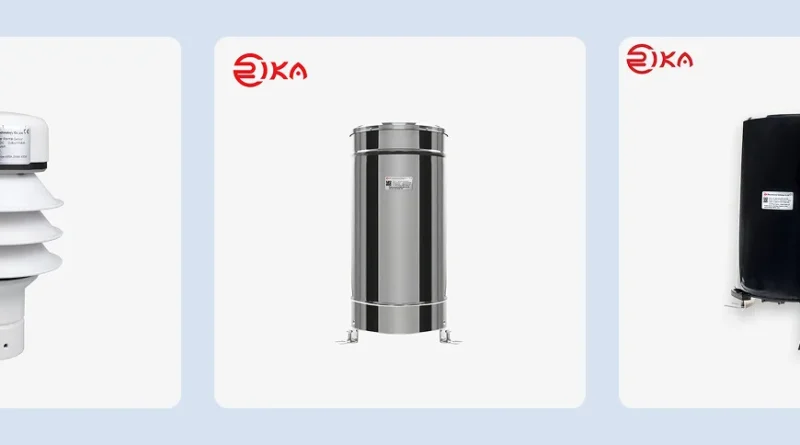
Benefits of Using Rika Sensors for Climate Monitoring
Climate monitoring is a vital aspect of understanding environmental changes, managing natural resources, and mitigating the effects of climate-related hazards. Accurate and continuous data collection is essential for researchers, government agencies, and industries that rely on environmental insights. As climate conditions become increasingly unpredictable, the role of advanced sensing technology has never been more critical.
One of the most effective tools for precise climate monitoring is the Rika Sensor. These sensors provide highly accurate measurements of various environmental parameters, enabling organizations to track climate trends, detect anomalies, and make informed decisions. By leveraging cutting-edge technology, Rika sensors improve the quality and reliability of climate data, which is crucial for both short-term weather forecasting and long-term climate research.
High Accuracy for Reliable Climate Data
Accurate data is the cornerstone of effective climate monitoring. Sensors must measure temperature, humidity, rainfall, wind speed, air pressure, and solar radiation with precision. Even small errors in these measurements can significantly affect climate models and predictions.
Rika sensors are engineered to deliver exceptional accuracy across a range of environmental conditions. Their advanced calibration and high-quality components ensure that readings remain consistent over time. This level of reliability allows scientists and policymakers to base their climate strategies on dependable information, improving the outcomes of mitigation and adaptation efforts.
Real-Time Monitoring for Immediate Response
Climate monitoring often requires real-time data to respond to sudden environmental changes. Extreme weather events such as storms, floods, or heatwaves demand immediate attention to protect communities and resources. Rika sensors provide continuous, real-time monitoring, allowing authorities to react promptly to emerging threats.
For example, real-time rainfall and river level measurements can help predict floods, giving emergency services crucial lead time to evacuate areas or manage water flow. Similarly, real-time temperature and humidity monitoring can aid in wildfire prevention and management. By offering immediate insights, Rika sensors enhance both public safety and operational efficiency.
Durability in Harsh Environments
Climate monitoring equipment is frequently exposed to harsh and unpredictable conditions. Sensors must withstand extreme temperatures, heavy rainfall, strong winds, and high levels of dust or salt, depending on their location. Any compromise in sensor performance can lead to inaccurate data or equipment failure.
Rika sensors are designed for durability and long-term performance in challenging environments. Their robust construction and protective casings ensure that sensitive components remain operational under adverse conditions. This resilience minimizes maintenance requirements and guarantees continuous data collection, which is essential for long-term climate studies.
Wide Range of Environmental Parameters
Effective climate monitoring involves tracking multiple environmental factors simultaneously. Rika sensors are capable of measuring a broad range of parameters, including temperature, humidity, rainfall, wind speed, atmospheric pressure, and solar radiation. This versatility allows a single sensor system to provide comprehensive climate data without the need for multiple devices.
By collecting diverse environmental information, Rika sensors support more accurate modeling and forecasting. This comprehensive data is essential for understanding complex climate patterns, predicting seasonal changes, and assessing the impacts of human activities on the environment.
Seamless Integration with Monitoring Systems
Modern climate monitoring relies on digital platforms and automated systems for data analysis and reporting. Rika sensors are designed to integrate easily with these systems, supporting wireless communication, IoT platforms, and cloud-based data management. This seamless integration ensures that climate data is transmitted securely and efficiently for analysis.
Integration with advanced analytics platforms enables organizations to detect trends, predict anomalies, and make informed decisions based on real-time information. It also allows for remote monitoring, reducing the need for frequent site visits and increasing operational efficiency.
Applications Across Various Sectors
Rika sensors are valuable tools for a wide range of climate monitoring applications. In meteorology, they provide accurate data for weather forecasts and climate research. In agriculture, precise environmental data helps optimize irrigation, protect crops, and improve yield. In urban planning, climate monitoring assists in managing air quality, energy usage, and infrastructure resilience.
Environmental agencies and research institutions rely on Rika sensors to monitor climate change indicators such as temperature fluctuations, precipitation trends, and extreme weather events. By providing reliable and high-resolution data, these sensors contribute to scientific research and policy development worldwide.
Enhancing Decision-Making and Sustainability
The accurate data provided by Rika sensors plays a vital role in decision-making for climate adaptation and mitigation strategies. Reliable environmental measurements allow governments, industries, and communities to plan effectively, manage resources sustainably, and reduce risks associated with climate variability.
For instance, energy companies can optimize power generation based on weather conditions, while cities can implement adaptive measures to reduce heat island effects. By improving the quality of climate data, Rika sensors support more sustainable and informed choices across multiple sectors.
Conclusion
Rika sensors offer significant benefits for climate monitoring by providing high accuracy, real-time data, durability, and versatility. Their ability to measure multiple environmental parameters and integrate with modern monitoring systems makes them indispensable for researchers, policymakers, and industries alike.
As climate challenges become more complex, the need for precise and reliable monitoring technology will continue to grow. Rika sensors ensure that organizations have access to the data required for effective decision-making, risk management, and sustainable environmental practices. Their contribution to climate monitoring ultimately enhances both scientific understanding and societal resilience.