
Water Gate Valves: Understanding Their Function, Applications, and Selection Criteria
Water distribution networks depend on reliable equipment to control the movement of water through pipelines. From municipal supply systems to industrial facilities, valves help isolate sections, support maintenance, and maintain safe operating conditions. Among the commonly used pipeline components, gate valves are valued for their ability to provide a relatively unobstructed flow path when fully open. Their simple operating principle makes them suitable for many water supply and distribution applications.
A Water Gate Valve is a mechanical device that controls water flow by raising or lowering a gate inside the valve body. When the gate is fully lifted, water can pass through the pipeline with minimal obstruction. Lowering the gate places it across the flow passage, stopping water movement. This design makes gate valves particularly useful for on-off isolation rather than continuous flow adjustment.
What Is a Water Gate Valve?
A water gate valve is a type of isolation valve commonly installed in pipelines that carry water. Its main closing component is a flat or wedge-shaped gate that moves vertically to open or close the flow passage.
Unlike ball valves, which operate through a rotating sphere, gate valves use a linear movement mechanism. A handwheel, gearbox, or actuator turns or moves the stem, causing the gate to rise or descend.
Gate valves are available in different sizes, pressure classes, body materials, and connection configurations. These options allow engineers to select products suited to municipal water networks, building services, pumping stations, and industrial installations.
How Does a Water Gate Valve Work?
The operation of a gate valve involves moving the internal gate between two main positions.
Fully Open Position
When the operator turns the handwheel in the opening direction, the stem lifts the gate away from the flow passage. In a fully open position, the water can move through the valve with relatively little restriction.
This characteristic makes gate valves useful in systems where maintaining a clear pipeline passage is important.
Fully Closed Position
Turning the handwheel in the opposite direction lowers the gate until it contacts the seating surfaces. The gate then blocks the pipeline passage and prevents water from continuing downstream.
The quality of the seal depends on the gate design, seat condition, material selection, and operating requirements.
Why Gate Valves Are Not Ideal for Throttling
Although a gate valve can be positioned partially open, it is generally not designed for continuous flow regulation. Water moving through a partially opened valve can create turbulence, vibration, and uneven wear on the gate and seats.
For applications requiring regular flow adjustment, globe valves, control valves, or other suitable regulating designs are generally more appropriate.
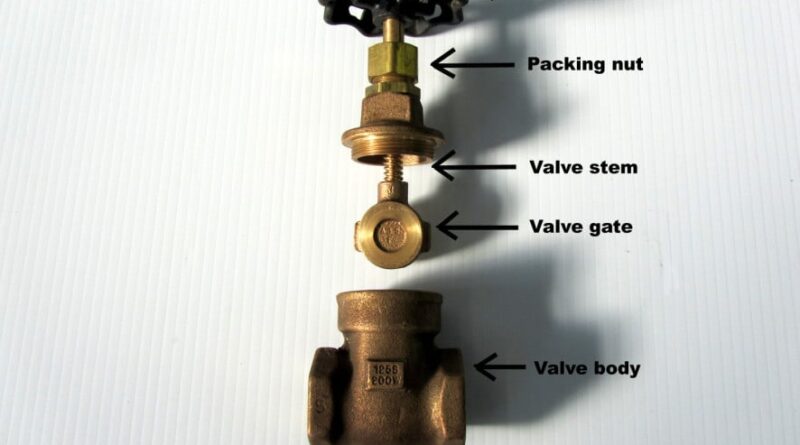
Main Components of a Water Gate Valve
Understanding the valve’s construction helps explain how it operates and what should be inspected during maintenance.
Valve Body
The body forms the main pressure-containing structure and connects the valve to the pipeline. It houses the gate, seats, stem, and other internal components.
Common materials include cast iron, ductile iron, stainless steel, and other alloys selected according to pressure, corrosion exposure, and application requirements.
Gate or Wedge
The gate is the internal component that blocks or opens the water passage. Depending on the design, it may have a solid wedge, flexible wedge, or parallel gate configuration.
Its geometry and surface condition influence sealing performance.
Stem
The stem transfers movement from the handwheel or actuator to the gate. Rising-stem designs allow the stem to move upward as the valve opens, while non-rising-stem designs keep the stem in a relatively fixed vertical position and move the gate internally.
Seat
The seating surfaces provide the contact area that helps stop water movement when the gate is closed. Seat construction may use metal-to-metal or resilient sealing arrangements, depending on the valve design.
Bonnet
The bonnet covers the upper section of the valve body and provides support for the stem and related components. It is typically connected to the body through bolts, threads, or another approved arrangement.
Handwheel or Actuator
A handwheel allows manual operation. Larger valves may use gearboxes to reduce operating effort, while automated installations can use electric or other suitable actuators.
Common Types of Water Gate Valves
Different gate valve designs are available to meet specific installation and operating requirements.
Resilient-Seated Gate Valves
Resilient-seated gate valves use an elastomeric material on the gate or sealing surface. This arrangement can provide effective shutoff in water distribution systems when the materials are suitable for the application.
They are commonly considered for municipal water networks and utility pipelines.
Metal-Seated Gate Valves
Metal-seated designs use metal contact surfaces to create the seal. They may be selected for particular operating conditions where the temperature, durability, or service requirements call for this construction.
Their performance depends on manufacturing quality, surface condition, and correct operation.
Rising-Stem Gate Valves
In a rising-stem design, the stem moves upward as the gate opens. This movement provides a visible indication of valve position, which can help operators identify whether the valve is open or closed.
However, sufficient vertical clearance is necessary to accommodate the moving stem.
Non-Rising-Stem Gate Valves
Non-rising-stem valves keep the stem within the valve’s overall vertical envelope. The stem movement operates the gate internally, making this arrangement useful where overhead space is limited.
These valves are often used in underground water distribution installations, depending on the product’s design and operating specifications.
Key Benefits of Water Gate Valves
Gate valves offer several advantages that make them useful in water pipeline systems.
Low Flow Resistance When Fully Open
When the gate is fully raised, many gate valve designs provide a relatively direct flow path. This can help limit pressure loss compared with valves that leave a larger obstruction inside the pipeline.
Reliable Isolation
Gate valves are designed primarily for opening and closing pipelines. A correctly specified and maintained valve can provide dependable isolation for maintenance and system shutdowns.
Suitability for Larger Pipelines
Gate valves are available in a wide range of nominal sizes, including configurations suitable for large water distribution networks. Their design can support isolation in municipal and industrial infrastructure.
Flexible Installation Options
Different body designs, stem arrangements, and connection types allow gate valves to fit various pipeline layouts. Rising-stem and non-rising-stem models are particularly useful for addressing different space requirements.
Manual and Automated Operation
Smaller valves can often be operated using a handwheel, while larger or remotely controlled installations may use gearboxes or actuators. This flexibility supports different operating arrangements.
Common Applications of Water Gate Valves
Water gate valves are used in many systems where pipeline isolation is required.
Municipal Water Distribution
Water utilities install gate valves at selected points throughout distribution networks. These valves allow maintenance teams to isolate individual pipeline sections without shutting down the entire network.
They may also be installed near junctions, service connections, and other important network locations.
Water Treatment Plants
Treatment facilities use gate valves to isolate equipment and pipeline sections around filtration units, storage tanks, pumps, and treatment processes.
The selected materials must be compatible with the water being handled and any treatment chemicals present.
Pumping Stations
Gate valves can be installed around pumps and related pipeline equipment to support isolation during servicing. Their suitability depends on the system layout and the manufacturer’s pressure and operating requirements.
Industrial Water Systems
Factories and processing facilities use water for cooling, cleaning, manufacturing, and general utilities. Gate valves can isolate selected sections of these systems when equipment requires inspection or repair.
Commercial and Residential Buildings
Larger building water distribution systems may use gate valves at main supply points, risers, and equipment connections. However, the preferred valve type depends on accessibility, maintenance needs, and local plumbing requirements.
Water Gate Valve Selection Criteria
Choosing an appropriate gate valve involves more than matching its nominal diameter to the pipeline. Engineers and purchasing teams should evaluate several technical factors before making a decision.
- Pipeline size: Select a nominal diameter that matches the piping design and required flow capacity.
- Pressure rating: Confirm that the valve can withstand the system’s operating pressure and foreseeable pressure variations.
- Water temperature: Check the temperature limits of the body, seats, seals, and stem packing.
- Body material: Choose a material with suitable strength and corrosion resistance for the installation environment.
- Seat design: Consider whether resilient-seated or metal-seated construction is appropriate.
- Stem configuration: Determine whether a rising or non-rising stem best suits the available installation space.
- Connection type: Match the valve’s flanged, threaded, or other connection arrangement to the pipeline specification.
- Operating method: Decide whether a handwheel, gearbox, or actuator is required.
- Applicable standards: Review the relevant dimensional, pressure, material, and testing requirements for the project.
- Maintenance access: Ensure that operators can reach the valve for inspection and servicing.
For drinking water applications, wetted materials and product approvals should also comply with applicable local water quality requirements.
Installation Best Practices
Correct installation helps protect the valve from mechanical stress and supports reliable sealing. Before fitting a gate valve, inspect the pipeline for dirt, debris, and alignment problems.
The valve should be installed according to the manufacturer’s instructions, including any requirements related to flow direction, orientation, and support. Although many gate valves can operate in either flow direction, specific product designs may have particular installation limitations.
Other important practices include:
- Confirming that the valve size and pressure class match the pipeline.
- Checking flange faces, gaskets, and bolt specifications.
- Avoiding excessive force during connection and tightening.
- Providing suitable support for heavy valves and adjoining pipes.
- Ensuring adequate space for handwheel or actuator operation.
- Operating the valve through its full travel after installation where appropriate.
Underground installations may also require suitable valve boxes, access arrangements, and protection against environmental exposure.
Maintenance and Common Operating Problems
Regular inspection helps identify wear and operating problems before they affect the wider water system.
Common issues include leakage through the closed valve, external leakage around the stem or bonnet, difficult operation, corrosion, and damage caused by debris or unsuitable operating conditions.
A practical maintenance program may include:
- Inspecting the valve body and external connections for leakage.
- Checking the handwheel, gearbox, or actuator for smooth operation.
- Examining stem packing and bonnet seals.
- Looking for signs of corrosion or physical damage.
- Operating the valve periodically where recommended by the manufacturer and system procedures.
- Replacing worn internal components when necessary.
Gate valves should not be forced when they become difficult to operate. Excessive force can damage the stem, gate, or operating mechanism. Maintenance work must be performed only after the relevant pipeline section has been safely isolated and depressurized.
Gate Valves Compared with Other Water Valve Designs
Different valve types serve different functions within a water distribution system.
| Valve Type | Main Function | Typical Strength |
|---|---|---|
| Gate valve | On-off isolation | Relatively low flow resistance when fully open |
| Ball valve | On-off isolation | Quick quarter-turn operation |
| Globe valve | Flow regulation | Better suited to controlled throttling |
| Butterfly valve | Isolation and selected regulating duties | Compact construction, especially for larger lines |
| Check valve | Reverse-flow prevention | Automatic one-way flow control |
The appropriate design depends on the system’s operating purpose. Gate valves are particularly useful for isolation, while other valve types may be more suitable for frequent adjustment, rapid operation, or automatic backflow prevention.
Conclusion
Water gate valves are important components in municipal, commercial, and industrial pipeline systems. Their linear gate mechanism provides a practical way to isolate water flow, while their relatively unobstructed passage when fully open makes them suitable for many distribution applications.
Selecting the right valve requires attention to pressure ratings, body and seat materials, stem design, connection type, installation space, and maintenance requirements. By matching the valve to actual operating conditions and following proper installation practices, water system operators can support dependable isolation and long-term pipeline performance.


