
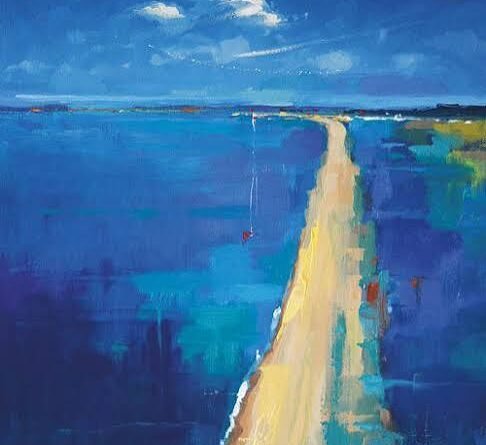
The History and Evolution of Abstract Oil Painting in Modern Art
Abstract art has transformed the way people understand and experience painting. Instead of focusing on realistic representations of people, places, and objects, abstract artists explore colors, shapes, lines, textures, and emotions. This approach challenged traditional artistic conventions and opened new possibilities for creative expression. Among the many forms of abstract art, oil painting has played an important role because of its rich colors, flexible techniques, and ability to create complex textures.
The development of Abstract Oil Painting is closely connected to the evolution of modern art. From early experiments with color and form to the expressive movements of the twentieth century, artists gradually moved away from realistic subjects and explored new ways to communicate ideas. Understanding this history provides valuable insight into how abstract oil painting became one of the most influential forms of contemporary artistic expression.
The Origins of Abstract Art
Before abstract art became an established movement, Western painting largely emphasized recognizable subjects, including religious scenes, historical events, portraits, and landscapes. Artists traditionally aimed to represent the visible world through accurate proportions, perspective, and realistic details.
However, changes in society, philosophy, science, and technology during the nineteenth century encouraged artists to question established artistic standards. Photography also influenced painting by providing new ways to capture realistic images. As a result, some painters began exploring the expressive possibilities of color, light, shape, and composition rather than concentrating exclusively on accurate representation.
Movements such as Impressionism, Post-Impressionism, and Symbolism helped prepare the foundation for abstraction. These developments encouraged artists to experiment with visual interpretation and personal expression.
Early Developments in Abstract Oil Painting
The beginning of abstract painting is generally associated with the early twentieth century. During this period, artists increasingly explored compositions that did not depend on recognizable subjects.
Oil paint was particularly useful for these experiments. Its slow drying time allowed artists to adjust compositions, blend colors, and develop multiple layers. Its rich pigmentation also helped painters create strong contrasts and subtle tonal relationships.
Several early artists contributed to the development of abstraction by experimenting with color, geometric forms, and expressive compositions.
Wassily Kandinsky and the Move Toward Pure Abstraction
<escape>Wassily Kandinsky</escape> is widely recognized as a major pioneer of abstract art. His paintings explored how colors, lines, and shapes could communicate emotions and spiritual ideas without depicting familiar objects.
He believed that visual elements could affect viewers in ways similar to music. This approach encouraged artists to consider painting as an independent language rather than simply a representation of the physical world.
Kazimir Malevich and Geometric Simplicity
Kazimir Malevich introduced Suprematism, an artistic approach based on simple geometric forms and limited color arrangements. His work demonstrated that a painting could communicate through basic visual elements without relying on realistic subjects.
His ideas influenced later artists interested in minimalism, geometric abstraction, and simplified compositions.
Piet Mondrian and Structured Abstraction
Piet Mondrian developed a distinctive style using straight lines, rectangular shapes, and primary colors. His compositions emphasized balance, proportion, and visual order.
Although his approach differed from more spontaneous forms of abstract painting, it established an important direction for modern design and geometric art.
The Influence of Modern Art Movements
Abstract oil painting developed through several major artistic movements. Each introduced different ideas about how painters could use materials, techniques, and visual elements.
Cubism
Developed by Pablo Picasso and Georges Braque, Cubism challenged traditional perspective by presenting subjects through multiple viewpoints. Although early Cubist works often retained recognizable forms, the movement encouraged artists to break objects into geometric structures.
This approach influenced abstract painters by demonstrating that visual reality could be reorganized rather than copied.
Futurism
Futurist artists focused on movement, speed, technology, and modern urban life. Their compositions often used repeated forms and dynamic lines to suggest motion.
These ideas encouraged experimentation with rhythm and energy, which later became important characteristics of expressive abstract painting.
Abstract Expressionism
Abstract Expressionism became especially influential in the United States during the 1940s and 1950s. Artists emphasized personal expression, spontaneous gestures, and large-scale compositions.
Jackson Pollock became known for his energetic drip-painting technique, while Mark Rothko explored large areas of color that created emotional and contemplative experiences.
Oil paint allowed many artists in this movement to develop layered surfaces, strong color relationships, and expressive brushwork.
How Abstract Oil Painting Evolved After World War II
After World War II, abstract art gained international recognition. New York became an important center for modern artistic activity, attracting painters, critics, galleries, and collectors.
Artists increasingly viewed painting as a form of individual expression. Some focused on physical movement and spontaneous brushwork, while others explored simplicity, structure, and the emotional qualities of color.
During the following decades, abstract painting continued to develop through several approaches:
- Color Field Painting: Artists used broad areas of color to create immersive visual experiences.
- Lyrical Abstraction: Painters explored fluid forms, expressive gestures, and personal artistic responses.
- Minimalist Art: Simple shapes, reduced color palettes, and carefully arranged compositions became central features.
- Geometric Abstraction: Artists continued experimenting with structured lines, repeated patterns, and mathematical relationships.
- Post-Painterly Abstraction: This approach emphasized cleaner surfaces, precise shapes, and less visible brushwork.
These developments expanded the possibilities of oil painting and demonstrated that abstraction could take many different forms.
The Role of Oil Paint in Abstract Artistic Techniques
Oil paint has remained an important medium for abstract artists because it supports a wide range of techniques. Its texture, color intensity, and working flexibility make it suitable for both controlled compositions and spontaneous experimentation.
Some commonly used techniques include:
Impasto: Artists apply thick layers of paint to create raised textures and visible brush or palette knife marks.
Glazing: Transparent layers of oil paint are applied over dried layers to create depth and subtle color effects.
Palette knife painting: A palette knife spreads, scrapes, and shapes paint, producing distinctive surfaces and expressive marks.
Color blending: Artists combine wet colors to create transitions, gradients, and visual harmony.
Dripping and splattering: Paint is allowed to drip or scatter across the canvas, producing energetic and unpredictable patterns.
These methods show how oil painting can support a wide range of abstract styles, from carefully structured compositions to highly expressive works.
Abstract Oil Painting in Contemporary Art
Today, abstract oil painting continues to evolve as artists combine traditional painting methods with new creative influences. Contemporary painters draw inspiration from architecture, nature, digital technology, cultural experiences, and personal emotions.
Some artists maintain the techniques of earlier abstract movements, while others combine oil paint with mixed media, unconventional tools, and experimental surfaces.
Contemporary abstract works can feature:
- Bold color contrasts and layered textures.
- Minimalist compositions with limited visual elements.
- Organic shapes inspired by natural environments.
- Large-scale paintings designed for public and commercial spaces.
- Mixed-media approaches that combine oil paint with other materials.
This diversity allows abstract oil painting to remain relevant across different artistic communities and interior design trends.
The Impact of Abstract Oil Painting on Interior Design
Abstract paintings have influenced interior design by offering a flexible way to introduce color, texture, and personality into living and working environments.
Unlike artwork that depicts a specific location or subject, abstract compositions can complement a room through their visual relationships. A painting with soft neutral colors may create a calm atmosphere, while a bold composition can become the main focal point of a space.
When selecting abstract oil artwork for an interior, consider the following factors:
- Color coordination: Choose tones that complement existing furniture, wall colors, and decorative elements.
- Scale: Make sure the painting is proportionate to the available wall space.
- Composition: Consider whether the artwork’s shapes and movement suit the atmosphere of the room.
- Texture: Raised paint and layered surfaces can add visual depth to simple interiors.
- Personal preference: Select artwork that continues to interest you beyond current decorating trends.
These considerations help create a balanced relationship between artwork and its surroundings.
Why the History of Abstract Oil Painting Still Matters
Understanding the history of abstract oil painting helps viewers recognize the ideas and artistic experiments behind modern compositions. What may initially appear to be a random arrangement of colors or shapes often reflects years of artistic development, cultural change, and individual exploration.
The history also demonstrates that abstraction is not a single style. It includes many approaches, from geometric precision to spontaneous expression. Each movement has contributed techniques and ideas that contemporary artists continue to reinterpret.
For collectors and art lovers, this background can make viewing and selecting abstract paintings a more meaningful experience.
Final Thoughts
The history of abstract oil painting reflects a major transformation in the development of modern art. From early experiments with color and form to the influential movements of the twentieth century, artists gradually expanded the boundaries of what painting could represent. Oil paint supported this evolution through its versatility, rich pigments, and ability to create distinctive textures.
Today, abstract oil painting remains an important part of contemporary artistic culture. Whether appreciated for its historical significance, expressive qualities, or decorative appeal, it offers viewers an opportunity to connect with art in a personal way. Exploring the different styles and creative approaches presented by ARTLAND can help art lovers discover how this evolving tradition continues to inspire modern spaces and artistic appreciation.