
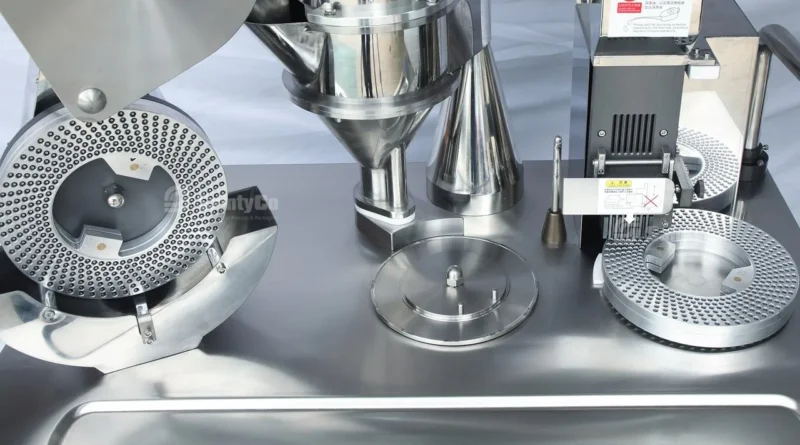
Semi Automatic Capsule Filling Machine Accuracy and Dosage Control Explained
In pharmaceutical manufacturing, accuracy in capsule filling is not just a technical requirement but a regulatory necessity. Even the smallest variation in dosage can impact product effectiveness, patient safety, and compliance with industry standards. For this reason, manufacturers rely on advanced equipment that ensures precision and repeatability in every production batch.
A modern semi automatic capsule filling machine plays a vital role in achieving controlled and consistent dosing. It combines mechanical precision with operator supervision to deliver reliable capsule filling performance, making it a preferred choice for many pharmaceutical and nutraceutical producers.
Why Dosage Accuracy Matters in Capsule Production
Dosage accuracy directly affects the quality and safety of pharmaceutical products. Inconsistent filling can lead to underdosed or overdosed capsules, both of which are unacceptable in regulated industries.
Maintaining precision is important for:
- Ensuring therapeutic effectiveness of medicines
- Meeting strict regulatory standards
- Reducing product rejection rates
- Maintaining brand trust and reputation
Because of these factors, dosage control is one of the most critical performance indicators in capsule manufacturing.
How Semi Automatic Systems Ensure Precision
Semi-automatic capsule filling machines are designed with mechanisms that help control the exact amount of powder or granules filled into each capsule. Unlike fully manual methods, these machines reduce human error and improve consistency.
Key features that support accuracy include:
- Adjustable dosing trays for controlled filling
- Uniform powder distribution systems
- Mechanical alignment of capsule bodies
- Calibrated filling depth settings
These elements work together to ensure that each capsule receives a consistent dose throughout the production cycle.
Role of Powder Characteristics in Dosage Control
While machine design plays a major role in accuracy, the physical properties of the powder also significantly impact filling performance. Factors such as flowability, density, and particle size can affect how evenly material is distributed.
To improve dosage consistency, manufacturers often:
- Use properly granulated powders for better flow
- Maintain uniform particle size distribution
- Control moisture levels in raw materials
- Employ pre-sieving techniques to avoid clumping
When powder quality is optimized, the machine performs more efficiently and delivers better filling accuracy.
Operator Influence on Filling Accuracy
Although semi-automatic systems reduce manual intervention, operator skill still plays an important role in ensuring dosage precision. Proper setup and monitoring are essential for consistent results.
Operators must focus on:
- Correct machine calibration before production
- Proper adjustment of dosing parameters
- Continuous monitoring during operation
- Regular sampling and weight checks
Even minor adjustments during production can help maintain uniform capsule weight and prevent deviations.
Calibration and Setting Adjustments
Calibration is a key process that directly influences dosage accuracy. Semi-automatic capsule filling systems allow operators to adjust filling depth and powder compression based on formulation requirements.
Important calibration steps include:
- Setting accurate dosing plate positions
- Adjusting compression levels for different powders
- Running trial batches before full production
- Verifying capsule weight consistency
Proper calibration ensures that the machine maintains stable output across long production runs.
Reducing Variation in Capsule Weight
One of the main challenges in capsule production is minimizing weight variation between individual capsules. Even slight inconsistencies can affect product quality and regulatory compliance.
To reduce variation, manufacturers should:
- Maintain steady powder feed during operation
- Avoid vibration or uneven machine placement
- Regularly clean dosing components
- Conduct frequent in-process quality checks
These measures help maintain uniformity and improve overall production reliability.
Importance of Routine Quality Checks
Continuous quality monitoring is essential for maintaining dosage control. Regular sampling during production allows operators to detect and correct variations early.
Common quality control practices include:
- Periodic capsule weight testing
- Visual inspection of filled capsules
- Monitoring machine performance indicators
- Recording batch consistency data
This proactive approach ensures that production remains within acceptable tolerance levels.
Conclusion
Dosage accuracy is a fundamental requirement in capsule manufacturing, directly impacting product safety and effectiveness. With the right equipment and proper operational practices, manufacturers can achieve highly consistent results.
A well-calibrated semi-automatic system offers an effective balance of control and efficiency, ensuring precise filling with minimal variation. By focusing on powder quality, operator training, and routine calibration, manufacturers can maintain high standards of accuracy and produce reliable pharmaceutical products at scale.