
PETG Film Manufacturing Process: From Raw Material to Finished Product
Introduction
PETG film is a widely used thermoplastic material valued for its clarity, toughness, and ease of processing. It plays an important role in packaging, medical applications, and industrial manufacturing due to its balance of performance and versatility. Understanding how it is produced helps explain why it delivers consistent quality and reliability across different applications.
The production of PETG film involves carefully controlled steps that transform raw polymer resins into a uniform, high-performance film. Each stage of the process contributes to the final material’s optical clarity, mechanical strength, and thermoforming ability. In many industries, PETG film is selected because its manufacturing process allows for precise control over thickness, transparency, and flexibility.
Raw Material Selection and Preparation
The manufacturing process begins with the selection of high-quality PETG resin. PETG is a glycol-modified version of polyethylene terephthalate, which improves flexibility and impact resistance compared to standard PET. The raw material is usually supplied in pellet form and must meet strict quality standards to ensure consistent film performance.
Before processing, the resin is dried thoroughly to remove moisture. This step is critical because excess moisture can lead to defects such as bubbles, reduced clarity, or weakened mechanical properties during extrusion. Proper drying ensures that the material maintains stability throughout the production cycle.
Extrusion Process
The core stage of PETG film production is extrusion. In this process, dried PETG pellets are fed into an extruder where they are melted under controlled temperature and pressure conditions. The molten polymer is then forced through a flat die to form a continuous sheet of film.
Temperature control is essential during extrusion. If the temperature is too high, the material may degrade; if too low, it may not flow properly. Manufacturers carefully balance these conditions to achieve a smooth and uniform melt.
After exiting the die, the molten sheet is rapidly cooled using chilled rollers. This cooling process solidifies the film and locks in its optical clarity and structural properties. The speed and temperature of cooling significantly influence the final appearance and thickness consistency of the film.
Calendering and Thickness Control
Once the film is formed, it may pass through calendering rollers to refine thickness and improve surface quality. These rollers apply controlled pressure to ensure the film remains uniform across its entire width.
Thickness control is a critical quality parameter in PETG film production. Even slight variations can affect performance in downstream applications such as thermoforming or printing. Advanced manufacturing systems use automated monitoring tools to maintain precise dimensional accuracy throughout the process.
Surface Treatment and Functional Enhancement
Depending on the intended application, PETG film may undergo surface treatment processes to improve adhesion, printability, or durability. Common treatments include corona discharge or chemical coating, which modify the surface energy of the film.
These treatments allow inks, adhesives, and coatings to bond more effectively to the material. This is particularly important for packaging and graphic applications where high-quality printing is required.
In some cases, additional layers or coatings may be applied to enhance properties such as scratch resistance, UV protection, or chemical resistance. These modifications expand the usability of PETG film in specialized environments.
Cutting, Rolling, and Packaging
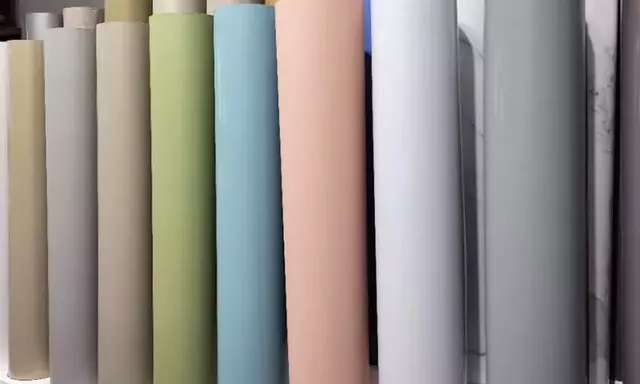
After processing and surface treatment, the PETG film is cut into specific widths and wound into rolls for shipment. The winding process must be carefully controlled to avoid tension inconsistencies that could lead to deformation or surface damage.
Rolls are then inspected for defects such as bubbles, scratches, or thickness variations. Quality control is a vital part of the manufacturing process, ensuring that only high-grade material reaches end users.
Once approved, the finished rolls are packaged in protective materials to prevent contamination and mechanical damage during transportation and storage.
Quality Control and Testing
Quality assurance is integrated throughout the PETG film manufacturing process. Tests are conducted to evaluate optical clarity, tensile strength, impact resistance, and dimensional stability. These tests ensure that the material meets industry standards and performs reliably in real-world applications.
Manufacturers also test the film’s thermoforming behavior, ensuring it can be shaped without cracking or losing transparency. Chemical resistance and surface energy tests may also be performed depending on the application requirements.
Conclusion
The manufacturing process of PETG film involves a series of carefully controlled steps, from raw material preparation to final quality inspection. Each stage plays a crucial role in determining the film’s clarity, strength, and performance characteristics. With its precise production process and adaptable properties, PETG film continues to be a reliable material for packaging, medical, and industrial applications where consistency and quality are essential.


