
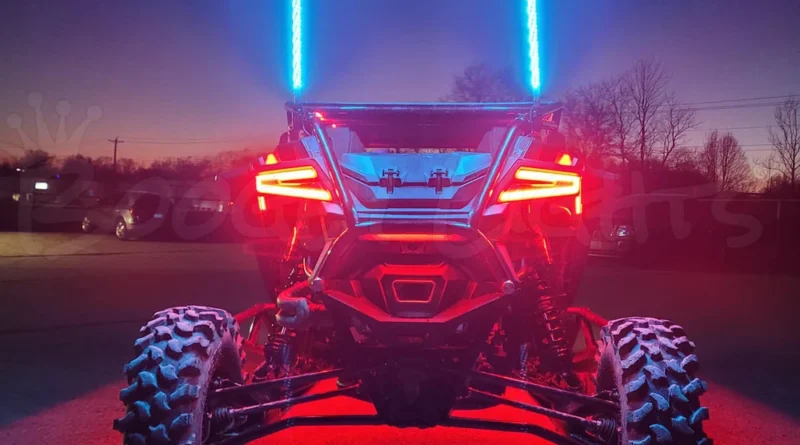
How LED Whip Lights Improve Vehicle Visibility During Off-Road Driving
Off-road driving often takes place in environments where visibility can change quickly. Dust, darkness, uneven terrain, vegetation, and groups of vehicles can make it harder to identify nearby vehicles. For recreational riders and off-road enthusiasts, making a vehicle more noticeable can therefore be an important part of vehicle preparation.
An LED Whip Light can provide a highly visible lighting point above the vehicle. Mounted on a flexible whip or pole, it can help other drivers identify the vehicle’s position, particularly in areas where terrain or dust makes lower-mounted lighting difficult to see.
What Is an LED Whip Light?
An LED whip light is an illuminated flexible antenna-style accessory designed to make an off-road vehicle more visible. It typically combines a flexible mounting pole with LED lighting elements and is commonly installed on vehicles such as ATVs, UTVs, side-by-sides, and off-road trucks.
Unlike conventional vehicle lights that are mounted close to the body, whip lights extend upward. This elevated position can make the light easier to see across uneven terrain or from a greater distance.
Why Visibility Matters Off the Road
Off-road environments can be very different from paved roads. Trails may contain sharp turns, hills, obstacles, loose surfaces, and areas with limited lighting.
When several vehicles are traveling together, identifying where other vehicles are located becomes particularly important. An elevated light source can provide an additional visual reference that helps distinguish one vehicle from another.
Whip lights are not a replacement for headlights or other required vehicle lighting. Instead, they can complement the vehicle’s existing lighting setup.
How LED Whip Lights Improve Visibility
Elevated Light Position
The height of a whip light is one of its most useful characteristics.
Because the light is positioned above the vehicle, it may remain visible when the lower portion of the vehicle is hidden behind terrain, vegetation, or other obstacles. This can be especially useful on trails with hills and uneven surfaces.
High-Visibility Illumination
LED technology allows whip lights to produce bright illumination while generally requiring relatively little electrical power compared with older lighting technologies.
Depending on the design, a whip light may provide steady illumination, multiple lighting modes, or other visual effects intended for off-road use.
Easier Vehicle Identification
When multiple vehicles are traveling together, individual lighting accessories can help riders distinguish vehicles from one another.
Different colors or lighting patterns may be used for identification where permitted and appropriate. Users should always check local regulations and trail requirements before selecting or operating particular lighting modes.
Benefits for Group Off-Road Driving
Group rides can create unique visibility challenges. Vehicles may become separated by turns, hills, dust, or changing trail conditions.
An elevated whip light can provide a visible reference point for other members of the group. This can make it easier to recognize a vehicle’s location when its body or lower lighting is partially obscured.
The benefit can be particularly noticeable during evening rides or in environments with reduced natural visibility.
LED Efficiency and Durability
LEDs are widely used in automotive and recreational lighting because of their efficiency and long operating life.
A properly designed off-road LED light should also be able to withstand the conditions associated with its intended application. Off-road vehicles may experience vibration, impacts, dust, mud, moisture, and temperature changes.
When choosing a whip light, users should examine the manufacturer’s specifications for durability and environmental resistance rather than assuming that every LED product offers the same level of protection.
Common Applications
LED whip lights are used across several types of recreational and off-road vehicles.
ATVs and UTVs
These vehicles frequently travel over uneven trails where an elevated lighting point can make the vehicle easier to identify.
Side-by-Sides
Side-by-side vehicles are often used for recreational riding, trail exploration, and utility applications. A whip light can add a visible marker above the vehicle.
Off-Road Trucks
Trucks used for recreational off-roading can also incorporate whip lights as part of a broader visibility and accessory lighting setup.
Sand and Desert Vehicles
Open terrain can create long sightlines, but dust clouds can make nearby vehicles difficult to identify. An elevated light may provide an additional visual reference in these conditions.
What to Consider When Choosing an LED Whip Light
Not all whip lights have the same specifications. Before choosing one, consider the vehicle and environment where it will be used.
Important factors include:
- Overall whip length
- LED brightness and visibility
- Lighting modes
- Mounting method
- Flexibility and impact resistance
- Weather resistance
- Power requirements
- Wiring and switch compatibility
- Replacement parts and maintenance
The appropriate specifications will depend on the vehicle, intended use, and local requirements.
Installation and Electrical Considerations
A whip light needs a secure mounting point and an appropriate electrical connection.
The mounting system should be compatible with the vehicle and capable of handling vibration and movement during off-road use. Wiring should also be routed carefully to protect it from abrasion, heat, moving components, and moisture.
Before installation, check the product’s voltage and current requirements against the vehicle’s electrical system. Proper fusing and circuit protection should also be considered.
Visibility Does Not Replace Safe Driving
Additional lighting can improve vehicle visibility, but it does not eliminate the need for safe off-road practices.
Drivers should maintain appropriate distances, communicate with other members of their group, use suitable lighting for the conditions, and follow trail-specific rules.
It is also important to avoid using lighting patterns or colors that could be confused with emergency or regulated signals.
Maintaining an LED Whip Light
Regular inspection can help keep an off-road lighting accessory functioning properly.
After riding in muddy or dusty conditions, check the light and mounting hardware for contamination or damage. Inspect the wiring and connections periodically, particularly if the vehicle is frequently exposed to water, vibration, or rough terrain.
Any damaged wiring, loose mounting hardware, or malfunctioning components should be addressed before the next ride.
Final Thoughts
An LED whip light can add an elevated source of illumination that helps make an off-road vehicle more noticeable. Its height, LED technology, and flexible mounting design make it particularly useful for ATVs, UTVs, side-by-sides, trucks, and other recreational vehicles.
For the best results, vehicle owners should choose a product suited to their environment, install it securely, protect the electrical connections, and use it alongside responsible off-road driving practices. A well-planned visibility setup can make it easier for riders to identify one another while navigating challenging terrain.