
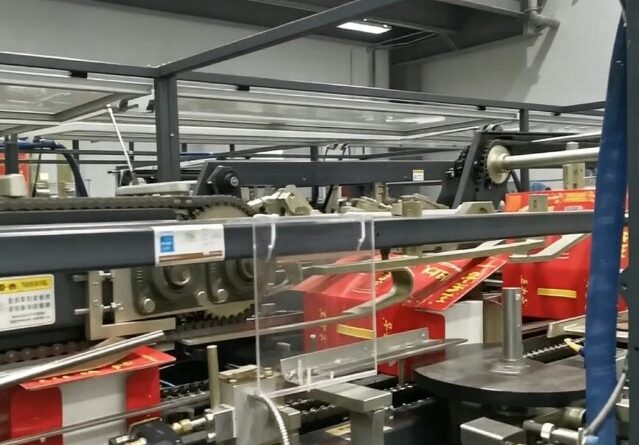
How Can a Wrap Around Packer Reduce Manual Packing Work?
Manual case packing, irrespective of wrap around packer, often requires workers to repeat the same physical tasks throughout an entire production shift. Product grouping, cardboard positioning, folding, and sealing may seem simple individually, but together they consume considerable time as production volumes grow.
A wrap around packer automates these repetitive steps by organizing products and forming corrugated cases around them. This allows manufacturers to reduce the amount of hands-on packing work while keeping product movement and case formation under controlled machine operation.
Which Packing Tasks Can Automation Handle?
A typical manual packing process may involve several separate actions. Workers might collect products, arrange them into a case pattern, prepare cardboard, fold panels, apply adhesive, and close the finished package.
An automated system brings many of these activities into one coordinated process. The machine controls product movement and case formation according to programmed settings.
This reduces the number of manual actions required for every completed case.
Product Grouping Without Constant Manual Handling
Products need to reach the case in a specific arrangement. With manual packing, workers may repeatedly count and position products before placing them into each case.
Automated grouping systems use conveyors, guides, and timing controls to create predetermined product patterns. Once the required group forms, the machine transfers it toward the case-forming section.
Operators no longer need to perform every grouping movement by hand.
Automated Cardboard Handling
Preparing a case manually requires workers to handle individual cardboard pieces. They may need to retrieve blanks, position them correctly, and prepare them for product loading.
The automated system stores flat corrugated blanks in a magazine and feeds them into the packing cycle as required.
This saves handling time and helps maintain a steady supply of packaging material during production.
Machine-Controlled Folding
Folding cardboard around products can become tiring when workers repeat the task hundreds or thousands of times.
Automated folding mechanisms guide each panel into position as the cardboard wraps around the product group. The machine repeats the same sequence throughout the production run.
This reduces the physical workload associated with repetitive folding while helping maintain consistent case formation.
Automated Sealing
Sealing represents another repetitive task that automation can take over. Depending on the machine configuration, the system applies adhesive to selected areas and brings the relevant panels together.
The machine controls the timing and movement involved in the sealing process.
Workers therefore spend less time manually closing cases and more time supervising the overall packaging operation.
Fewer Workers Needed for Repetitive Tasks
Automation does not necessarily mean removing people from the packaging line. Instead, it changes how employees contribute to production.
Rather than having several workers perform individual packing movements, a smaller team may supervise the automated process and handle tasks such as:
- Machine monitoring
- Material replenishment
- Quality inspection
- Routine adjustments
- Production reporting
The actual labor reduction depends on the previous packing method, production volume, machine configuration, and level of automation.
Reducing Physical Fatigue
Repetitive packing can place physical demands on workers, particularly when products or cases require frequent lifting, reaching, bending, or folding.
Moving these repetitive movements to automated equipment can reduce the amount of manual physical effort required during production.
Workers can focus more on monitoring and quality-related activities rather than repeating the same packing motion throughout a shift.
Maintaining Consistent Workflows
Manual packing speed can vary throughout a production shift. Fatigue, breaks, staffing changes, and differences in working methods may affect the rate at which cases leave the packing area.
An automated system follows a defined operating sequence. When products and packaging materials enter the machine correctly, the process can maintain a more predictable rhythm.
This helps manufacturers plan production around a more consistent packaging workflow.
Reducing Packing Bottlenecks
A packaging station that depends heavily on manual work may struggle when upstream production increases.
For example, a filling or processing machine may produce products faster than workers can group and pack them. Products then accumulate before the packing area.
Automating case packing can increase the capacity of this stage and help maintain better synchronization with upstream equipment.
Less Product Repositioning by Hand
Product alignment matters when several units need to fit inside one case. Manual packing requires workers to position products correctly before closing the package.
Automated conveyors and guides control product movement and help create repeatable arrangements.
This reduces the need for operators to repeatedly reposition individual products during every packing cycle.
Fewer Repetitive Packing Errors
Human involvement remains important for quality control, but repetitive manual actions can lead to occasional mistakes. Products may become misaligned, cases may receive inconsistent folds, or sealing may vary.
Automated equipment uses programmed movements and controlled settings for each cycle. This can reduce variations associated with repetitive manual operations.
Manufacturers should still use appropriate inspection and monitoring procedures to maintain packaging quality.
How Automation Changes the Operator’s Role
Automation does not remove the need for skilled employees. Instead, operators generally shift from direct packing tasks toward machine supervision.
An operator may monitor product flow, check case quality, replenish cardboard blanks, adjust settings, and respond to machine alerts.
This approach allows employees to oversee a larger part of the process instead of focusing on one repetitive activity.
When Does Manual Labor Become a Bottleneck?
The need for automation often becomes clearer as production volumes increase. A packing method that works well for a small operation may become inefficient when the number of cases rises significantly.
Manufacturers should look at the time employees spend on each case and multiply that workload across the production shift.
Useful measurements include:
- Cases packed per hour
- Number of employees assigned to packing
- Average time spent on each case
- Manual handling steps
- Packing-related downtime
- Rejected or incorrectly formed cases
These figures help manufacturers determine whether automation could provide a meaningful improvement.
What Should Manufacturers Consider Before Automating?
The right equipment depends on more than the desire to reduce labor. Manufacturers should examine the products, packaging materials, case formats, and production targets involved.
Important considerations include product dimensions, product arrangement, case size, cardboard specifications, required output, changeover frequency, and available floor space.
A machine that matches the application can reduce manual work without creating new operational challenges.
How Techflow Pack Supports Automated Packing
Techflow Pack provides packaging machinery for manufacturers looking to automate case packing operations. The appropriate setup depends on the products being handled and the requirements of the production line.
Manufacturers should share information about product sizes, case configurations, production rates, packaging materials, and existing equipment when evaluating a solution.
Techflow Pack can use these application details to help determine an appropriate approach to reducing repetitive packing work while maintaining reliable production.
Is Automation Worth It for Every Manufacturer?
Not necessarily. Businesses with low production volumes, highly variable products, or frequent packaging changes may have different priorities.
Automation tends to offer greater value when repetitive packing consumes substantial labor time, production volumes continue to grow, or manual operations create bottlenecks.
Manufacturers should compare the expected labor and productivity improvements with equipment, installation, maintenance, and integration costs before making a decision.
Final Thoughts
A wrap around packing system can reduce manual packing work by automating product grouping, cardboard feeding, folding, and sealing. These functions remove many repetitive movements from the operator’s daily workload.
The biggest benefit comes when the equipment matches the production requirements. Manufacturers should assess their current labor demands, packaging workflow, product formats, and future production plans before investing.
With the right setup, automation can shift employees away from repetitive case packing and toward machine supervision, quality control, and other tasks that support the wider production operation.