
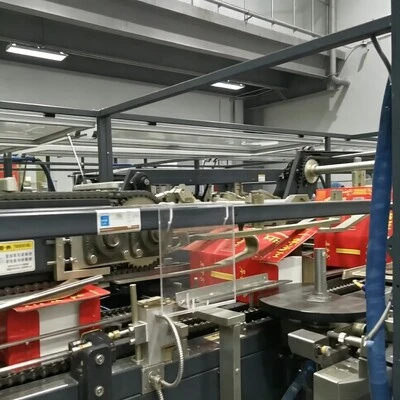
How a Wrap Around Case Packer Reduces Labor Costs and Packaging Waste
Manufacturers are constantly looking for ways to control operating expenses while improving production efficiency. Packaging is an important part of this process because it involves labor, materials, equipment, and time. When carton packaging relies heavily on manual operations, businesses may experience higher labor costs, inconsistent material usage, and unnecessary production delays.
Automation provides an opportunity to address these challenges. A Wrap Around Case Packer automates the process of grouping products, forming corrugated cartons, and sealing finished cases. By combining these operations into a coordinated system, manufacturers can reduce repetitive manual tasks, improve packaging consistency, and manage material consumption more effectively.
Understanding the Role of Automated Case Packing
A wrap-around case packing machine uses flat corrugated cardboard blanks to create shipping cases around grouped products. Unlike traditional packaging methods that require pre-assembled cartons, this system folds the cardboard directly around the products before sealing the finished case.
The process generally involves product feeding, grouping, blank positioning, carton folding, and sealing. Each stage is coordinated to maintain a continuous packaging workflow.
This approach is particularly useful for manufacturing facilities that handle large product volumes and need consistent carton packaging throughout their production shifts.
How a Wrap-Around Case Packer Reduces Labor Costs
Labor expenses can become significant when packaging operations involve repetitive manual activities. Automated case packing helps reduce these requirements by performing several tasks mechanically.
1. Automates Repetitive Packaging Activities
Manual carton packaging often requires employees to fold cardboard, prepare boxes, arrange products, load cases, and seal packages. These activities consume time and require continuous labor throughout production shifts.
An automated system performs these tasks through synchronized mechanical operations. This reduces the number of manual steps involved in preparing finished shipping cases.
Employees can instead concentrate on supervising machinery, monitoring packaging quality, replenishing materials, and managing production activities.
2. Reduces the Need for Manual Carton Assembly
Traditional packaging processes frequently involve assembling cartons before products can be loaded. This creates additional work, especially when production volumes are high.
Wrap-around systems use flat cardboard blanks and form cases directly around product groups. Since carton formation takes place within the machine, separate manual box assembly is generally unnecessary.
This simplifies the packaging workflow and reduces the labor associated with preparing empty cartons.
3. Improves Employee Productivity
Automating routine packaging activities allows manufacturers to use their workforce more efficiently.
Instead of assigning employees to repetitive folding and loading tasks, businesses can allocate staff to quality control, equipment monitoring, material management, and other responsibilities.
This can improve overall workforce productivity without necessarily requiring an increase in employee numbers as production demand grows.
4. Minimizes Labor-Related Production Delays
Manual packaging operations can slow down when employees need breaks, when staffing levels change, or when production volumes increase unexpectedly.
Automated machinery helps maintain a more consistent operating rhythm by performing packaging operations according to programmed sequences.
Although operators are still required for supervision and maintenance, automation can reduce the effect of repetitive manual activities on production continuity.
How Automated Case Packing Helps Reduce Packaging Waste
Packaging waste is another important concern for manufacturers. Unnecessary cardboard consumption, incorrect carton formation, and damaged packaging materials can increase operating expenses and create avoidable waste.
Automated case packing helps address these issues through more controlled packaging operations.
1. Efficient Use of Corrugated Cardboard
Wrap-around case packers use flat corrugated blanks that are folded around grouped products during the packaging cycle.
This method can help manufacturers select carton dimensions that closely match their product arrangements. Properly designed cases reduce the need for excessive cardboard while maintaining the required packaging structure.
The amount of material saved depends on product dimensions, carton design, and the corrugated board specifications.
2. Reduces Packaging Errors
Manual carton assembly can result in inconsistent folds, incorrect dimensions, and poorly positioned flaps. These problems may cause cartons to become unsuitable for transportation or require replacement.
Automated machines follow controlled folding and forming sequences, helping maintain more consistent carton quality.
Reducing packaging errors can lower the number of discarded cartons and minimize unnecessary material consumption.
3. Minimizes Damage During Carton Formation
Incorrect handling during manual packaging can damage cardboard blanks before they are used. Torn edges, bent panels, and damaged flaps may make cartons unsuitable for final packaging.
Automated feeding and folding mechanisms help standardize material handling throughout the process.
Proper machine adjustment and suitable cardboard quality are still necessary to prevent feeding and folding problems.
4. Reduces Storage and Handling Waste
Flat cardboard blanks generally require less storage space than pre-assembled cartons. This can improve warehouse organization and reduce the handling required before packaging.
Better material storage also helps manufacturers maintain a more organized supply of packaging materials near the production line.
5. Supports Better Packaging Standardization
Consistent carton dimensions and folding patterns make it easier to establish standardized packaging specifications.
Standardization helps manufacturers monitor cardboard consumption, identify material inefficiencies, and maintain more predictable packaging requirements across production batches.
Additional Operational Benefits of Automated Case Packing
Besides reducing labor expenses and packaging waste, automated case packing systems can provide several other operational advantages.
Improved Production Speed
Automated product grouping, carton formation, and sealing help reduce delays associated with manual packaging. This can increase packaging throughput when the machine is properly matched to production requirements.
Consistent Packaging Quality
Controlled machine operations help maintain uniform case dimensions, folding accuracy, and sealing quality. Consistency is important for protecting products during storage and transportation.
Better Warehouse Organization
Uniform shipping cases are easier to stack, arrange, and handle. Their standardized dimensions can also simplify pallet configuration and inventory management.
Reduced Repetitive Physical Work
Automating carton preparation and product loading reduces the need for employees to perform repetitive physical activities. This can support better workplace organization and reduce certain manual handling demands.
Industries That Can Benefit From Reduced Packaging Costs
Wrap-around case packing technology is suitable for several manufacturing industries where products are packed in grouped shipping cartons.
Food and Beverage Manufacturing
Food and beverage producers frequently package bottles, cans, jars, and cartons in corrugated shipping cases. Automated systems help maintain consistent packaging while supporting high production volumes.
Pharmaceutical Manufacturing
Pharmaceutical companies can use automated case packing for secondary packaging of individually packaged products. Equipment selection should account for applicable product handling, hygiene, and regulatory requirements.
Household and Cleaning Products
Detergents, cleaning liquids, and other household products often require durable outer cartons. Automated packing can improve consistency and reduce repetitive manual packaging activities.
Personal Care and Consumer Goods
Manufacturers of shampoo, lotion, cosmetics, and other consumer products can benefit from standardized carton formation and more efficient material handling.
Factors That Influence Labor and Material Savings
The actual savings generated by automated packaging equipment depend on several operational conditions.
Manufacturers should evaluate the following factors:
- Production volume: Higher production volumes may provide more opportunities to benefit from automation.
- Current labor requirements: Facilities relying heavily on manual carton assembly may have greater potential to reduce repetitive labor.
- Carton design: Properly sized cases can help minimize unnecessary cardboard consumption.
- Product compatibility: Equipment must handle product dimensions and packaging configurations accurately.
- Machine utilization: Frequent downtime can reduce the financial benefits of automation.
- Material quality: Consistent corrugated blanks help prevent feeding errors and damaged packaging.
- Maintenance practices: Regular servicing helps maintain reliable machine performance and reduce unexpected interruptions.
Evaluating these factors helps businesses understand where automation can deliver measurable improvements.
Practical Ways to Maximize Packaging Efficiency
Installing automated equipment is only the first step toward reducing packaging costs. Manufacturers should also establish procedures that support efficient daily operations.
Some useful practices include:
- Monitor cardboard consumption to identify unnecessary material usage.
- Inspect corrugated blanks before feeding them into the machine.
- Adjust carton dimensions according to product specifications.
- Track packaging output and machine downtime regularly.
- Train operators to identify folding, feeding, and sealing problems.
- Schedule preventive maintenance to reduce unexpected equipment failures.
- Review labor allocation after automation to identify opportunities for better workforce utilization.
Monitoring these areas helps manufacturers maintain consistent packaging performance while controlling avoidable expenses.
Conclusion
A wrap-around case packing system can help manufacturers reduce labor costs and packaging waste by automating carton assembly, product grouping, and sealing. Its use of flat corrugated blanks, controlled folding operations, and consistent case formation can simplify packaging workflows while supporting more efficient material management.
However, the financial benefits depend on production volume, equipment utilization, carton design, and existing labor requirements. By selecting suitable machinery and maintaining it properly, manufacturers can improve packaging consistency, reduce repetitive work, and establish more cost-efficient production operations.


