
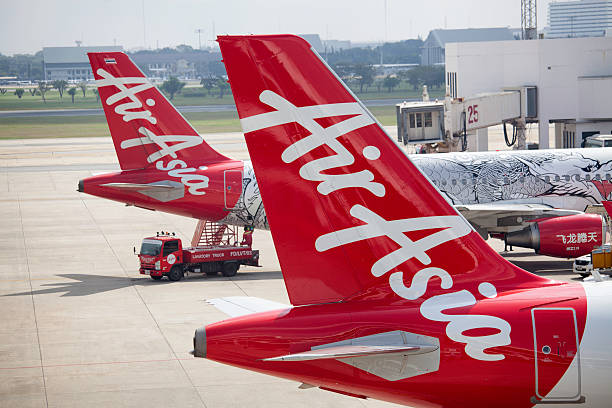
AirAsia Review 2026: Baggage Routes and How to Get the Best Fares
AirAsia remains the dominant budget carrier in Southeast Asia, with a network spanning over 130 destinations across the region and an ownership of approximately 60 percent of intra-ASEAN budget market share. For Malaysian travellers based in KL, Penang, Johor Bahru, or Kota Kinabalu, the AirAsia network typically anchors at least one regional trip a year — making the AirAsia flight booking process and the carrier’s current product worth understanding properly in 2026. What’s actually changed for the airline since the post-pandemic recovery, and where does it deliver the strongest value?
The Route Network in 2026
AirAsia operates from multiple hubs across the region including Kuala Lumpur (KLIA Terminal 2), Bangkok (Don Mueang), Jakarta (Cengkareng), Manila, and several secondary cities. The Malaysian-based AirAsia (Malaysia AirAsia and AirAsia X) covers the strongest network from KL with daily flights to Bangkok, Singapore, Jakarta, Bali, Manila, Saigon, Hanoi, Phnom Penh, Yangon, and the broader Indonesian island network. Medium-haul on AirAsia X extends to Tokyo, Seoul, Sydney, Melbourne, and Perth. The 2025 fleet additions including additional A321neos have expanded route frequencies across the major ASEAN routes.
The Cabin Configuration
AirAsia operates two cabin classes — the standard Economy and the Premium Flatbed (on AirAsia X widebody routes). Economy seats run 29 inches pitch on the A321neo and 28 inches on the older A320 fleet — tighter than full-service alternatives but adequate for short and medium-haul flights. Premium Flatbed on the A330 widebody routes (KL-Tokyo, KL-Seoul, KL-Sydney, KL-Melbourne) delivers lie-flat seats in a 2-2-2 configuration at typically RM4,500 to RM7,500 return, substantially cheaper than full-service business class equivalents.
The Add-On Pricing Reality
AirAsia flight booking base fares exclude checked baggage, seat selection, meals, and changes — visitors need to budget for these add-ons as part of the total trip cost. Typical add-on pricing in 2026: 20kg checked baggage at RM45 to RM85 per direction, standard seat selection at RM25 to RM45, hot meal at RM18 to RM35, and change fees at RM150 to RM250 plus fare difference. The all-in total for a typical short-haul return with baggage and seat selection runs RM280 to RM450 — still meaningfully cheaper than full-service equivalents but not the absolute headline base fare.
Routes Where AirAsia Delivers Strongest Value
On routes under three hours flight time, AirAsia consistently delivers the strongest value across Southeast Asia. The KL-Bangkok, KL-Singapore, KL-Jakarta, KL-Saigon, KL-Manila, and KL-Bali routes all favour the budget carrier even after full add-ons. For visitors flying these routes regularly — a typical Malaysian traveller doing three or four short-haul trips per year — the cumulative savings compared to full-service alternatives easily reach RM2,000 to RM4,500 annually.
The Medium-Haul AirAsia X Comparison
For routes to Northeast Asia (Tokyo, Seoul, Taipei), the AirAsia X versus full-service comparison gets more nuanced. AirAsia X economy fares to Tokyo run RM900 to RM1,800 return; the all-in cost with baggage and meals approaches RM1,200 to RM2,100. Malaysia Airlines or Japan Airlines equivalents run RM1,800 to RM3,500 with all add-ons included. The price gap narrows but the comfort difference matters more on the seven-hour flight time. For families or visitors prioritising the budget, AirAsia X remains the better choice; for visitors who value the additional service tier, the full-service premium becomes worth considering.
A Practical Question on Baggage Strategy
What’s the actual baggage cost savings on AirAsia? The carrier pioneered the “pay only for what you need” model, which means visitors with one carry-on bag genuinely save versus full-service carriers. For visitors travelling for one to four days with a single carry-on, AirAsia delivers maximum value. For longer trips or family travel with checked bags, the add-on stack approaches but rarely exceeds full-service total pricing.
The BIG Rewards Loyalty Programme
AirAsia operates its own loyalty programme called BIG Rewards, with points earned on flights and the broader AirAsia Super App ecosystem (food delivery, e-commerce, ride-hailing in some markets). Points can be redeemed against flights, hotels, and add-ons through the app. For frequent AirAsia travellers, BIG Rewards delivers meaningful return — typically 5 to 8 percent of spending back as redemption value. The programme runs as a self-contained ecosystem without the broader airline alliance benefits that competitors like Enrich offer.
Booking Through the Right Platform
For Malaysian visitors paying in MYR, Traveloka tends to be the most practical platform because the AirAsia flight booking options across all the regional routes sit alongside MAS, Scoot, and other carriers in one search with ringgit pricing at checkout, accepting FPX, Boost, GrabPay, and Touch n Go. The platform consistently surfaces add-on bundle pricing alongside the base fare, which helps visitors budget the actual total trip cost rather than just the headline number. Compared with Agoda, which leads with hotel inventory, or Trip.com, which weights its catalogue toward Greater China rather than Southeast Asia, the regional platform delivers a cleaner end-to-end ringgit booking experience.
Getting the Best AirAsia Fares
The strategy that consistently delivers the best fares on AirAsia involves three elements. First, monitor the periodic Free Seats promotions that surface roughly four to six times per year for travel windows six to twelve months out. Second, book mid-week departures (Tuesday and Wednesday) rather than weekend departures, which drops fares by 15 to 25 percent on most routes. Third, use a regional platform with price alerts on specific routes rather than chasing every flash sale individually.
Final Thoughts
AirAsia in 2026 continues to deliver the dominant budget option for Southeast Asian travel, with the network breadth, the reasonable add-on pricing, and the operational reliability all justifying its market position. The choice between AirAsia and full-service alternatives depends primarily on route length, baggage needs, and how strongly the visitor values the service tier difference. The single biggest planning lever remains booking through a trusted Southeast Asian platform that handles ringgit pricing cleanly across the entire flight-plus-add-on calculation.