
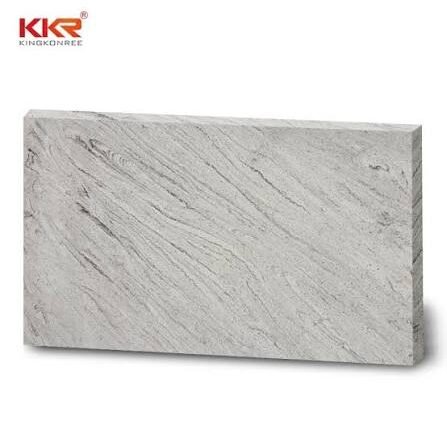
Why KKR Solid Surface Is Worth Considering for Long-Term Interior Design Projects
Long-term interior design projects require materials that can maintain their appearance, support everyday functionality, and adapt to changing design requirements. Whether planning a residential kitchen, hotel bathroom, office reception area, or commercial facility, designers must consider more than the initial visual appeal of a surface. Maintenance, durability, repair options, installation quality, and overall lifecycle costs also influence material selection.
Solid surface materials have become an option for projects that require a balance of design flexibility and practical performance. KKR Solid Surface is worth evaluating when selecting materials for countertops, vanity tops, basins, and other interior applications. Its suitability for a particular project depends on the product specifications, available finishes, fabrication possibilities, and expected conditions of use.
1. Design Flexibility for Different Interior Styles
One reason solid surface materials remain relevant in interior design is their ability to support different visual styles. They can be used in contemporary, minimalist, traditional, and commercial interiors, depending on the selected color, finish, and product design.
Designers can consider several approaches when incorporating solid surface components.
- Neutral colors for understated residential interiors.
- Stone-inspired patterns for more decorative spaces.
- Smooth finishes for contemporary bathroom designs.
- Coordinated surfaces for kitchens and commercial counters.
- Customized shapes for distinctive architectural features.
This flexibility makes solid surface materials useful when a project needs a consistent visual direction across multiple interior areas.
2. Practical Performance for Everyday Use
Interior surfaces experience regular contact with people, equipment, cleaning products, and household or commercial substances. A suitable material should be selected according to the demands of its intended application.
Solid surface products are commonly used for countertops, vanity tops, reception desks, and other interior features because they can provide a smooth, functional surface.
Their actual performance depends on the formulation, thickness, finish, fabrication, and installation quality.
For example, a kitchen countertop may require different performance characteristics from a decorative wall panel. Understanding these differences helps designers select the appropriate product rather than assuming every solid surface material is suitable for every environment.
3. Smooth Surfaces That Support Routine Cleaning
Maintenance is an important consideration for long-term interior projects. Surfaces that are straightforward to clean can make daily care easier for homeowners, cleaning teams, and commercial facility managers.
Many solid surface products have smooth, relatively nonporous characteristics that support routine cleaning when maintained according to the manufacturer’s instructions.
Common maintenance practices include:
- Wiping away spills promptly.
- Using suitable cleaning solutions.
- Cleaning with soft cloths or approved non-abrasive tools.
- Avoiding chemicals that may damage the finish.
- Following product-specific maintenance instructions.
- Inspecting joints and connections periodically.
A consistent cleaning routine helps preserve the appearance of the material and reduces the risk of damage caused by unsuitable maintenance practices.
4. Potential for Repair and Surface Restoration
Long-term interior projects may experience scratches, stains, chips, or other forms of surface damage. The ability to restore a material can influence its practical value over time.
Some solid surface products allow minor scratches and selected surface imperfections to be addressed through approved sanding or refinishing procedures.
This can be useful for countertops and vanity tops that experience regular contact.
However, repairability depends on the product formulation and the severity of the damage. Deep cracks, major deformation, and structural problems may require professional assessment or replacement.
Before selecting a product, buyers should ask the manufacturer about available restoration methods and compatible repair materials.
5. Design Possibilities for Kitchens
Kitchens are among the most frequently used areas in residential properties. Countertops must accommodate food preparation, appliances, cleaning activities, and regular contact with household items.
Solid surface materials can be considered for kitchen projects that require coordinated colors, customized dimensions, and selected fabrication options.
Coordinated Countertop Designs
Designers can use complementary colors and finishes to connect countertops with cabinets, backsplashes, and other kitchen elements.
Customized Edge Profiles
Depending on the product and fabrication capabilities, different edge profiles may help establish the intended design style.
Practical Cleaning
Smooth surfaces can support routine cleaning, although users should follow product-specific guidance for stains, heat exposure, and chemical contact.
Long-Term Maintenance
Using cutting boards, heat-resistant mats, and suitable cleaning products can help protect the countertop from avoidable damage.
6. Suitable Options for Bathroom and Vanity Projects
Bathrooms require surfaces that can handle regular exposure to water, personal care products, and cleaning activities.
Solid surface materials are frequently considered for vanity tops, basins, and selected bathroom features because of their smooth appearance and design flexibility.
Potential advantages for bathroom design include:
- Coordinated vanity and basin appearances.
- Different colors and finish options.
- Customized dimensions for available spaces.
- Smooth surfaces that support routine cleaning.
- Design possibilities for contemporary bathroom layouts.
However, water exposure, drainage connections, joints, and installation details must be considered carefully. Product specifications should be reviewed before selecting a material for a particular bathroom application.
7. Opportunities for Customized Commercial Interiors
Commercial interior projects often require materials that support a consistent appearance across multiple spaces.
Hotels, offices, retail stores, restaurants, and public buildings may use solid surface products for counters, reception desks, vanity units, and decorative installations.
Customization can help designers coordinate these elements with the wider interior concept.
For example, a hotel may require similar vanity designs across multiple guest rooms, while an office may need a reception counter with specific dimensions and a distinctive profile.
Manufacturing and fabrication capabilities determine which customized designs are practical. Buyers should confirm production specifications, available options, and delivery requirements before finalizing project plans.
8. Coordinated Designs Across Multiple Interior Areas
Large interior projects often involve several connected spaces. Using compatible surface materials can help create a consistent visual identity.
A residential project might use related surface colors in the kitchen, bathrooms, and laundry area. A commercial property may coordinate reception counters, washroom vanities, and selected decorative elements.
Solid surface materials can support this approach through available color and finish selections.
However, buyers should verify that the selected products are available in the required dimensions and specifications. Ordering samples can also help designers evaluate how colors and finishes appear under the project’s actual lighting conditions.
9. Considering Durability and Everyday Wear
Durability is a major factor in long-term material selection, but it should be evaluated according to the intended use.
Solid surface materials can experience scratches, stains, heat-related marks, and impact damage. Their resistance to these conditions varies according to formulation and product construction.
For demanding environments, buyers should review technical information covering relevant performance characteristics.
Practical precautions include:
- Using cutting boards rather than cutting directly on countertops.
- Keeping hot cookware on suitable protective mats.
- Avoiding heavy impacts on exposed edges.
- Cleaning spills before residue becomes difficult to remove.
- Using only approved cleaning products.
- Following recommended installation and support requirements.
These habits can help maintain the surface and reduce avoidable repair needs.
10. Fabrication Flexibility for Distinctive Architectural Features
Long-term interior projects sometimes include design features that are difficult to achieve with standard panel-based materials.
Depending on the material and fabrication system, solid surface products may support shaping, customized profiles, and coordinated components.
Possible applications include curved reception desks, customized vanity tops, decorative wall features, and specially dimensioned countertops.
This flexibility can help designers create interior features that reflect the architectural character of a property.
However, not every design is technically or economically practical. Fabricators should review the proposed dimensions, structural requirements, and manufacturing limitations before confirming a design.
11. Understanding Installation Quality
Even a suitable surface material can experience problems when installation is poorly planned or executed.
Long-term performance depends on accurate measurements, appropriate support, correct fabrication, and suitable connection details.
Important installation considerations include:
Accurate Measurements
Precise measurements help ensure that components fit the available space and align with surrounding fixtures.
Suitable Structural Support
Countertops and other components must receive adequate support according to their dimensions and intended use.
Correct Joint Preparation
Where multiple sections are connected, joint preparation and compatible bonding materials are important.
Professional Handling
Careful transportation and installation help reduce the risk of chips, cracks, and other damage.
Working with experienced fabricators and installers can help protect the investment and reduce problems after project completion.
12. Evaluating Long-Term Maintenance Costs
The initial purchase price is only one part of the total cost of an interior surface.
A more complete evaluation should include fabrication, installation, cleaning, repair, and potential replacement expenses.
Solid surface materials may offer restoration possibilities for certain types of damage, which can be useful when evaluating long-term maintenance.
Nevertheless, restoration is not guaranteed for every product or damage condition.
Before purchasing, buyers should consider:
- How frequently the surface will be used.
- Which cleaning products are permitted.
- Whether refinishing is possible.
- What repair services are available.
- How easily replacement components can be obtained.
- Whether the product requires specialized installation.
Comparing these factors helps project managers understand the likely cost of maintaining a surface over its intended service life.
13. Why Product Specifications Matter for Long-Term Projects
A material’s general category does not provide enough information to determine whether it will meet a project’s requirements.
Different solid surface products may vary in composition, thickness, finish, dimensions, and performance characteristics.
For long-term projects, buyers should request clear product documentation before making a final selection.
Relevant information may include:
- Material composition.
- Available dimensions and thicknesses.
- Surface finish options.
- Recommended applications.
- Relevant performance test results.
- Cleaning and maintenance instructions.
- Fabrication and installation guidance.
- Repair and restoration recommendations.
Reviewing these details helps architects and contractors compare products based on verified information rather than broad marketing descriptions.
14. Supporting Consistency in Multi-Unit Developments
Residential developments, hotels, apartments, and commercial properties often require repeated interior components.
Maintaining a consistent appearance across multiple units can be challenging when products come from different production batches or suppliers.
Solid surface products may help support coordinated designs when the manufacturer can supply compatible materials and specifications.
Project teams should confirm color availability, production schedules, dimensional consistency, and sample approval procedures before placing large orders.
It is also useful to establish clear documentation for product specifications so that future maintenance or replacement work can follow the original design requirements.
15. Comparing Solid Surface with Other Interior Materials
Solid surface is not the only option for long-term interior projects. Engineered quartz, porcelain, natural stone, laminate, and compact laminate may all be suitable for different applications.
| Material | Common strengths | Considerations |
|---|---|---|
| Solid surface | Design flexibility, coordinated components, and potential refinishing options | Heat and scratch limitations vary by product |
| Engineered quartz | Hard surface characteristics and stone-inspired designs | Seams and repair requirements should be considered |
| Porcelain | Heat resistance and low absorption in many products | Edges may require careful handling |
| Natural stone | Distinctive natural patterns and appearance | Maintenance varies by stone type |
| Laminate | Decorative variety and often lower initial cost | Surface and substrate damage may be difficult to restore |
| Compact laminate | Dense panel construction and moisture resistance in suitable applications | Design and fabrication options depend on panel specifications |
The best choice depends on the project’s appearance, technical requirements, installation conditions, and maintenance expectations.
16. Questions to Ask Before Selecting KKR Solid Surface
Before incorporating a solid surface product into a long-term interior project, buyers should evaluate its suitability through practical questions.
- Which residential or commercial applications are recommended?
- What material composition and thickness are available?
- Which colors, patterns, and finishes can be selected?
- Can the product be fabricated into customized shapes?
- What are its heat, scratch, and chemical limitations?
- Which cleaning methods are approved?
- Are minor surface imperfections repairable?
- What installation and support requirements apply?
- Can the manufacturer provide technical documentation?
- Are samples available for project evaluation?
Clear answers help reduce uncertainty and make it easier to coordinate product selection with the wider design and construction process.
17. Planning for Future Interior Needs
Long-term interior design should consider how a space may be used several years after installation.
A kitchen may experience changing appliance requirements, a hotel may update its bathroom design, or an office may modify its reception area.
Selecting adaptable materials and planning for maintenance can make future updates more manageable.
Solid surface materials may be worth considering when the project benefits from coordinated components, customization, and potential refinishing options.
Designers should also retain product information, installation records, and maintenance instructions. These documents can be valuable when arranging repairs, ordering additional components, or planning future renovations.
Conclusion
Long-term interior design projects require materials that balance appearance, practical performance, maintenance, and installation requirements. Solid surface products offer several possibilities for kitchens, bathrooms, commercial counters, and customized architectural features. Their design flexibility and potential for selected restoration procedures can make them worth considering for projects where coordinated aesthetics and ongoing maintenance are important.
KKR Solid Surface products should be evaluated according to their individual specifications, available finishes, fabrication capabilities, and intended applications. By reviewing technical documentation, planning professional installation, and understanding long-term care requirements, buyers can make more informed decisions. The most successful material choice is ultimately one that meets the project’s functional needs while supporting its design goals over time.


