
How Nylon Sleeves Provide Protection and Reduce Wear in Industrial Machinery
Industrial machinery relies on components that move, rotate, slide, and interact under repeated mechanical stress. Over time, friction, vibration, contamination, and environmental exposure can contribute to surface damage and premature equipment wear. Protective components are therefore essential for maintaining reliable operation and reducing maintenance requirements. Nylon sleeves are widely used in mechanical assemblies because they offer a combination of wear resistance, lightweight construction, and useful friction characteristics.
Choosing a suitable Nylon Sleeve can help protect shafts, guide moving components, and reduce direct contact between surfaces in selected industrial applications. These components are available in different dimensions, wall thicknesses, and material grades to accommodate various equipment designs. Understanding their properties and limitations helps engineers select sleeves that provide effective protection without compromising mechanical performance.
What Is a Nylon Sleeve?
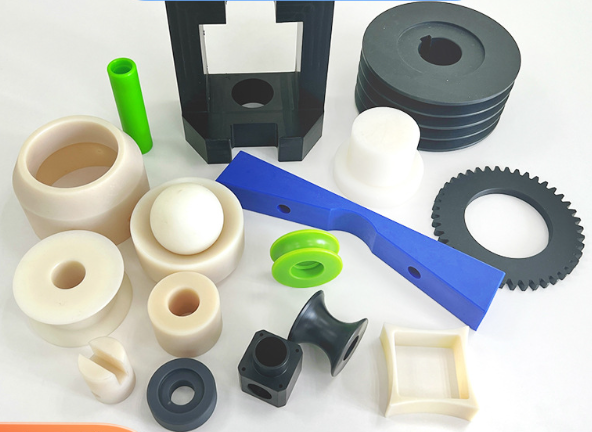
A nylon sleeve is a cylindrical component manufactured from nylon, an engineering thermoplastic known for its strength, toughness, and abrasion resistance. It is commonly installed around a shaft, inside a housing, or between moving components to provide a protective or guiding surface.
Depending on the design, a nylon sleeve may function as a spacer, bushing, wear liner, or protective covering. Its exact purpose depends on the equipment configuration and the mechanical forces acting on it.
Common characteristics include:
- Lightweight construction compared with many metal alternatives.
- Good abrasion resistance under suitable operating conditions.
- Relatively low friction characteristics.
- Resistance to rust and corrosion.
- Natural vibration-damping properties.
- Good machinability and manufacturing flexibility.
- Electrical insulation properties.
The performance of a nylon sleeve depends on the specific polymer grade, dimensions, applied load, operating speed, temperature, and surrounding environment.
1. Reducing Friction Between Moving Components
Friction is a major contributor to mechanical wear in industrial equipment. When two surfaces move against each other, repeated contact can generate heat and gradually damage the materials involved.
Nylon has relatively favorable friction characteristics in many applications. A properly designed sleeve can provide a smooth contact surface between moving components, helping reduce resistance and surface deterioration.
This can be useful in:
- Rotating shafts.
- Sliding mechanisms.
- Conveyor assemblies.
- Mechanical guide systems.
- Selected linear movement applications.
Actual friction performance depends on contact pressure, surface finish, speed, lubrication, and temperature. Nylon sleeves should be evaluated under the intended operating conditions rather than assumed to be suitable for every sliding or rotating application.
2. Protecting Shafts and Other Mechanical Surfaces
Industrial shafts can experience wear when exposed to repeated contact with bearings, housings, seals, or other components. Replacing or repairing damaged shafts can be expensive and may require significant equipment downtime.
A nylon sleeve can act as a protective layer between selected components. Instead of allowing direct contact with the underlying shaft or housing, the sleeve provides a replaceable contact surface.
Potential benefits include:
- Reducing direct surface contact.
- Helping protect components from abrasion.
- Limiting damage caused by repeated movement.
- Providing a replaceable wear surface.
- Supporting easier maintenance in suitable assemblies.
The sleeve must be correctly fitted and designed to withstand the forces generated during operation.
3. Lightweight Construction Supports Efficient Equipment Design
Nylon is considerably lighter than many metals commonly used in mechanical components. Replacing suitable metal sleeves with nylon alternatives can reduce the weight of an assembly.
This may be particularly useful in equipment with multiple moving parts, where reducing component mass can improve mechanical responsiveness.
Lightweight sleeves can also simplify handling during installation and replacement. In some machinery designs, they help manufacturers achieve compact assemblies without adding unnecessary weight.
However, weight reduction should never take priority over the required strength, stiffness, and dimensional stability.
4. Corrosion Resistance for Challenging Environments
Metal sleeves can be vulnerable to rust and corrosion when exposed to moisture or certain chemicals. Nylon does not rust, making it a practical option for selected environments where corrosion resistance is important.
Depending on the nylon grade, sleeves may also tolerate exposure to various oils, fuels, and industrial substances.
Applications may include:
- Agricultural machinery.
- Food-processing equipment components where the selected material is approved.
- Manufacturing systems.
- Warehousing equipment.
- Machinery exposed to occasional moisture.
Chemical compatibility must be checked before installation. Some substances can affect nylon, while moisture absorption may influence its dimensions and mechanical properties.
5. Vibration and Noise Reduction
Mechanical contact can produce noise and vibration, particularly in equipment with frequent movement or repeated component engagement.
Nylon has natural damping characteristics that can help absorb some vibration and reduce noise in suitable applications.
When used as a guide sleeve, spacer, or protective interface, it may help reduce the transmission of mechanical noise through an assembly.
The overall result depends on equipment alignment, mounting rigidity, operating speed, and the condition of surrounding components.
6. Electrical Insulation Properties
Unlike metal sleeves, nylon components are electrically insulating under appropriate conditions. This makes them useful in selected assemblies where electrical separation between components is required.
Potential applications include electrical enclosures, control equipment, and machinery containing conductive shafts or housings.
For safety-critical electrical applications, the specific material’s dielectric properties, dimensions, moisture exposure, and applicable standards must be verified. A general-purpose nylon sleeve should not automatically be considered a certified electrical insulation component.
Common Industrial Applications of Nylon Sleeves
Nylon sleeves serve different purposes across industrial sectors. Their design and material grade should match the requirements of each application.
| Industry | Typical Applications |
|---|---|
| Manufacturing | Shaft protection and mechanical guides |
| Automotive | Selected linkage and actuator assemblies |
| Agriculture | Protective sleeves in machinery and equipment |
| Material handling | Conveyor guides and moving mechanisms |
| Packaging | Sliding components and machine assemblies |
| Electrical equipment | Insulating sleeves and protective spacers |
| General engineering | Bushings, liners, and wear components |
In high-load or high-temperature machinery, engineers should compare nylon with alternative engineering plastics and metallic materials before making a final selection.
Nylon Sleeves Compared with Metal Sleeves
Both nylon and metal sleeves are used to protect and support mechanical components. Their different material properties make them suitable for different operating conditions.
| Factor | Nylon Sleeves | Metal Sleeves |
|---|---|---|
| Weight | Generally lightweight | Usually heavier |
| Corrosion resistance | Does not rust | Depends on metal and surface treatment |
| Friction | Favorable in many applications | Depends on material and surface finish |
| Noise and vibration | Can provide useful damping | May transmit more vibration |
| Electrical properties | Insulating under suitable conditions | Generally conductive |
| Load capacity | Limited by polymer properties and design | Often suitable for higher loads |
| Temperature resistance | Depends on nylon grade | Generally better at elevated temperatures |
| Moisture response | Can absorb moisture | Depends on metal |
Nylon sleeves are often suitable where low weight, corrosion resistance, and reduced contact noise are priorities. Metal sleeves may be preferable for very high loads, elevated temperatures, or applications requiring greater rigidity and dimensional stability.
Important Factors When Selecting a Nylon Sleeve
Choosing the right sleeve requires careful evaluation of the equipment’s mechanical and environmental conditions.
1. Dimensions and Fit
Check the inner diameter, outer diameter, wall thickness, and overall length. An incorrect fit can cause excessive movement, installation difficulties, or uneven loading.
For precision assemblies, consider dimensional tolerances and any expected changes caused by temperature or moisture absorption.
2. Load and Pressure
Determine the radial and axial forces acting on the sleeve. Excessive pressure can cause deformation, accelerated wear, or premature failure.
The selected material grade and sleeve geometry should be appropriate for the expected operating load.
3. Operating Speed
Rotating and sliding applications generate frictional heat. Higher speeds can increase temperature and wear, making it important to assess the sleeve’s pressure-velocity limitations where relevant.
4. Temperature Conditions
Nylon mechanical properties vary with temperature. Elevated temperatures may reduce stiffness and load-bearing capacity.
Check the manufacturer’s recommended operating range and consider heat generated through friction.
5. Moisture and Chemical Exposure
Some nylon grades absorb moisture, which can influence dimensions and mechanical properties. Chemical exposure may also affect performance.
Review the material’s compatibility with the surrounding environment before choosing a sleeve.
6. Installation and Maintenance Requirements
Consider whether the sleeve needs a press fit, clearance fit, or another mounting arrangement. Proper installation helps prevent deformation and uneven contact.
The design should also allow inspection or replacement when the sleeve functions as a wear component.
Manufacturing Quality and Customization
A nylon sleeve must meet precise dimensional requirements to perform reliably. Inconsistent wall thickness, poor surface finish, or inaccurate diameters can affect alignment and accelerate wear.
When evaluating a manufacturer, consider:
- Material grade and technical documentation.
- Dimensional accuracy and tolerance control.
- Surface finish and edge quality.
- Production consistency.
- Available standard sizes.
- Custom machining or molding capabilities.
- Quality inspection procedures.
Machining can be suitable for prototypes and specialized dimensions, while molding may be appropriate for larger production volumes and repeatable designs. The best process depends on the component’s geometry, required precision, and order quantity.
Maintenance Tips for Nylon Sleeves
Regular inspection helps identify wear and installation problems before they affect other machinery components.
Recommended practices include:
- Inspect sleeves for cracks, deformation, and excessive wear.
- Check for unusual noise or vibration.
- Monitor operating temperature during demanding cycles.
- Confirm that shafts and moving parts remain properly aligned.
- Remove accumulated dust and abrasive particles.
- Check for chemical or moisture-related deterioration.
- Replace sleeves that no longer meet dimensional or performance requirements.
- Follow manufacturer guidance for cleaning and lubrication.
Maintenance intervals should reflect the operating speed, load, environment, and importance of the equipment.
Conclusion
Nylon sleeves provide a practical way to protect mechanical surfaces and reduce wear in selected industrial applications. Their lightweight construction, abrasion resistance, corrosion resistance, and vibration-damping characteristics make them useful in machinery involving rotating shafts, sliding mechanisms, and moving assemblies.
However, nylon is not suitable for every mechanical environment. Load capacity, operating speed, temperature, moisture absorption, chemical compatibility, and dimensional stability must all be considered during selection. By matching the sleeve design and material grade to the application and working with a manufacturer that maintains consistent quality standards, businesses can improve equipment reliability and support more efficient maintenance.

