
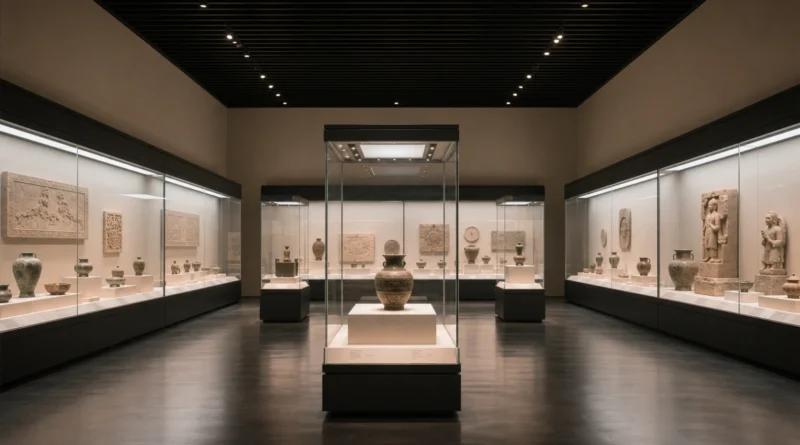
Key Principles of Effective Museum Showcase Design
A museum showcase does more than place an artifact behind glass. It creates the physical setting in which visitors observe, understand, and appreciate an object while helping protect it from environmental and physical risks.
Effective Museum Showcase Design brings together presentation, protection, accessibility, security, lighting, and practical maintenance. When these elements are considered together from the beginning, the finished display can better support both the artifact and the visitor experience.
Start With the Artifact
The artifact should be the starting point for showcase planning. Its size, weight, material, fragility, and conservation requirements can influence almost every design decision.
A small historical document may require different conditions from a large sculpture or archaeological object. Understanding these characteristics helps determine the appropriate enclosure, mounting, lighting, and environmental features.
Prioritize Artifact Protection
Protection should be built into the showcase rather than treated as an additional feature. The enclosure should help limit unwanted physical contact, dust, pollutants, excessive light, and other potential risks.
For particularly sensitive collections, the design may also need to support controlled humidity or other environmental measures.
Maintain Clear Visibility
The purpose of a showcase is ultimately to allow visitors to view the collection. Glazing should therefore provide clear visibility without unnecessarily distracting reflections or visual barriers.
The shape and height of the enclosure should also correspond with the viewing position of the intended audience.
Choose the Right Showcase Configuration
Different exhibition spaces call for different configurations. Freestanding cases, wall-mounted displays, table-style cases, upright enclosures, and larger panoramic systems can serve different purposes.
The choice should take into account gallery dimensions, visitor circulation, artifact characteristics, and the narrative of the exhibition.
Use Proportion Carefully
A showcase should have a balanced relationship with the artifact and surrounding gallery. An enclosure that is too large can make a small object appear insignificant, while one that is too compact may restrict viewing or future adjustments.
Proportion should therefore be considered alongside artifact dimensions, mounting requirements, and available floor or wall space.
Plan the Visitor Viewing Experience
Visitors should be able to approach the showcase comfortably and view the artifact from appropriate angles. Case height, glazing position, lighting, and surrounding circulation all affect how an object is perceived.
The design should also avoid creating unnecessary congestion in busy exhibition areas.
Integrate Appropriate Lighting
Lighting should reveal important details without creating excessive exposure or glare. Fixture placement, illumination intensity, color characteristics, and control systems should be considered during the showcase planning stage.
For light-sensitive materials, conservation guidelines should determine the appropriate exposure levels.
Consider Security From the Beginning
Locks, secure glazing, concealed hardware, controlled access, and stable construction can help protect valuable collections. Security features should be integrated into the overall enclosure instead of being added after the basic design has been finalized.
The level of security should reflect the artifact and the risks associated with its exhibition environment.
Support Environmental Stability
Certain artifacts require carefully managed temperature and humidity conditions. A showcase may be designed to support passive buffering, monitoring equipment, or active environmental-control systems when required.
The appropriate approach depends on the conservation needs of the collection and the conditions within the gallery.
Select Materials With Care
Materials used in the enclosure can affect durability, appearance, maintenance, and the environment around the artifact. Frames, panels, glazing, interior surfaces, seals, coatings, and mounting materials should therefore be selected according to the project’s requirements.
Sensitive collections may require additional review of materials used inside the enclosed space.
Design Effective Artifact Mounts
An artifact should remain stable while being displayed in a natural and visually appropriate position. Mounts and supports need to account for the object’s shape, weight, center of gravity, and conservation considerations.
Custom mounting solutions may be necessary for unusual or fragile objects.
Make Maintenance Practical
Even a carefully engineered showcase requires routine maintenance. Glass may need cleaning, lighting components may need servicing, and seals or hardware may eventually require inspection.
Designing accessible service points can allow staff to maintain the enclosure without unnecessary disruption to the exhibit.
Allow for Future Adjustments
Museum collections and exhibitions can change over time. A showcase that offers some flexibility can make future modifications easier.
Adjustable shelves, adaptable mounting points, replaceable components, or configurable lighting can be useful when exhibitions are expected to evolve.
Coordinate With the Gallery
A showcase should work as part of the complete exhibition rather than as an isolated object. Its dimensions, finishes, lighting, placement, and circulation requirements should complement the gallery environment.
Coordination with architects, exhibition designers, conservators, electricians, and installation teams can reduce conflicts during the later stages of a project.
Think About Installation Requirements
Transportation and installation should be considered before manufacturing begins. Large or specialized showcases may need to pass through particular doorways, elevators, corridors, or other access points.
Modular construction or carefully planned assembly can make delivery and installation more manageable when site conditions are restrictive.
Balance Appearance and Function
A museum showcase needs to look refined while performing its protective and practical functions. Excessive decorative elements can distract from an artifact, while an overly utilitarian appearance may not suit the exhibition concept.
A balanced approach keeps the object visually prominent while integrating necessary technical features discreetly.
Review the Complete Design
Before production, museums can review the proposed showcase against several questions:
- Does it provide suitable artifact protection?
- Is the object clearly visible?
- Is the viewing height appropriate?
- Are lighting levels suitable?
- Does the enclosure meet security requirements?
- Can environmental controls be incorporated if needed?
- Are interior materials appropriate?
- Can staff access the case safely?
- Is routine maintenance practical?
- Will the showcase fit the installation location?
A complete review can identify design issues before they become costly changes during manufacturing or installation.
Work With an Experienced Manufacturer
Once the requirements are established, choosing a manufacturer capable of translating them into a practical enclosure becomes important. Technical drawings, material specifications, fabrication capabilities, customization options, and communication processes should all be reviewed.
DG Display Showcase can be considered as part of this evaluation by examining how its capabilities align with the structural, conservation, security, and presentation requirements of the intended exhibition.
Final Thoughts
Effective museum showcase design balances several priorities at once. Artifact protection, visitor visibility, lighting, security, environmental stability, material selection, maintenance, and installation all influence the success of the finished display.
By treating the showcase as an integrated part of the exhibition rather than simply a container, museums can create displays that protect collections while presenting them clearly and thoughtfully to visitors.