
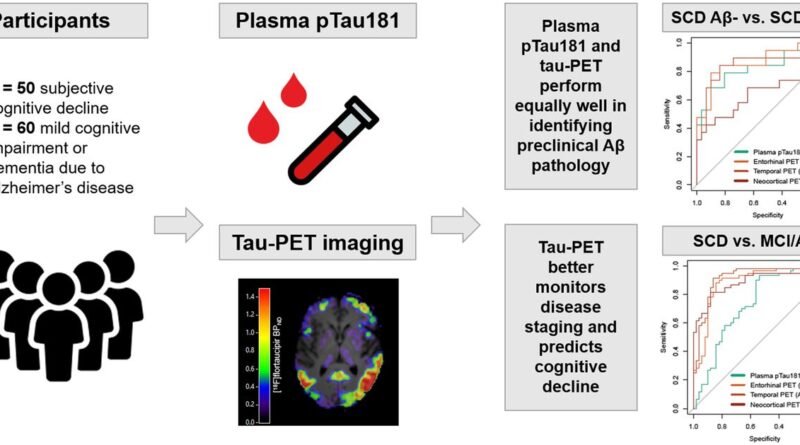
Improving p-tau 181 Detection: Factors That Influence Analytical Sensitivity and Specificity
Introduction
Phosphorylated tau at threonine 181, commonly known as p-tau 181, is an important biomarker in research investigating Alzheimer’s disease and other neurodegenerative conditions. Changes in p-tau 181 concentrations can provide insights into tau-related biological processes, making reliable measurement essential for studies exploring disease mechanisms, biomarker performance, and potential diagnostic approaches.
Achieving dependable results requires more than selecting an appropriate assay. Researchers must consider sample quality, antibody characteristics, analytical interference, calibration, and instrument performance. A well-designed approach to p-tau 181 detection can help laboratories evaluate these variables systematically, improve measurement consistency, and generate data suitable for meaningful comparisons across experiments.
Understanding Analytical Sensitivity and Specificity
Analytical sensitivity and specificity are two fundamental characteristics of an immunoassay, but they describe different aspects of performance.
Analytical sensitivity refers to an assay’s ability to measure low concentrations of its target analyte. It is particularly important when p-tau 181 is present at relatively low levels, as may occur in certain sample types or research populations. Sensitivity is commonly evaluated through parameters such as the limit of blank, limit of detection, and limit of quantification.
Analytical specificity describes how effectively an assay measures p-tau 181 without responding significantly to unrelated substances or structurally similar molecules. For phosphorylated tau measurements, this includes distinguishing the intended phosphorylation site from other tau forms and phosphorylation states.
Both characteristics influence the reliability of research findings. An assay with insufficient sensitivity may fail to quantify low-level samples accurately, while inadequate specificity can produce misleading measurements through cross-reactivity or interference.
Factors That Influence Analytical Sensitivity
Several technical and experimental variables determine how effectively an assay can measure low concentrations of p-tau 181.
1. Antibody Affinity and Recognition
Antibody selection is central to immunoassay performance. The capture and detection antibodies must recognize the intended target with suitable affinity and selectivity.
For p-tau 181 assays, antibody recognition should account for the phosphorylation site at threonine 181. Antibodies that do not adequately distinguish phosphorylated from non-phosphorylated tau may produce signals that do not accurately represent the intended biomarker.
Important considerations include:
- Binding affinity for the target analyte.
- Recognition of the intended phosphorylation site.
- Compatibility between capture and detection antibodies.
- Potential cross-reactivity with related tau species.
- Consistency between antibody production batches.
Careful antibody characterization helps establish a reliable foundation for sensitive and selective measurement.
2. Assay Design and Signal Generation
The design of an immunoassay affects how efficiently target molecules are captured and detected. Sandwich immunoassays, for example, use two antibodies that recognize different regions of the target molecule. This arrangement can improve selectivity when the antibody pair is appropriately validated.
Signal-generation chemistry also influences sensitivity. Chemiluminescence immunoassays produce measurable light through a chemical reaction, allowing instruments to quantify signals associated with target binding.
The overall performance depends on several interconnected factors, including reagent formulation, reaction conditions, incubation time, washing efficiency, and signal stability. Optimizing these elements can improve the ability to distinguish low-concentration samples from background signals.
3. Background Signal and Detection Limits
An assay’s background signal affects its ability to identify small amounts of p-tau 181. Even when the detection chemistry is highly responsive, excessive background noise can reduce the distinction between positive signals and blank measurements.
Researchers should evaluate:
- Blank sample responses.
- Signal-to-background ratios.
- Variation among replicate measurements.
- Detection limits under defined conditions.
- Stability of background signals across assay runs.
The limit of detection indicates the lowest concentration that can be distinguished from the blank with a specified level of confidence. The limit of quantification is different: it represents the lowest concentration that can be measured with predefined accuracy and precision.
These parameters should be established using appropriate experimental designs rather than inferred from instrument specifications alone.
4. Sample Quality and Handling
Pre-analytical conditions can substantially affect measured biomarker concentrations. Differences in collection procedures, processing delays, storage temperatures, and freeze-thaw cycles may introduce variability before testing begins.
Researchers should establish consistent procedures for:
- Sample collection and identification.
- Processing and separation.
- Storage temperature and duration.
- Aliquot preparation.
- Freeze-thaw management.
- Sample acceptance and rejection criteria.
The appropriate procedures depend on the sample matrix, such as plasma, serum, or cerebrospinal fluid. Validation should therefore be performed using the specific specimen type intended for the study.
Factors That Influence Analytical Specificity
High sensitivity is valuable only when the measured signal accurately represents the intended analyte. Several factors can influence specificity in p-tau 181 immunoassays.
1. Cross-Reactivity with Related Tau Proteins
Tau exists in multiple molecular forms, including phosphorylated and non-phosphorylated variants. Different phosphorylation sites may also be present on the same protein.
An assay designed to measure p-tau 181 should be evaluated for its ability to distinguish the target from:
- Non-phosphorylated tau.
- Tau phosphorylated at other sites.
- Related tau fragments.
- Other potentially interfering proteins in the sample matrix.
Cross-reactivity studies help determine whether the assay responds to substances other than its intended target. These evaluations are especially important when interpreting small differences in biomarker concentrations.
2. Matrix Effects
Biological samples contain many substances that can affect immunoassay reactions. Proteins, lipids, endogenous antibodies, and other matrix components may alter antibody binding or signal generation.
Potential effects include:
- Signal suppression.
- Signal enhancement.
- Non-specific binding.
- Changes in analyte recovery.
- Increased variation between sample types.
Matrix effects should be investigated using representative specimens and appropriate controls. Dilution studies, spike-and-recovery experiments, and comparisons between different sample matrices can help identify potential problems.
3. Heterophilic Antibodies and Other Interferences
Some biological samples contain antibodies that interact with assay antibodies independently of the target analyte. These interactions may generate falsely elevated or reduced results.
Other potential sources of interference include rheumatoid factor, biotin in assays susceptible to biotin interference, and substances that affect the assay’s detection chemistry.
Interference testing should reflect the assay’s design and intended application. When unexpected results occur, laboratories can investigate possible interference through dilution assessments, alternative assay methods, or suitable blocking procedures where validated.
4. Calibration and Reference Materials
Calibration establishes the relationship between an assay’s measured signal and the concentration assigned to a sample. Inconsistent calibration can undermine comparisons between runs, instruments, or laboratories.
A reliable calibration process should include:
- Appropriate calibrator materials.
- Defined calibration procedures.
- Verification of calibration curves.
- Monitoring of calibration stability.
- Documentation of reagent and calibrator lots.
Where suitable reference materials are available, their use can support measurement comparability. However, differences in assay antibodies, calibrator composition, and measurement procedures may still limit direct comparison between platforms.
The Role of Chemiluminescence Immunoassay Technology
Chemiluminescence immunoassay (CLIA) technology is used in laboratory testing because it converts specific biochemical reactions into measurable light signals. This approach can support sensitive analyte measurement when combined with suitable antibodies, optimized reagents, and controlled reaction conditions.
Automated CLIA platforms may help standardize sample handling, reagent dispensing, incubation, washing, and signal measurement. Automation can reduce some sources of manual variability, although it does not eliminate the need for assay validation, quality control, or appropriate sample preparation.
When evaluating an analyzer for p-tau 181 research, laboratories should consider its measurement capabilities, throughput, precision, operating conditions, and compatibility with the intended assay reagents. The availability of an analyzer does not by itself establish that a particular p-tau 181 assay has been validated on that system.
Evaluating Assay Performance in the Laboratory
A structured validation process helps researchers determine whether an assay is suitable for a specific research application.
Precision and Reproducibility
Precision describes how closely repeated measurements agree under defined conditions. It is commonly assessed through within-run and between-run variation.
Researchers should test samples at multiple concentration levels, including concentrations near the lower end of the assay’s measuring range. Replicate measurements can reveal whether variability increases as analyte concentrations decrease.
Linearity and Measuring Range
The measuring range identifies the concentrations over which an assay can provide reliable quantitative results. Linearity studies assess whether measured values maintain an appropriate relationship with expected concentrations across that range.
Samples outside the validated range may require dilution or other procedures specified by the assay manufacturer. Such procedures should be verified before being applied to research specimens.
Recovery and Dilutional Parallelism
Spike-and-recovery experiments help evaluate whether added p-tau 181 can be measured accurately in a particular sample matrix. Dilutional parallelism assesses whether diluted samples behave consistently with the assay’s calibration system.
These studies are useful for identifying matrix-related effects and determining whether sample dilution is appropriate.
Quality Control
Quality-control materials help monitor assay performance over time. Laboratories should establish acceptance criteria and review control results before interpreting study samples.
Monitoring should include reagent lot changes, instrument maintenance, calibration events, and unexpected shifts in control values. Consistent documentation makes it easier to identify trends and investigate potential sources of error.
Common Challenges and Practical Solutions
| Analytical challenge | Potential impact | Recommended approach |
|---|---|---|
| Low analyte concentration | Reduced measurement reliability | Evaluate detection and quantification limits |
| Antibody cross-reactivity | Reduced analytical specificity | Perform cross-reactivity studies |
| Sample degradation | Biased or inconsistent results | Standardize collection and storage |
| Matrix interference | Signal suppression or enhancement | Conduct matrix and recovery studies |
| Calibration variation | Poor comparability between runs | Verify calibration and monitor controls |
| Reagent lot differences | Changes in assay performance | Assess new lots before routine use |
| Instrument variability | Inconsistent measurements | Follow maintenance and performance checks |
These measures should be adapted to the assay’s intended use and the laboratory’s validation requirements.
Why Sensitivity and Specificity Must Be Considered Together
Sensitivity and specificity are complementary rather than interchangeable. Increasing signal responsiveness does not automatically improve target recognition. Similarly, an assay with strong selectivity may still be unsuitable if it cannot reliably quantify concentrations relevant to the research question.
For p-tau 181 studies, both characteristics influence the interpretation of measured concentrations. A sensitive but insufficiently specific assay may respond to related tau forms, while a highly selective assay with inadequate sensitivity may fail to quantify low-level samples.
Researchers should therefore evaluate both characteristics alongside precision, accuracy, measuring range, and robustness. The most suitable assay is the one that demonstrates acceptable performance for the intended sample type and experimental application.
Conclusion
Improving p-tau 181 measurement requires a coordinated approach to antibody selection, assay design, signal generation, sample handling, calibration, and interference assessment. Analytical sensitivity determines how effectively low concentrations can be measured, while analytical specificity helps ensure that the resulting signal represents the intended phosphorylated tau target.
By validating these characteristics together and maintaining consistent laboratory procedures, researchers can improve measurement reliability and strengthen the quality of biomarker data. Careful assay evaluation is particularly important when comparing samples, investigating disease-related patterns, or assessing potential biomarkers across research studies.