
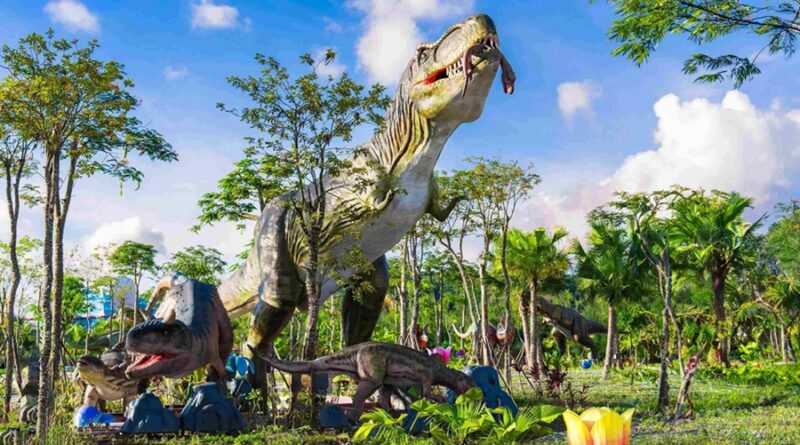
How Jurassic Park-Inspired Spinosaurus Animatronics Enhance Dinosaur Attractions
Dinosaur attractions have evolved from static displays into immersive environments that combine realistic models, mechanical movement, sound, lighting, and carefully designed scenery. Inspired by the excitement of prehistoric creatures in popular films, modern attractions aim to create experiences that feel engaging while encouraging visitors to explore the world of dinosaurs. Among the many species featured in these environments, Spinosaurus stands out because of its imposing size, distinctive back sail, and unusual anatomy.
A well-designed Jurassic Park Spinosaurus Animatronic can become a memorable centerpiece in a dinosaur-themed attraction. By combining lifelike movement with detailed sculpting and synchronized sound effects, these installations help transform an ordinary display into an interactive experience that appeals to families, dinosaur enthusiasts, and curious visitors.
The Influence of Jurassic Park on Dinosaur Attractions
The Jurassic Park franchise helped shape public expectations of how dinosaurs could appear and behave in entertainment environments. Its combination of animatronic creatures, cinematic storytelling, and immersive settings demonstrated how practical effects could make prehistoric animals feel tangible.
Although modern dinosaur attractions vary considerably in their design, many use similar principles. Detailed models, believable movement, environmental sound, and carefully planned viewing areas work together to create a stronger sense of presence.
Spinosaurus is particularly suited to this approach because its unusual silhouette immediately distinguishes it from more familiar dinosaurs. Its elongated skull and prominent sail provide recognizable visual features that can make a display stand out without relying entirely on dramatic effects.
Why Spinosaurus Makes an Impressive Attraction Feature
Spinosaurus lived during the Cretaceous Period, approximately 100 million years ago, in what is now North Africa. Fossil evidence indicates that it possessed a long, narrow snout, conical teeth, and elongated neural spines that supported a prominent sail-like structure along its back.
These features provide several advantages when designing a dinosaur attraction.
A Distinctive Silhouette
The tall back sail creates a recognizable outline, even when visitors view the model from a distance. This makes Spinosaurus suitable for large exhibition spaces, themed landscapes, and entrance displays.
Its elongated skull and tail also create a different visual profile from the bulky body shape commonly associated with Tyrannosaurus rex. Including both species in an attraction can therefore introduce greater visual variety.
Impressive Scale and Presence
Large dinosaur models naturally attract attention, especially when positioned within an environment that provides a sense of scale. A substantial Spinosaurus installation can serve as a focal point around which other exhibits, pathways, and educational features are organized.
However, size alone does not guarantee a convincing result. Proportions, surface details, and movement must work together to make the model appear coherent and believable.
Opportunities for Storytelling
Spinosaurus offers opportunities to explore prehistoric ecosystems, fossil discoveries, and scientific debates about dinosaur adaptations. Attractions can use these topics to develop experiences that combine entertainment with educational information.
For example, an exhibit might introduce the animal’s distinctive anatomy before presenting an animated sequence that illustrates a possible interaction with its environment. Such interpretations should be identified as reconstructions when scientific evidence remains uncertain.
How Animatronic Technology Creates Realistic Dinosaur Experiences
Animatronic dinosaurs combine mechanical engineering, electronic controls, sculpting, and artistic finishing. Each system contributes to the appearance and behavior of the finished installation.
Mechanical Movement and Control Systems
An internal framework supports the dinosaur’s body and provides mounting points for motors, actuators, and joints. These components enable programmed movements such as turning the head, opening the jaws, moving the neck, or swaying the tail.
Electronic controllers coordinate these actions so that different body parts move in a planned sequence. Carefully timed pauses and gradual movements can make a performance feel more natural than a series of abrupt, unrelated actions.
The system’s complexity depends on the installation’s intended purpose. A simple display may feature a few repeated movements, while a larger attraction may incorporate multiple coordinated actions and interactive triggers.
Realistic Sculpting and Exterior Materials
The external appearance is essential to the overall illusion. Designers use sculpting techniques to reproduce the elongated snout, back sail, scales, folds, and other surface details associated with Spinosaurus.
Materials such as silicone, rubber, and specialized foam compounds may be selected according to the model’s flexibility requirements, size, and operating environment. Paint and surface treatments add depth by creating subtle color transitions and emphasizing anatomical contours.
For outdoor attractions, weather resistance is particularly important. Sunlight, moisture, dust, and changing temperatures can affect both exterior materials and mechanical components, making suitable material selection and maintenance essential.
Sound and Environmental Effects
Sound effects can reinforce the visual performance of an animatronic dinosaur. A synchronized jaw movement accompanied by a low growl, for example, may feel more convincing than the same movement without audio.
Because the actual vocalizations of Spinosaurus are unknown, such sounds are creative interpretations rather than established scientific recordings. Attraction designers can still use them effectively while maintaining a clear distinction between entertainment and paleontological evidence.
Environmental sounds, including wind, water, and background ambience, can further support the atmosphere of a prehistoric setting.
Designing an Immersive Dinosaur Attraction
A successful dinosaur attraction depends on more than a single impressive model. The surrounding environment influences how visitors experience the installation and how long they remain engaged.
Themed Scenery and Landscape Design
Rock formations, artificial vegetation, water features, and textured pathways can help establish the setting. These elements should complement the dinosaur rather than compete with its appearance.
For a Spinosaurus display, designers might develop a prehistoric wetland environment inspired by scientific interpretations of its ecology. Such scenery can provide context while making the installation visually cohesive.
Lighting also plays an important role. Directional illumination can highlight the sail and facial details, while carefully controlled ambient lighting creates depth without obscuring the model.
Interactive Visitor Experiences
Interactive elements encourage visitors to observe the dinosaur more closely. Depending on the installation, sensors may trigger head movements, sound effects, or programmed sequences when someone approaches a designated viewing area.
Other attractions may incorporate information panels, digital displays, or augmented reality features. These additions can explain the animal’s anatomy and help visitors understand the scientific evidence behind its reconstruction.
Interaction should remain intuitive and safe. Moving parts need appropriate clearance, and visitor pathways should be arranged to prevent accidental contact with mechanical components.
Visitor Flow and Viewing Angles
The placement of a large animatronic affects both visibility and crowd movement. Designers should consider how visitors approach the model, where they are likely to stop, and whether multiple viewing angles are available.
A prominent sail may be especially effective when visible from the entrance, while closer viewing areas allow visitors to examine the skull, skin texture, and moving components.
Clear pathways and appropriate barriers help maintain safe distances without unnecessarily separating visitors from the experience.
Educational Value Beyond Entertainment
Jurassic Park-inspired attractions can create opportunities for informal learning when their visual spectacle is supported by accurate information. Animatronic dinosaurs help visitors visualize the size, anatomy, and possible movement of animals that no longer exist.
For Spinosaurus, an exhibit can introduce several important subjects:
- Paleontology: How scientists use fossils to reconstruct extinct animals.
- Anatomy: How the skull, teeth, limbs, tail, and back sail distinguish Spinosaurus from other dinosaurs.
- Evolution and adaptation: How anatomical features may relate to an animal’s environment and way of life.
- Scientific uncertainty: Why reconstructions can change as new fossils and research become available.
Presenting these topics alongside an engaging display makes the attraction more informative for children and adults alike. It also helps visitors recognize the difference between established evidence and imaginative elements added for dramatic effect.
Maintaining Animatronics for Long-Term Performance
Regular maintenance is essential for keeping dinosaur attractions reliable, safe, and visually appealing. Repeated movement can place stress on joints, motors, wiring, and exterior materials, while outdoor conditions introduce additional challenges.
A routine inspection schedule should cover:
- Mechanical joints, actuators, and structural connections
- Electronic controls, sensors, and wiring
- Exterior surfaces, paint, and protective coatings
- Movement consistency and sound synchronization
- Safety barriers, clearances, and visitor access areas
Promptly addressing unusual vibration, inconsistent movement, or surface damage can reduce downtime and prevent minor problems from becoming more serious.
Maintenance requirements should be considered during the design stage. Accessible service panels, replaceable components, and appropriate weather protection can make ongoing operation more manageable.
Balancing Cinematic Inspiration with Scientific Accuracy
The visual excitement associated with Jurassic Park can inspire attraction designers, but cinematic representations do not always reflect current paleontological understanding. Film creatures are often designed for dramatic impact, and some details may be speculative or intentionally exaggerated.
Spinosaurus is an especially interesting example because researchers continue to investigate its locomotion, anatomy, and adaptations to aquatic environments. A responsible attraction can draw inspiration from cinematic presentation while grounding its physical design in available fossil evidence.
This balance does not diminish the entertainment experience. Instead, it provides visitors with a more meaningful introduction to prehistoric life and demonstrates how scientific knowledge develops over time.
The Future of Spinosaurus Attractions
Advances in materials, motion control, and digital technologies are creating new possibilities for dinosaur-themed environments. Improved actuators can support smoother movement, while more sophisticated programming allows for varied behavioral sequences.
Augmented reality, projection mapping, and interactive displays may also provide additional context without requiring every effect to be built into the physical model. These technologies can help connect the animatronic experience with educational storytelling.
As attractions become more immersive, thoughtful design will remain essential. The strongest installations will combine dependable engineering, compelling presentation, visitor safety, and a clear understanding of the difference between scientific evidence and creative interpretation.
Conclusion
Jurassic Park-inspired Spinosaurus animatronics bring together mechanical innovation, artistic craftsmanship, and immersive environment design to create memorable dinosaur attractions. Their distinctive anatomy, coordinated movements, realistic textures, and synchronized sound make them effective focal points for themed exhibitions and entertainment spaces.
When combined with engaging scenery and reliable educational information, these installations can offer more than visual spectacle. They can encourage curiosity about paleontology, introduce visitors to prehistoric ecosystems, and demonstrate how modern technology helps people imagine life in Earth’s distant past.