How a Concrete Block Making Machine Supports Modern Construction Projects
Modern construction depends on reliable access to building materials that meet project specifications and can be supplied according to schedule. Concrete blocks remain widely used because they are available in different shapes and dimensions and can serve a range of structural and non-structural purposes. Producing these units efficiently requires suitable machinery, controlled material preparation, and consistent quality checks.
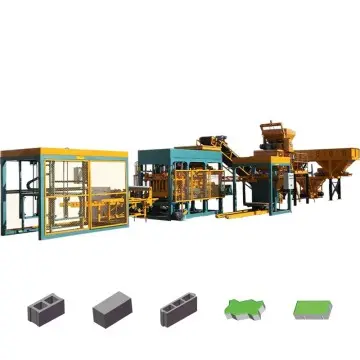
A Concrete Block Making Machine helps manufacturers form concrete mixtures into repeatable block shapes using a mold and a mechanical compaction process. Depending on the model, the machine may use vibration, hydraulic pressure, or a combination of methods. Its role is to support the forming stage of production while allowing manufacturers to organize output around the requirements of their customers.
The Role of Concrete Blocks in Construction
Concrete blocks are used in residential, commercial, industrial, and infrastructure projects. Their applications include partition walls, boundary walls, building enclosures, and other construction elements specified by the project design.
Different applications require different block properties. Dimensions, density, compressive strength, durability, and moisture characteristics may all be relevant. The correct product must be selected according to local building regulations, engineering requirements, and the intended use.
A manufacturer therefore needs to understand customer specifications before choosing a machine or mold arrangement. Producing a block that looks correct is not enough if it does not meet the performance requirements of the project.
1. Supporting Repeatable Block Dimensions
A machine uses a defined mold to shape the concrete mixture. When the mold is correctly manufactured and maintained, and the production process is controlled, it can help produce blocks with consistent dimensions.
Uniformity is important during construction because significant differences between units can complicate alignment, joint thickness, and installation. Regular dimensional checks help manufacturers identify mold wear, inconsistent filling, or other production problems.
Quality checks should be performed throughout the production run rather than only when a batch is complete. This allows operators to address variations before they affect a large quantity of blocks.
2. Improving the Forming Process
Manual production can involve substantial physical effort and may make it difficult to maintain the same forming conditions across every unit. Mechanical equipment provides a more structured process by controlling mold movement and applying the required compaction method.
Vibration can help the concrete mixture settle within the mold, while hydraulic or mechanical systems may provide the force needed for forming. The appropriate arrangement depends on the machine design and the product being manufactured.
Good results still depend on the concrete mix. Too much water, poor aggregate grading, or inconsistent material proportions can lead to defects even when the machine is operating correctly.
3. Supporting Different Construction Requirements
Concrete block manufacturers may serve customers who need several product types. Depending on mold compatibility, a machine may be configured for solid blocks, hollow blocks, or selected paving products.
This allows a business to respond to demand from different market segments. However, changing products may require additional molds, adjustments to operating settings, and changes in the production schedule.
Before purchasing, confirm the machine’s supported block dimensions, mold availability, and changeover procedure. The supplier should provide clear information about the products that can be manufactured using the proposed configuration.
4. Making Production Easier to Organize
A dedicated machine can help manufacturers arrange production into defined stages: raw-material storage, mixing, feeding, forming, removal, and curing. Organizing these stages in sequence reduces unnecessary movement and helps workers understand their responsibilities.
Production planning should consider the capacity of the entire facility. If mixing cannot supply the machine consistently, or the curing area cannot accommodate finished units, the forming machine may spend time waiting.
Managers should measure output across the full process, including downtime and rejected products. This gives a more realistic view of daily production performance than machine cycle figures alone.
5. The Importance of Curing and Quality Control
Freshly formed blocks require appropriate handling and curing. Curing helps concrete develop its intended properties by maintaining suitable moisture and environmental conditions during the early hardening period.
Blocks should be protected from damaging movement, unsuitable exposure, and premature drying. The curing method and duration should follow the concrete mix requirements and applicable standards.
Manufacturers should also maintain records of mix proportions, production dates, inspection results, and any rejected batches. These records can help trace defects and improve consistency.
6. Selecting Machinery for the Business
A suitable machine should match the required output, product dimensions, available workforce, power supply, factory layout, and investment budget. Buyers should also review maintenance requirements, spare-parts access, installation arrangements, and technical support.
Ask suppliers for production estimates based on the specific block size and mold configuration. If possible, inspect a demonstration and examine sample products before making a commitment.
Building a Reliable Production Operation
A concrete block-making machine can support modern construction by helping manufacturers organize forming operations and produce blocks to defined specifications. Its effectiveness depends on the complete production system, from raw-material selection to final curing.
By combining appropriate equipment with trained operators, consistent mix preparation, and regular testing, manufacturers can build a dependable supply process for construction customers.