
How to Select the Right CHZ Lighting Products for Your Commercial Lighting Needs
Choosing the right lighting system is an important decision for any commercial property. Offices, retail stores, warehouses, hotels, hospitals, and industrial facilities all have different illumination requirements. A suitable lighting setup can improve visibility, create a comfortable working environment, support daily operations, and help control electricity expenses. With the growing availability of LED technology, businesses now have more options for developing efficient and practical lighting systems.
However, selecting commercial lighting involves more than comparing fixture prices or brightness levels. Factors such as room dimensions, ceiling height, energy efficiency, color temperature, installation conditions, and maintenance requirements all influence the final decision. Businesses exploring modern lighting solutions can consider the product information available from CHZ Lighting when evaluating different LED options. Understanding the main product categories and their applications makes it easier to identify fixtures that match specific commercial requirements.
Understand Your Commercial Lighting Requirements
Before purchasing lighting equipment, it is important to identify how each area of a commercial property will be used. Different activities require different illumination levels and lighting characteristics.
For example, an office needs comfortable lighting that supports computer work and reading, while a warehouse requires sufficient brightness across storage aisles and loading areas. Retail environments may prioritize product visibility and visual presentation.
Start by evaluating the following factors:
- Space dimensions: Measure the length, width, and ceiling height of each area.
- Daily operating hours: Consider how long the lighting system will remain switched on.
- Work activities: Identify whether the space requires general, task-oriented, or decorative illumination.
- Environmental conditions: Determine whether fixtures will be exposed to moisture, dust, heat, or outdoor weather.
- Existing infrastructure: Review electrical connections, mounting arrangements, and current lighting equipment.
A clear assessment helps prevent unnecessary purchases and supports more effective lighting design.
Explore Different Types of Commercial LED Lighting
Commercial lighting products are available in several configurations. Selecting the right type depends on the property’s layout, operational requirements, and desired lighting performance.
LED Panel Lights for Offices and Commercial Interiors
LED panel lights are commonly installed in offices, educational institutions, healthcare facilities, and meeting rooms. Their flat design allows them to fit into suspended ceilings or compatible surface-mounted arrangements.
They provide relatively uniform illumination and can help create a clean, professional appearance. When selecting panel lights, businesses should consider brightness, glare control, color temperature, and compatibility with existing ceiling systems.
LED High Bay Lights for Warehouses
Warehouses, manufacturing facilities, and distribution centers often have high ceilings that require specialized lighting equipment.
LED high bay fixtures are designed to provide powerful illumination across large indoor spaces. Their suitability depends on mounting height, lumen output, beam angle, and fixture spacing.
Choosing the correct configuration can help reduce dark areas and improve visibility around storage racks and workstations.
LED Floodlights for Outdoor Areas
Commercial buildings frequently require outdoor lighting for parking spaces, entrances, loading zones, and building exteriors.
LED floodlights are designed to provide broad illumination across open areas. Important selection factors include beam distribution, brightness, weather resistance, and mounting position.
LED Linear Lights for Retail and Workspaces
Linear LED fixtures are suitable for retail stores, offices, corridors, and industrial work areas. Their elongated design supports continuous lighting arrangements and can provide consistent illumination along specific spaces.
They are particularly useful in environments where balanced lighting is preferred across long work surfaces or walkways.
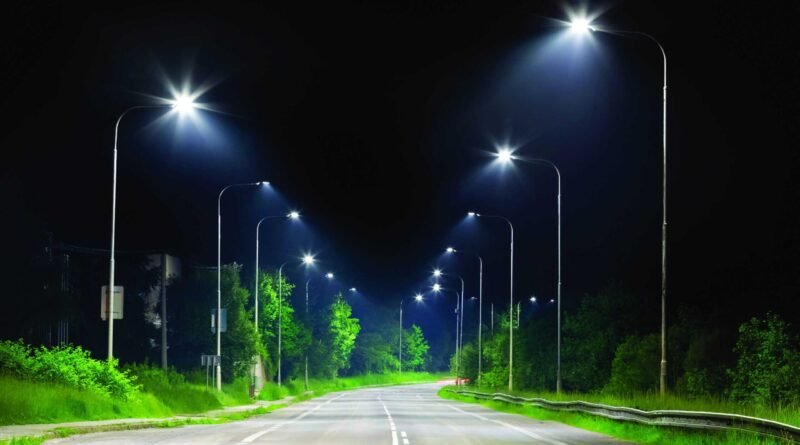
LED Street Lights for Commercial Infrastructure
Large commercial properties, business parks, and private road networks may require dedicated outdoor street lighting.
LED streetlights can help illuminate access roads, pedestrian routes, and vehicle movement areas. Their optical design, mounting height, and weather protection should be evaluated before installation.
Compare Important LED Lighting Specifications
Product specifications provide valuable information about how a fixture will perform. Comparing these details can help businesses avoid selecting products that are unsuitable for their applications.
Lumen Output and Brightness
Lumens measure the total visible light produced by a fixture. A higher lumen value generally indicates greater light output, although the required brightness depends on the space and its intended use.
Businesses should consider the illumination needed at the working surface rather than selecting fixtures based on wattage alone.
Energy Efficiency
Energy efficiency is commonly expressed in lumens per watt. This measurement indicates how effectively a lighting product converts electricity into visible light.
Comparing luminous efficacy can help identify fixtures that provide suitable brightness with lower electricity consumption.
Color Temperature
Color temperature is measured in Kelvin (K) and describes whether light appears warm, neutral, or cool.
- Warm white can create a relaxed atmosphere in hospitality and reception areas.
- Neutral white is often suitable for general commercial environments.
- Cool white may be appropriate for detailed work areas and certain industrial applications.
The ideal choice depends on the activities performed and the atmosphere the business wants to create.
Color Rendering Index
The Color Rendering Index (CRI) measures how accurately a light source reveals the colors of objects.
A higher CRI is particularly useful in retail stores, design studios, healthcare environments, and other locations where accurate color recognition matters.
IP Protection Rating
The Ingress Protection rating indicates how effectively a fixture is protected against dust and water.
Indoor commercial spaces may have relatively simple environmental requirements, while outdoor installations and industrial environments may need higher levels of protection.
Checking the IP rating helps ensure that the selected fixture is appropriate for its installation conditions.
Consider Energy Efficiency and Long-Term Costs
The initial purchase price should not be the only factor when selecting commercial lighting. Electricity consumption, maintenance expenses, replacement frequency, and expected operating life all influence the total cost of ownership.
LED technology can offer financial advantages because it generally consumes less electricity than many traditional lighting alternatives. Its longer service life can also reduce maintenance activities and replacement costs.
For businesses operating large facilities, even modest reductions in electricity consumption can become significant over time.
A practical comparison should include:
- Initial fixture and installation costs.
- Estimated electricity consumption.
- Expected operating lifespan.
- Maintenance and replacement requirements.
- Warranty conditions and product support.
This approach provides a clearer understanding of the long-term value of different lighting options.
Match Lighting Products to Specific Commercial Environments
Every commercial property has unique requirements. A product that performs well in one environment may not be appropriate for another.
Office Buildings
Offices benefit from balanced illumination that supports concentration and visual comfort. LED panels and linear fixtures are common options because they can provide uniform lighting across workstations and meeting rooms.
Glare reduction and suitable color temperature are particularly important in spaces where employees use computers for extended periods.
Retail Stores
Retail lighting influences how customers perceive products and navigate the store. LED track lights, panels, spotlights, and linear fixtures can be combined to create different lighting effects.
High color rendering performance can also help display merchandise more accurately.
Hotels and Restaurants
Hospitality environments require a balance between functionality and atmosphere. Different areas may need different lighting approaches, including general illumination, accent lighting, and decorative fixtures.
Warm color temperatures are often preferred in relaxation areas, while service and preparation spaces may require brighter task lighting.
Hospitals and Healthcare Facilities
Healthcare facilities need dependable lighting that supports visibility, cleanliness, and different clinical activities.
Appropriate brightness, color rendering, glare management, and maintenance considerations should guide product selection.
Warehouses and Manufacturing Facilities
Industrial and storage environments require durable fixtures that provide adequate illumination across large areas.
LED high bay lights, industrial linear fixtures, and suitable floodlights can address different operational requirements. Environmental protection and mounting arrangements should also be evaluated.
Evaluate Smart Lighting and Control Options
Modern commercial LED systems can integrate with intelligent controls that improve energy management and operational flexibility.
Motion sensors can automatically adjust lighting in areas that are not continuously occupied. Daylight sensors can reduce artificial illumination when natural light is sufficient, while programmable schedules help businesses manage lighting according to working hours.
Dimmable fixtures and centralized control platforms may also be useful for large commercial properties.
Before choosing these features, verify compatibility between the fixtures, drivers, sensors, and control systems. Not every LED product supports every type of automation.
Common Mistakes to Avoid When Selecting Commercial Lighting
Even when businesses understand the benefits of LED technology, certain purchasing mistakes can affect installation quality and long-term performance.
Common issues include:
- Choosing fixtures based only on wattage instead of lumen output.
- Ignoring ceiling height and light distribution requirements.
- Selecting unsuitable color temperatures for the intended environment.
- Overlooking IP ratings for outdoor or demanding industrial locations.
- Purchasing products without reviewing driver quality and thermal management.
- Failing to check warranty coverage and replacement availability.
- Installing too many fixtures without conducting proper lighting calculations.
Avoiding these mistakes can help businesses achieve better illumination while controlling unnecessary expenses.
Why Professional Lighting Planning Matters
A well-designed lighting system requires more than selecting individual fixtures. Professional lighting planning considers how products work together across an entire property.
Lighting calculations can help determine fixture quantities, spacing, mounting positions, and expected illumination levels. They can also identify potential glare problems and areas where additional lighting may be necessary.
For larger commercial projects, a detailed lighting plan can improve installation efficiency and help ensure that the finished system meets the property’s operational requirements.
Conclusion
Selecting the right LED products for commercial lighting requires careful consideration of the environment, lighting requirements, technical specifications, and long-term operating costs. LED panels, high bay fixtures, floodlights, linear lights, and streetlights each serve different purposes, making product selection an important part of project planning.
By comparing lumen output, energy efficiency, color temperature, CRI, IP ratings, and maintenance requirements, businesses can make more informed purchasing decisions. Combining suitable products with professional lighting design and compatible control systems can create reliable, comfortable, and energy-efficient commercial environments.
