How Private Label Notebooks Help Businesses Build Their Own Stationery Brand
Creating a recognizable stationery brand requires more than offering products with attractive designs. Businesses need to develop a consistent identity, understand customer preferences, and provide products that deliver practical value. Notebooks are a useful starting point because they serve everyday needs across offices, educational institutions, retail environments, and creative industries.
For businesses interested in developing their own product collections, Private Label Notebooks provide an opportunity to sell customized stationery under their own brand name. Instead of relying entirely on existing branded products, companies can select notebook designs, materials, colors, and finishing details that reflect their market positioning. This approach allows businesses to build a distinct stationery identity while focusing on product quality and customer expectations.
Understanding the Concept of Private Label Notebooks
Private labeling refers to selling products manufactured or supplied by another company under a business’s own brand identity. In the stationery industry, this approach allows retailers, distributors, and other organizations to offer notebooks with customized branding and product specifications.
Businesses can often choose from different notebook formats, cover materials, paper types, binding styles, and printing options. These choices help create products that match their target audience and overall brand strategy.
Unlike simply reselling generic stationery, private labeling gives businesses greater control over how their products are presented and positioned in the market.
Why Businesses Choose Private Label Stationery
Developing a stationery brand can be an attractive opportunity for companies that already serve customers interested in office supplies, educational products, or lifestyle accessories.
Several advantages make this approach worth considering.
Establishing a Distinct Brand Identity
A recognizable brand helps customers differentiate one business from another. Customized notebooks provide opportunities to use consistent logos, colors, typography, and packaging.
When these elements are applied across a stationery collection, they create a unified product identity. Customers can gradually become familiar with the brand through repeated interactions with its products.
Greater Control Over Product Design
Private labeling allows businesses to make decisions about product appearance and functionality. Depending on manufacturing capabilities, they may customize notebook covers, page layouts, sizes, and finishing options.
This flexibility makes it easier to develop products that suit specific customer preferences instead of relying entirely on standard market designs.
Opportunities for Business Expansion
Companies already selling bags, office supplies, school materials, or promotional merchandise may find notebooks a natural addition to their existing collections.
Adding stationery products can help diversify a product range and create opportunities to reach customers with related needs.
Building Customer Loyalty
Consistent product quality and recognizable branding can encourage customers to return when they need additional stationery.
A notebook that offers a comfortable writing experience and durable construction can contribute to a positive customer impression. Over time, this can support stronger relationships between a business and its audience.
Important Customization Options for Private Label Notebooks
Product customization plays a major role in creating a stationery brand that stands out. Businesses should evaluate the available options according to their budget, target market, and intended product positioning.
Cover Materials and Finishes
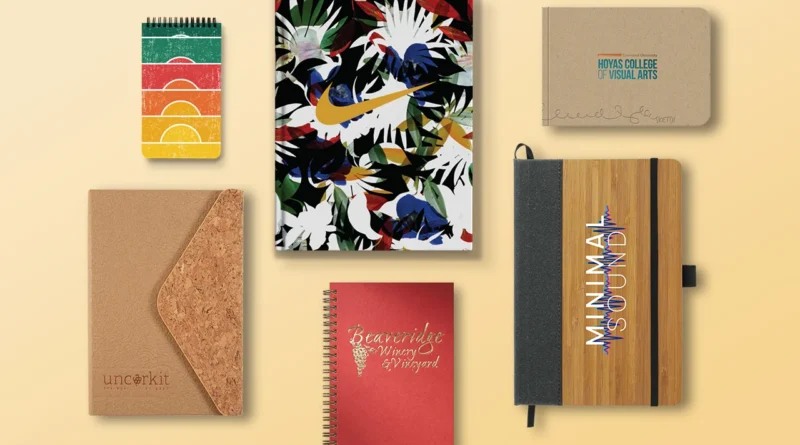
The notebook cover influences both appearance and durability. Common options include cardboard, coated paper, fabric, and synthetic materials.
Businesses can also explore different finishes, such as:
- Matte or glossy surfaces.
- Embossed or debossed logos.
- Printed patterns and illustrations.
- Textured cover materials.
- Customized brand colors.
The selected finish should reflect the desired product image while remaining suitable for regular use.
Paper Quality and Page Layouts
The internal pages are just as important as the exterior design. Paper thickness, smoothness, and texture affect how comfortable a notebook is for writing.
Different page formats serve different purposes:
- Ruled pages for everyday writing.
- Blank pages for drawing and creative work.
- Dotted pages for planning and journaling.
- Grid pages for calculations and structured notes.
Offering suitable page layouts can help businesses appeal to different customer groups.
Notebook Sizes and Binding Styles
Notebook dimensions influence portability and functionality. Smaller formats are convenient for carrying, while larger notebooks provide more room for detailed notes.
Binding options also affect the user experience. Spiral binding allows pages to turn easily, while sewn or glued binding can provide a more traditional book-like appearance.
Businesses should select formats based on how customers are expected to use their products.
Identifying the Right Target Market
Before developing a private label stationery collection, businesses should understand who they want to reach. A product designed for students may have different features from one intended for corporate professionals or creative individuals.
Potential customer groups include:
Students and educational institutions: These customers often need affordable, durable notebooks for regular academic use.
Office professionals: Business users may prefer practical designs, quality paper, and professional-looking covers.
Artists and creative individuals: Blank, dotted, and specialized paper formats may appeal to people involved in drawing, journaling, and creative planning.
Retail stationery customers: General consumers may look for notebooks that combine attractive designs with everyday functionality.
Understanding these audiences helps businesses make better decisions about product features, pricing, and presentation.
How Private Label Notebooks Support Brand Recognition
Brand recognition develops when customers repeatedly encounter consistent visual and product experiences. Customized notebooks can contribute to this process through their design, packaging, and everyday use.
For example, a notebook featuring recognizable brand colors and a distinctive logo can become associated with the business that sells it. When customers use these products at work, school, or in public spaces, the branding may also become visible to others.
Packaging provides another opportunity to reinforce identity. Coordinated labels, sleeves, or product tags can create a consistent presentation across an entire stationery collection.
However, effective branding should not depend on appearance alone. Product quality and usability remain essential to maintaining customer confidence.
Choosing a Suitable Manufacturing Partner
The success of a private label stationery brand depends partly on the capabilities of its manufacturing partner. Businesses should evaluate potential suppliers carefully before committing to production.
Important considerations include:
Production Experience
Review previous notebook projects to understand the manufacturer’s experience with different formats, materials, printing techniques, and customization requirements.
Quality Standards
Ask about paper specifications, cover construction, binding methods, and quality inspection procedures. Requesting samples can help verify whether the products meet expectations.
Minimum Order Quantities
Manufacturers may have different minimum order requirements. Businesses should choose quantities that match their purchasing capacity and expected customer demand.
Pricing Transparency
Request detailed quotations covering materials, printing, finishing, packaging, and shipping. Comparing similar specifications makes it easier to evaluate overall value.
Communication and Delivery
Clear communication helps prevent errors during design approval and production. Businesses should also confirm estimated manufacturing times and delivery arrangements before placing orders.
Developing a Consistent Stationery Product Collection
A successful private label brand should offer products that feel connected rather than appearing as unrelated items.
Businesses can start with a small selection of notebook formats and gradually expand according to customer feedback. For example, an initial collection might include everyday ruled notebooks, premium journals, and compact notebooks for portability.
Using consistent colors, logos, packaging, and design principles across these products helps establish a recognizable identity.
This approach also makes future product development easier because new items can follow existing brand guidelines.
Managing Costs and Inventory Effectively
Launching a private label stationery line involves planning beyond the initial manufacturing expense. Businesses need to account for production costs, packaging, storage, transportation, marketing, and inventory management.
Ordering larger quantities may reduce the cost per unit, but excessive stock can create unnecessary financial pressure. Companies should estimate demand using existing sales information, customer research, and realistic market expectations.
Starting with manageable quantities can help businesses evaluate product performance before expanding their collections.
Common Mistakes to Avoid When Building a Private Label Stationery Brand
Several mistakes can make it difficult to establish a successful product range. Businesses should avoid:
- Prioritizing attractive designs over writing quality.
- Ignoring the needs of their target customers.
- Ordering large quantities without testing product samples.
- Selecting materials without considering durability.
- Using inconsistent branding across different products.
- Overlooking packaging and transportation costs.
- Expanding the collection before understanding customer demand.
Careful planning helps businesses maintain product standards while reducing unnecessary expenses.
Conclusion
Private label notebooks offer businesses an opportunity to develop their own stationery identity, expand product collections, and create stronger connections with customers. Through customized designs, suitable materials, consistent branding, and practical product features, companies can create notebooks that reflect their market positioning.
Building a successful stationery brand requires more than selecting attractive covers. Businesses should understand their target audience, choose reliable manufacturing partners, maintain quality standards, and manage inventory according to actual demand. With a thoughtful approach, private label stationery can become a valuable part of a broader business and branding strategy.