
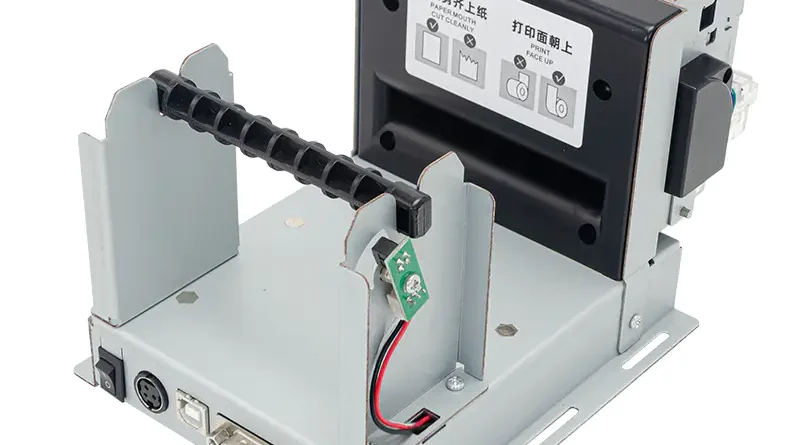
How Panel Printers Support Real-Time Data Monitoring
Real-time data monitoring allows machines and operators to track changing information as it happens. In industrial equipment, self-service systems, medical devices, and other automated environments, having current information available can help improve visibility and support faster decision-making.
While digital displays and software dashboards are common monitoring tools, printed information still has an important role in many systems. A Panel Printer can provide a physical record of measurements, transactions, alerts, or operating conditions directly from the equipment generating the data.
What Is Real-Time Data Monitoring?
Real-time data monitoring involves collecting and presenting information with minimal delay. Sensors, controllers, software, and connected devices can continuously gather data and make it available to operators or automated systems.
The information may include temperatures, pressure readings, production counts, transaction details, equipment status, or diagnostic messages. Depending on the application, this data can be displayed digitally, stored electronically, or converted into a physical document.
The Role of Printing in Monitoring Systems
Printing adds a physical layer to digital monitoring. When a machine produces a printed record, operators can review information without accessing a computer or retrieving data from a separate system.
For example, an industrial machine could print a summary of operating measurements at the end of a production cycle. A weighing system could produce a record showing measured values, while a self-service terminal could print transaction information immediately after an operation.
This makes printing useful when records need to be reviewed, transported, signed, filed, or retained for operational purposes.
How Compact Printers Receive Monitoring Data
A panel-mounted printer typically works as one component of a larger electronic system. A controller or application collects information from sensors and other devices before sending the relevant data to the printer.
The printer then converts the received commands into printed text, numbers, graphics, or other supported content. Because this process can happen automatically, users do not necessarily need to manually transfer information before creating a record.
The overall workflow can be summarized as:
- Sensors or connected devices collect information.
- A controller or software system processes the data.
- Relevant information is formatted for printing.
- The printer receives the print commands.
- A physical record is produced.
Applications in Industrial Monitoring
Industrial environments often generate large amounts of operational data. Monitoring systems can track production conditions, equipment performance, temperatures, pressure levels, and other measurements.
A compact printer can provide an immediate physical summary of selected information. This can be useful when operators need a record at a specific stage of a process or when electronic access is inconvenient.
Printed records may also support routine inspections and maintenance activities. Technicians can use them as references when checking equipment or comparing measurements over time.
Use in Weighing and Measurement Equipment
Scales and measurement systems are another example of equipment that can benefit from integrated printing. After a measurement is completed, the system can send the result directly to a compact printer.
A printed ticket may contain information such as the measured value, date, time, identification number, or other relevant details. This provides users with a tangible record without requiring a separate printing station.
For businesses handling repeated measurements, automated printing can also reduce manual data entry and help maintain consistency between the measurement system and its associated records.
Supporting Transaction Records
Real-time monitoring is not limited to industrial measurements. Retail terminals, vending equipment, kiosks, and payment-related systems also process information that users may need immediately.
In these environments, integrated printing can produce transaction records as soon as the operation is completed. The printed output may include transaction details, item information, totals, reference numbers, or other system-generated content.
Because the printer is integrated into the equipment, the process can remain largely automated from data collection through document production.
Importance of Connectivity
Reliable communication between the monitoring system and printer is essential. The printer must be able to receive data from the host equipment using a compatible communication interface.
Depending on the system, connectivity may involve serial communication, USB, Ethernet, or another supported interface. Software compatibility and command protocols should also be considered during system development.
Testing communication before deployment can help identify problems involving data formatting, connection stability, or printer control.
Speed and Real-Time Output
Printing speed can influence how effectively a system responds to monitoring events. If printed information is required immediately, excessive processing or printing delays may affect the user experience.
However, speed should be considered in relation to the application’s actual requirements. A system that prints only occasional measurement records may not need the same performance level as a high-volume ticketing or transaction machine.
The goal is to select printing hardware that can comfortably handle the expected workload without unnecessary over-specification.
Reliability in Continuous-Use Systems
Monitoring equipment may operate for extended periods, sometimes with limited human supervision. Printer reliability therefore becomes an important consideration when printed records are part of the system’s workflow.
Factors such as print-head life, paper-feeding performance, cutter durability, and error detection can influence operational reliability. The printer should be matched to the expected usage volume and operating environment.
Preventive maintenance and appropriate paper handling can further help reduce interruptions.
Combining Digital and Physical Records
Printed output does not replace digital monitoring. Instead, it can complement electronic systems by providing information in a format that is easy to physically distribute or retain.
A monitoring system might store complete data electronically while printing only key events or summaries. This approach can reduce unnecessary paper consumption while still providing physical records when they have practical value.
For example, a facility could digitally store continuous sensor readings but print a short report whenever a production cycle is completed or a specific event occurs.
Factors to Consider When Integrating a Printer
When adding a compact printer to a real-time monitoring system, several technical factors should be evaluated:
- Available installation space
- Printing speed and resolution
- Paper width and roll capacity
- Communication interface
- Power requirements
- Operating temperature and humidity
- Expected printing volume
- Paper and error detection
- Maintenance accessibility
- Compatibility with the control system
Considering these factors together helps ensure that the printer works as part of the complete monitoring solution rather than functioning as an isolated component.
The Value of Immediate Printed Information
Real-time systems are designed to make information available quickly, but not every user interaction needs to remain entirely digital. A physical record can be useful when information must be reviewed away from a screen, attached to paperwork, handed to a customer, or retained for operational purposes.
Compact printers make this possible without requiring substantial additional space. Their integration into equipment allows data generated by the system to be converted into a physical record with minimal user intervention.
Conclusion
Real-time data monitoring depends on accurate and timely information, while integrated printing can provide a practical physical representation of that data. From industrial measurements and machine diagnostics to transactions and weighing applications, compact printers can work alongside digital monitoring systems to create immediate records.
When selecting printing hardware for a monitoring application, factors such as connectivity, speed, reliability, paper handling, installation requirements, and environmental conditions should be considered together. A well-integrated printing solution can complement digital monitoring and make important information more accessible in the situations where a physical record is still valuable.

