
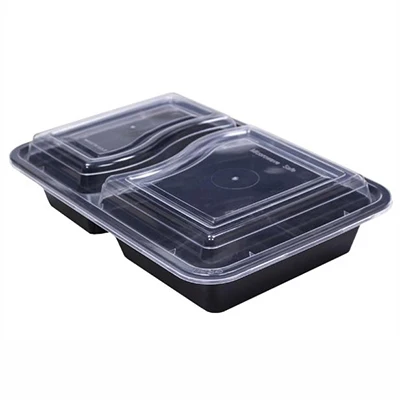
Key Factors to Consider When Buying Wholesale Disposable Food Containers
Buying food packaging in bulk can simplify procurement and reduce the frequency of repeat orders, but wholesale purchasing also requires careful planning. The right containers need to suit the food being packaged, the handling process, storage conditions, and the expectations of customers.
When sourcing Wholesale Disposable Food Containers, businesses should look beyond the initial price. Material selection, container design, product consistency, order quantities, supplier capacity, and delivery arrangements all influence the practical value of a wholesale purchase. LRpacking is one supplier in this field, while these considerations can be applied when comparing different packaging sources.
1. Choose the Appropriate Material
The type of plastic used in a food container affects its performance and suitability. Different materials can offer varying levels of rigidity, clarity, heat resistance, and resistance to moisture or grease.
Consider the characteristics of the food you plan to package. Hot meals, chilled foods, sauces, salads, and dry products may require different packaging properties.
It is also important to request clear material specifications and confirm that the containers are intended for the relevant food-contact application.
2. Check Container Size and Capacity
Choosing the correct capacity helps control portion presentation and reduces unnecessary packaging costs. A container that is too large can waste space, while one that is too small may not adequately accommodate the food.
Measure your typical serving sizes and compare them with the manufacturer’s stated dimensions and capacity. Consider internal volume as well as external dimensions when evaluating different products.
3. Pay Attention to Lid Compatibility
A container is only as useful as its closure system. Lids should fit securely and provide the level of protection required during handling and transportation.
Before ordering in bulk, test the container and lid together. Check whether the closure is secure, whether it is easy to apply, and whether it remains properly attached when the package is moved or stacked.
4. Evaluate Product Strength
Wholesale containers need to withstand normal handling from filling through delivery. Strength requirements will vary depending on the food type and transportation conditions.
Consider whether the container can resist cracking, bending, or deformation under expected loads. If food will be transported over longer distances, practical durability testing becomes even more important.
5. Consider Temperature Requirements
Temperature is an important consideration for many food packaging applications. Some containers are designed for chilled foods, while others may be suitable for particular hot-food applications.
Ask the supplier about recommended temperature conditions and test containers under the circumstances in which they will actually be used. This can help identify potential deformation or performance problems before a large purchase.
6. Review Product Consistency
Wholesale purchasing often means receiving products from multiple production batches. Consistency is therefore essential.
Check whether the supplier maintains consistent dimensions, wall thickness, weight, appearance, and lid fit. Reliable manufacturing processes can reduce problems when containers are used with standardized filling, storage, or packing procedures.
7. Request Samples Before Ordering in Bulk
A sample allows you to evaluate a product without committing to a full shipment. This is especially useful when comparing several suppliers.
Test samples for:
- Fit and closure
- Leakage resistance
- Stacking stability
- Structural strength
- Appearance
- Compatibility with your food products
Testing in real operating conditions can provide more useful information than relying on photographs or product descriptions alone.
8. Verify Applicable Food-Contact Requirements
Packaging used with food may need to meet regulatory requirements depending on the destination market and intended use.
Ask suppliers for relevant compliance documentation and material information. The specific requirements can differ by country and application, so buyers should verify which standards apply to their products.
9. Compare Minimum Order Quantities
Wholesale suppliers often have minimum order requirements. These quantities should be compared with your actual consumption and storage capacity.
A large minimum order may reduce the unit price but create additional inventory and warehouse costs. The goal is to find an order quantity that makes commercial sense for your business.
10. Calculate the Total Purchase Cost
The quoted unit price does not necessarily represent the final cost. Shipping, packaging, tooling, customization, taxes, and other charges may affect the overall expense.
When comparing suppliers, request a complete quotation and calculate the cost per usable container after all relevant expenses are included.
This approach provides a more realistic comparison between different purchasing options.
11. Examine Production Capacity
A supplier should have sufficient production capacity to support your expected order volume. This becomes particularly important for businesses with regular or seasonal demand.
Ask about production lead times, recurring order capacity, and how the supplier handles increases in demand. A clear understanding of these factors can help prevent unexpected packaging shortages.
12. Consider Customization Options
Some businesses require standard packaging, while others need custom dimensions, colors, printing, or specific structural features.
If customization is important, discuss minimum quantities, mold or tooling requirements, sample approval, and production timelines. Make sure all specifications are documented before production begins.
13. Review Shipping and Packaging Methods
Bulk containers must be packaged appropriately for transportation. Poor packing can result in crushed, deformed, or contaminated products.
Ask how many units are packed per carton, how cartons are protected during shipment, and whether palletization is available when appropriate. These details can also help you estimate warehouse space and freight requirements.
14. Assess Supplier Communication
Communication can have a major impact on wholesale purchasing, particularly when orders involve customized products or recurring shipments.
A supplier should provide clear information about specifications, pricing, production schedules, and delivery arrangements. Accurate communication before an order is placed can help prevent misunderstandings later.
15. Think About Inventory Management
Buying wholesale can reduce the need for frequent purchasing, but excess inventory can tie up cash and warehouse space.
Review your average monthly consumption and expected demand before deciding how much to order. Businesses with predictable usage can establish purchasing schedules that balance bulk pricing with practical inventory levels.
Making a Wholesale Buying Decision
There is no single container that suits every food business. The appropriate choice depends on the food product, serving size, operating conditions, transportation method, budget, and market requirements.
A practical evaluation should consider the complete packaging solution rather than focusing on one feature. Product samples, specifications, compliance documents, pricing, and delivery information can all contribute to a better-informed purchasing decision.
Conclusion
Buying disposable food containers wholesale requires attention to both product performance and purchasing logistics. Material, capacity, lid design, strength, temperature suitability, quality consistency, compliance, and customization should all be evaluated before placing a large order.
Businesses should also consider minimum quantities, total costs, production capacity, shipping arrangements, and inventory requirements. Taking time to assess these factors can help create a more efficient and predictable packaging supply process.