
Top Interior Design Trends Driving Demand for Modern Sofas in Global Homes
Interior design in 2026 is becoming less about decoration and more about how a space supports everyday living. As homes become more compact and lifestyles more flexible, furniture is expected to do more than fill a room. It needs to shape how people move, rest, and interact.
Among all furniture categories, the sofa plays the most central role. It is often the first object that defines a living area and the one piece that influences both comfort and visual balance. This is why the growing demand for modern sofas is closely tied to broader changes in how people design and experience their homes.
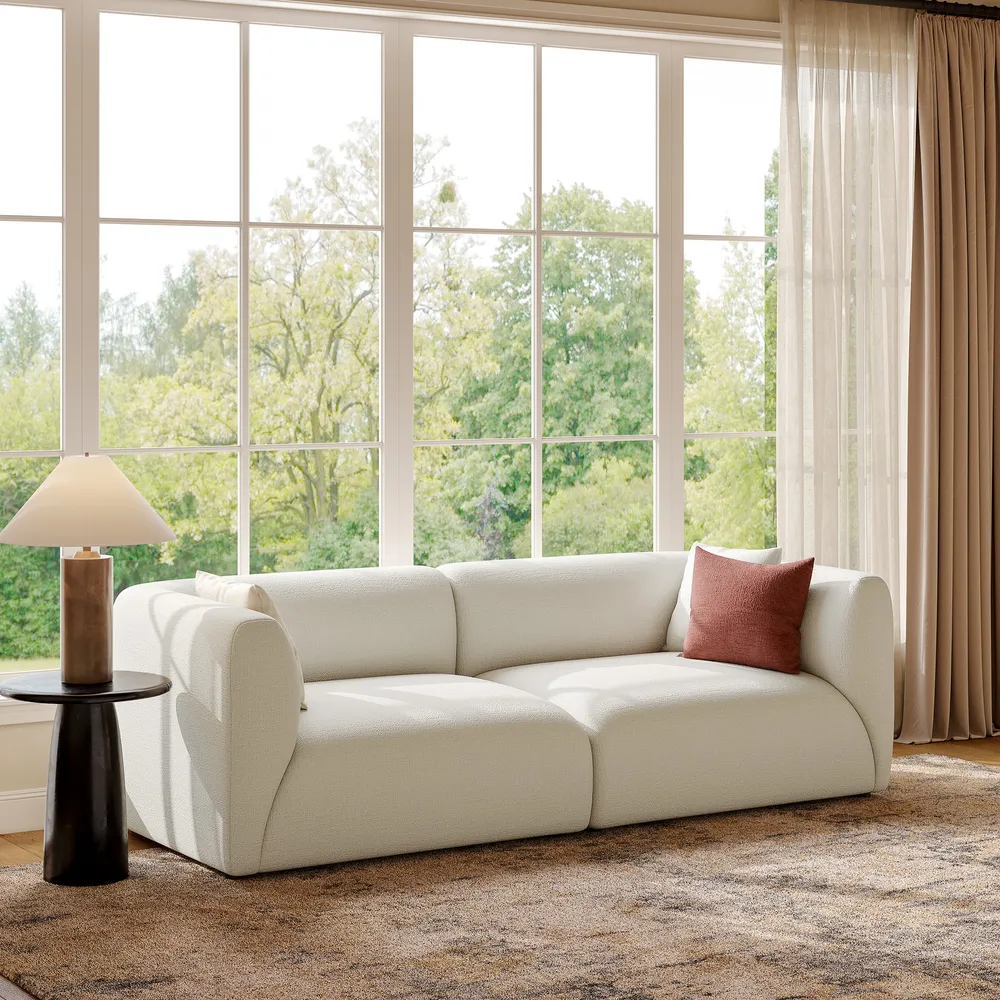
1. Sofas Are Becoming the Anchor of the Entire Living Space
In many contemporary layouts, especially in apartments under 80 square meters, the living room is no longer separated into rigid zones. Instead, a single open space often combines lounging, working, and social interaction.
In this context, the sofa is no longer just seating. It becomes the anchor that organizes the room.
Designers are increasingly using sofas to define spatial boundaries without adding walls. A well-proportioned sofa, typically between 180 and 210 cm in width, can visually separate a living area from a dining or workspace while maintaining openness.
This explains why more consumers are moving toward designs that feel structured yet soft. Collections of modern sofas that combine clean lines with warm materials naturally fit into this role, offering both visual clarity and a sense of comfort.
2. A Shift Toward Warm Minimalism Instead of Cold Minimalism
Minimalism is still a dominant trend, but its expression has changed.
Earlier minimalist interiors often relied on sharp edges, monochrome palettes, and visually light furniture. While clean, these spaces sometimes lacked warmth and livability. Today, the trend is shifting toward what designers often describe as “warm minimalism.”
This approach keeps the simplicity of modern design but introduces natural textures and softer forms. Sofas play a key role in this transition.
Instead of rigid silhouettes, more designs now feature subtle curves, textured upholstery, and neutral tones such as beige, taupe, and soft gray. Materials like chenille, boucle, and wood accents help soften the visual impact of the space while maintaining a modern aesthetic.
This aligns closely with the direction seen in modern sofas, where sculptural shapes and tactile materials are used to create pieces that feel both refined and inviting.
3. Modular Living Is Redefining Flexibility
Another major shift is the growing demand for flexibility.
As people move more frequently and living situations change, furniture is expected to adapt. This is particularly true in urban environments where space is limited and often multifunctional.
Modular sofas are becoming a preferred solution because they allow users to reconfigure layouts without replacing the entire piece. A sectional composed of individual units, typically around 70 to 100 cm per module, can be expanded, reduced, or rearranged depending on the space.
This flexibility is not just practical. It also supports a more personalized approach to interior design. Instead of committing to a fixed layout, users can adjust their space over time, which reflects how modern living continues to evolve.
4. Comfort Is Being Redefined as a Daily Requirement
Comfort is no longer treated as a luxury feature. It has become a baseline expectation.
With more time spent at home, sofas are now used for extended periods throughout the day. This includes working, reading, and relaxing. As a result, comfort is being evaluated in more specific terms.
Seat depth, for example, is becoming a key consideration. Depths around 50 to 60 cm support upright sitting, while deeper designs above 65 cm are better suited for lounging. Similarly, cushion density and back support are now part of the decision process rather than afterthoughts.
This shift is pushing brands to design sofas that balance softness with structure. The goal is not just immediate comfort, but comfort that holds up over time.
5. Design Is Moving Toward “Livable Luxury”
Another important trend is the idea of livable luxury.
Traditional luxury furniture often emphasized visual impact over usability. In contrast, today’s consumers are looking for pieces that feel premium but still fit into everyday life.
This is reflected in the growing popularity of sofas that combine refined aesthetics with practical features. Clean lines are paired with durable fabrics. Elegant proportions are balanced with real comfort. The result is furniture that looks sophisticated but does not feel untouchable.
Brands that focus on accessible design are responding to this demand by offering products that deliver both style and long-term usability.
6. Sofas Are Becoming Part of a Cohesive Interior System
Finally, sofas are no longer selected in isolation.
More homeowners are thinking in terms of complete environments rather than individual products. This means the sofa needs to work with other elements such as coffee tables, lighting, and storage.
Proportion and material consistency are becoming more important. For example, a sofa with natural fabric upholstery is often paired with wood or stone textures to create a cohesive look. Similarly, scale is carefully considered so that the sofa complements rather than dominates the room.
This shift toward integrated design is another reason why modern sofas continue to gain traction. They are easier to incorporate into a wide range of interior styles while maintaining a consistent visual language.
Conclusion
The growing demand for modern sofas is not simply the result of changing tastes. It reflects deeper changes in how people live, use space, and define comfort.
Sofas are now expected to organize space, support multiple activities, and contribute to a cohesive design environment. At the same time, they need to balance visual refinement with everyday usability.
As interior design continues to move toward flexibility and livability, modern sofas will remain at the center of this evolution. They are no longer just part of the room. They are shaping how the room works.