
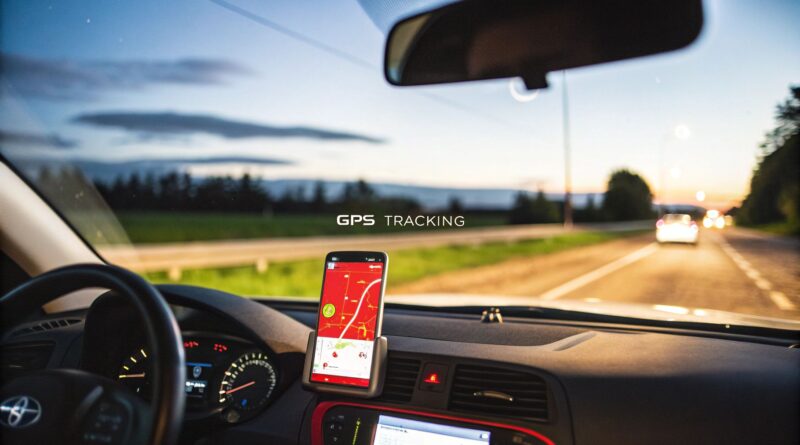
The Ultimate Guide to the Vehicle GPS Tracking Device: Safety, Logic, and Efficiency
In an era where we can track a $20 pizza in real-time as it travels three blocks, it seems almost absurd to leave a $30,000 vehicle to fate. Whether you are a business owner managing a fleet of twenty trucks or a parent who wants to ensure their teenager isn’t treating the local highway like a Formula 1 track, a vehicle gps tracking device is no longer a luxury—it is a digital necessity.
As we move through 2026, the global GPS tracking market has surged to over $4.14 billion, driven by a 15% annual growth rate. This isn’t just about dots on a map anymore; it is about data, security, and peace of mind. In this guide, we will break down the mechanics, the benefits, and the best practices for choosing the right tracker for your needs.
How Does a Vehicle GPS Tracking Device Work? (The Nerd Stuff)
At its core, a GPS tracker is a sophisticated communication hub. It doesn’t just “know” where it is; it performs a complex mathematical dance every few seconds.
1. The Satellite Handshake
The device connects with a constellation of at least four satellites orbiting 20,000 kilometers above Earth. Using a process called trilateration, the tracker measures the time it takes for signals to arrive from each satellite to calculate its exact latitude, longitude, and altitude.
2. The Cellular Leap
Once the device knows its location, it uses a built-in SIM card (operating on 4G or 5G networks) to beam that data to a secure cloud server. This is why most professional trackers require a small monthly subscription—they are essentially “calling” your phone with location updates.
3. The User Interface
The cloud server processes that raw data and displays it on your smartphone or computer via an intuitive map. Modern systems in 2026 update as fast as every 1 to 5 seconds, providing a smooth, “live” view of the vehicle’s movement.
Why You Actually Need One: Logic vs. Cost
You might be thinking, “My car has an alarm; isn’t that enough?” Unfortunately, professional thieves can disable a standard car alarm in under 60 seconds. A vehicle gps tracking device provides a layer of security that an alarm simply cannot match.
1. Theft Recovery (The “Hero” Move)
If the worst happens and your car vanishes, a tracker turns a “lost cause” into a live recovery mission. You can share the real-time location link directly with the police, significantly increasing the chances of getting your car back before it’s stripped for parts.
2. Fuel and Maintenance Savings
For businesses, the logic is financial. Real-time tracking allows managers to reduce “idle time” (where the engine is running but the car isn’t moving). According to recent fleet industry reports, optimized routing via GPS can reduce fuel costs by up to 20% annually.
3. Driver Behavior Coaching
Modern trackers monitor “harsh braking,” “rapid acceleration,” and “sharp cornering.” For parents, this is a coaching tool for teen drivers. For businesses, it is a way to reduce insurance liability and keep employees safe on the road.
Choosing the Right Tracker: Top Picks for 2026
The market is flooded with options, but most devices fall into three logical categories. Based on latest benchmarks from Car and Driver, here are the top-rated solutions:
Humorous Warning: If you choose a portable magnetic tracker, remember to check the battery! There is nothing more awkward than trying to track a stolen car only to realize the tracker died three days ago because you forgot to charge it.
The Legal Side: Don’t Be a Digital Stalker
This is where we have to be very human and very clear. Privacy laws in 2026 are stricter than ever. The Federal Trade Commission (FTC) now views geolocation data as highly sensitive information.
-
Legal Use: You can legally track any vehicle you own. This includes your personal car, your spouse’s car (if your name is on the title), and your business fleet.
-
Illegal Use: Placing a tracker on a vehicle you do not own—such as a neighbor’s or a stranger’s car—is considered illegal surveillance or stalking and can lead to serious criminal charges.
-
Employee Disclosure: If you are tracking a business fleet, it is a “best practice” (and often a legal requirement) to inform your employees in writing. Transparency builds trust; secret tracking destroys it.
Tips for Maximum Effectiveness
If you want your vehicle gps tracking device to actually do its job, follow these three rules:
-
Placement is Key: For hidden trackers, avoid placing them deep under metal. Metal blocks GPS signals. Plastic bumpers, under-dash areas, or wheel wells with plastic liners are much better choices.
-
Set Up Geofences: A “geofence” is a virtual boundary. You can set an alert to notify you if your car leaves your driveway after 10:00 PM or if a delivery truck goes outside city limits.
-
Monitor “Health” Data: Many OBD-II trackers like Bouncie or Geotab also monitor your car’s engine health. They can tell you if your battery is dying or if your “Check Engine” light is about to come on, saving you from a breakdown before it happens.
Conclusion: Peace of Mind in a Pocket-Sized Box
A vehicle gps tracking device is more than just a gadget; it is a silent guardian for your most valuable mobile assets. Whether you are looking to cut business costs, protect your family, or recover a stolen vehicle, the logic is undeniable: the cost of a tracker is a fraction of the cost of a lost car.
As technology continues to shrink and cellular networks get faster, these devices will only become more integrated into our lives. Stay safe, stay informed, and keep your “digital eye” on the road.
Sources & References:
-
Research and Markets: GPS Tracking Device Market Report 2026.
-
Car and Driver: Best Car GPS Trackers Tested and Reviewed (2025/2026).
-
FTC Guidelines on Geolocation Data Privacy (Update January 2026).
Final Word: Technology is a tool, not a replacement for common sense. Always lock your doors, park in well-lit areas, and use your GPS data to be a smarter, safer driver!