
Irradiance Sensors vs Other Solar Measurement Tools: Key Differences
Understanding solar radiation is essential for a variety of applications, including solar energy production, agricultural management, and climate research. Measuring solar energy accurately requires specialized instruments, each designed for specific purposes. Among these tools, the irradiance sensor is widely recognized for its ability to provide precise measurements of solar power per unit area. However, it is often compared to other solar measurement tools such as pyranometers, pyrheliometers, and photometers. Understanding the differences between these instruments is crucial for selecting the right tool for your application.
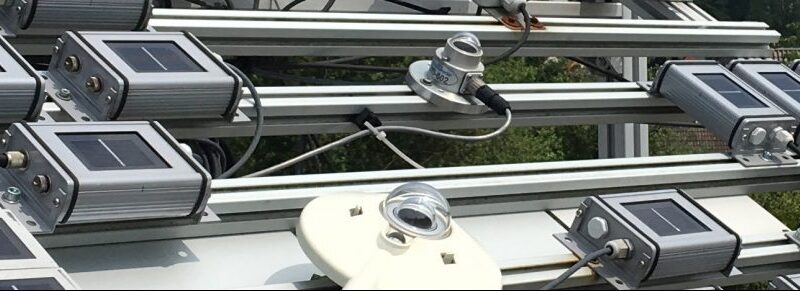
An Irradiance Sensor measures the intensity of solar radiation directly on a surface, usually expressed in watts per square meter (W/m²). It is often used in photovoltaic system monitoring, environmental studies, and agricultural applications. Advanced models, like the Irradiance Sensor from Rika Sensor, provide high accuracy across a broad spectrum of sunlight, making them ideal for long-term and research-grade solar monitoring. Unlike general light meters, irradiance sensors focus specifically on solar radiation, ensuring precise data for energy production calculations and scientific analysis.
Key Solar Measurement Tools
Pyranometers
Pyranometers are among the most commonly used instruments for measuring solar radiation. They measure the total hemispherical solar radiation incident on a flat surface, including both direct sunlight and diffuse sky radiation. Pyranometers are highly accurate and are typically used in meteorological stations, research facilities, and solar power plants. The main difference between pyranometers and irradiance sensors is that pyranometers are often larger, require more complex calibration, and are designed primarily for stationary measurements rather than integration into solar energy systems.
Pyrheliometers
Pyrheliometers measure direct beam solar radiation by pointing directly at the sun. These instruments are highly precise for evaluating solar intensity at a specific angle but do not capture diffuse radiation from the sky. While pyrheliometers provide excellent accuracy for research purposes, they are not as versatile as irradiance sensors for general solar monitoring, as they require careful alignment and tracking systems to follow the sun’s movement throughout the day.
Photometers and Lux Meters
Photometers and lux meters measure light intensity, typically in lumens or lux, which corresponds to human visual perception rather than the total solar energy. While useful for applications like indoor lighting design or horticulture, these instruments are not suitable for precise solar radiation measurements. They cannot capture the full spectrum of sunlight, including infrared and ultraviolet components, which are critical for solar energy and environmental studies. In contrast, an irradiance sensor captures a broader spectrum, providing a more complete picture of solar energy available for power generation or scientific analysis.
Working Principle Differences
Irradiance sensors typically use photovoltaic cells, thermopiles, or photodiodes to convert solar radiation into an electrical signal proportional to the intensity of sunlight. Pyranometers operate on similar principles but are often optimized for broader spectral response and stability under varying environmental conditions. Pyrheliometers use collimators to isolate direct sunlight, and photometers rely on human-eye-weighted spectral responses. The differences in these principles affect accuracy, sensitivity, and suitability for different applications.
Application-Specific Advantages
Irradiance sensors are ideal for real-time solar monitoring and integration with photovoltaic systems. Their compact size, ease of installation, and fast response time make them practical for both research and commercial applications. Pyranometers are better suited for meteorological and climate studies where long-term, highly accurate radiation data is required. Pyrheliometers are preferred in solar research requiring precise measurement of direct sunlight, such as testing solar concentrators. Photometers, while useful in horticulture and lighting studies, are not designed for accurate solar energy assessment.
Maintenance and Calibration
All solar measurement instruments require regular maintenance and calibration to ensure accurate readings. Irradiance sensors often need surface cleaning and periodic calibration against reference standards. Pyranometers and pyrheliometers typically require more rigorous calibration procedures due to their precision requirements. Photometers usually need less maintenance but cannot provide the detailed solar radiation data required for energy calculations or environmental research.
Conclusion
While multiple instruments exist to measure sunlight, the irradiance sensor stands out for its combination of accuracy, compact design, and versatility. Unlike pyranometers, which excel in stationary climate studies, or pyrheliometers, which focus on direct solar radiation, irradiance sensors offer a practical solution for real-time solar monitoring in energy, agricultural, and research applications. Understanding the differences between these tools ensures that the right instrument is selected for each purpose, allowing accurate solar measurement and optimized performance in both scientific and commercial settings.