Engraved Dog Tag: The 2026 Ultimate Guide to Pet Safety and Style
If your dog is anything like mine, they view “freedom” as any open door and “adventure” as the neighbors’ trash can. In a world of high-tech GPS trackers and microchips, the humble engraved dog tag remains the fastest, most effective way to get your runaway explorer back home.
Think of an ID tag as your pet’s business card. It doesn’t require a battery, it doesn’t need a satellite connection, and it doesn’t require a trip to the vet to be scanned. It just sits there, looking sharp and doing its job.
As we move through 2026, the pet industry is shifting toward “practical aesthetics.” We want things that work perfectly but also look like they belong in an architectural magazine. Here is how to choose the best engraved dog tag for your pup without losing your mind (or your dog).
Eco-Friendly Metals: Recycled stainless steel and ethically sourced brass are becoming the standard for the conscious pet parent.
QR Code Integration: Some modern engraved tags now include a small QR code on the back. It’s the best of both worlds: old-school engraving on the front, high-tech data on the back.
Maintenance: The 3-Month Checkup
A dog tag isn’t a “set it and forget it” tool. Between the dirt, the rain, and the occasional wrestling match with the neighbor’s golden retriever, tags take a beating.
-
Check Legibility: Can you still read the phone number from two feet away?
-
Inspect the Ring: The “split ring” (the little circle connecting the tag to the collar) is the weakest link. If it looks stretched or thin, replace it immediately.
-
Clean the Metal: Use a bit of warm soapy water to remove the “neck cheese” (yes, that’s a technical term) that builds up behind the tag.
Final Thoughts
An engraved dog tag is the cheapest insurance policy you will ever buy for your best friend. It’s a small piece of metal that carries the weight of your pet’s entire safety.
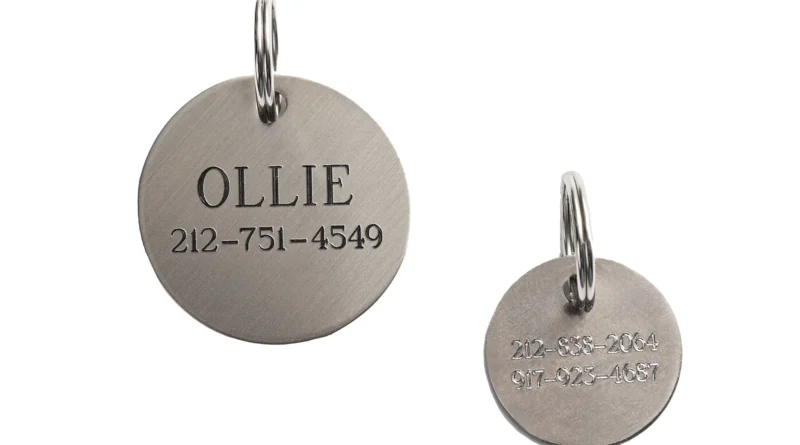
Whether you go for a rugged stainless steel plate or a stylish brass pendant, make sure the info is accurate and the engraving is deep. Your dog might not know how to read, but they’re counting on a kind stranger being able to.
Sources & References:
-
Adventure Den Pet Safety Reports 2026.
-
Pet ID Tags Australia: “The Essential Info Guide.”
-
The Control of Dogs Order 1992 (UK Legal Compliance).
J.P. Morgan Pet Industry Consumer Trends 2026.
Does your dog have a “silent” silicone tag or do you prefer the classic jingle of metal?