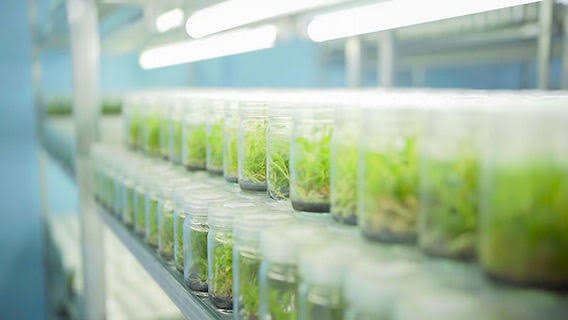
How Chinese Tissue Culture Technology Supports Modern Commercial Horticulture
Commercial horticulture depends on reliable plant production, consistent quality, and the ability to respond to changing market demand. Nurseries, greenhouse operators, landscape companies, and agricultural businesses need planting materials that can support efficient production and meet customer expectations. As traditional propagation methods face limitations in certain large-scale operations, tissue culture has become an increasingly valuable technique for multiplying selected plant varieties under controlled conditions.
China’s horticultural industry has developed capabilities in laboratory propagation and commercial plant production, making it an important participant in the international plant supply chain. For businesses exploring China Tissue Culture Plants, understanding how this technology supports modern horticulture can help clarify its value. From large-scale multiplication to specialty plant production, tissue culture offers practical applications across several areas of the industry.
1. Enabling Large-Scale Plant Propagation
One of the main contributions of tissue culture technology is its ability to multiply selected plants in controlled laboratory environments. Instead of depending entirely on seeds, cuttings, or division, producers can use small pieces of plant tissue to initiate new cultures.
Once a suitable propagation method has been developed, laboratories can multiply plant material through successive production stages. This approach can support nurseries and commercial growers that need larger quantities of particular varieties.
For businesses managing substantial planting schedules, tissue culture can make it easier to plan production volumes and coordinate inventory. Actual output depends on the species, propagation protocol, laboratory capacity, and production time.
2. Supporting Consistent Plant Quality
Consistency is important in commercial horticulture because buyers often expect plants within the same batch to have similar characteristics. Differences in growth habit, leaf appearance, or plant development can create challenges for nurseries and retailers.
Tissue culture can support uniformity when the starting material is correctly identified and the propagation process is properly controlled. Producers can use standardized procedures to manage culture conditions and monitor plant development.
However, uniformity is not automatic. Genetic stability, correct cultivar identification, contamination management, and careful inspection remain essential. Commercial buyers should ask suppliers how they monitor these factors throughout production.
3. Expanding Access to Ornamental Plant Varieties
Modern plant markets increasingly include a wide selection of ornamental species and specialty cultivars. Customers may look for distinctive foliage, unusual colors, compact growth habits, or particular flowering characteristics.
Tissue culture provides a method for multiplying selected varieties that may be difficult to produce in large quantities through conventional propagation.
Chinese laboratories and plant producers may work with ornamental categories such as:
- Monstera and Philodendron.
- Aglaonema and Syngonium.
- Anthurium and orchids.
- Calathea and selected ferns.
- Dieffenbachia and other decorative foliage plants.
- Selected succulents and specialty ornamentals.
This variety can help commercial nurseries develop more diverse product collections and serve different customer segments.
4. Improving Production Planning for Nurseries
Commercial nurseries need to coordinate plant availability with growing space, labor, seasonal demand, and sales schedules. Unpredictable planting material supplies can make these activities difficult.
Tissue culture production can support more organized sourcing by allowing suppliers to plan multiplication batches and prepare selected varieties for future orders.
Nurseries may use this approach to:
- Schedule the arrival of young plants.
- Plan greenhouse space in advance.
- Organize production by variety.
- Prepare inventory for seasonal demand.
- Coordinate planting material with customer orders.
To benefit from this approach, buyers should discuss lead times and production schedules with suppliers rather than assuming every catalog variety is immediately available.
5. Supporting Commercial Greenhouse Operations
Greenhouses provide controlled or semi-controlled environments for growing plants. Their temperature, humidity, light, and irrigation systems can help growers manage plant development throughout the year.
Tissue culture plantlets can supply greenhouse operations with young material for further growth and finishing. After arrival, plants may need to pass through an acclimatization period before entering standard production areas.
The transition should be planned according to the plant species and the condition in which it is supplied. In-vitro plantlets generally require more careful adaptation than established, acclimatized plants.
A suitable greenhouse setup helps businesses manage this transition and prepare plants for wholesale or retail markets.
6. Supporting Agricultural Crop Production
Although tissue culture is widely associated with ornamental plants, it also has important applications in commercial agriculture.
Selected crops can be propagated through laboratory methods to provide growers with planting material for larger cultivation projects. Banana is a well-known example, while pineapple and other crops may also be produced using tissue culture techniques.
Potential advantages for agricultural businesses include:
- Access to selected crop varieties.
- More uniform starting material when propagation is properly managed.
- Opportunities to plan larger planting programs.
- Support for organized nursery production.
- Greater flexibility in sourcing specific cultivars.
The success of agricultural planting material still depends on local growing conditions, crop management, soil suitability, irrigation, and disease control.
7. Helping Nurseries Develop Specialty Plant Collections
Specialty plants can help nurseries distinguish their product offerings in competitive markets. Collectors and indoor gardening customers may seek unusual leaf patterns, rare cultivars, or plants with distinctive growth characteristics.
Tissue culture can support the propagation of selected specialty varieties, provided that suitable protocols and stable starting material are available.
For example, some Monstera, Philodendron, and Anthurium cultivars attract interest because of their foliage characteristics. Buyers should confirm cultivar identity carefully, as visual differences may not always be obvious in young plantlets.
A nursery should also consider whether its customers are willing to pay for specialty varieties and whether its facilities can provide the required care.
8. Making Efficient Use of Production Space
Laboratory propagation uses controlled containers and culture environments during the early stages of plant development. This can allow producers to maintain many small plantlets without requiring the same space needed for mature nursery plants.
For large-scale horticultural businesses, this can create opportunities to organize early-stage production separately from greenhouse growing and finishing activities.
However, space requirements change as plants develop. After transfer from culture vessels, plantlets need appropriate containers, growing media, humidity, and room for continued growth.
Businesses should plan for the full production cycle rather than focusing only on the compact laboratory stage.
9. Supporting More Flexible Inventory Management
Plant demand can change because of seasonal trends, consumer preferences, landscaping projects, and agricultural schedules. Nurseries need to balance product availability with the costs of maintaining inventory.
Tissue culture sourcing can support flexible inventory planning when suppliers provide reliable information about production schedules and available varieties.
Buyers may benefit from discussing forecast quantities, repeat orders, and alternative varieties in advance. This is particularly useful for businesses that sell multiple plant categories or supply customers across different regions.
Reliable forecasting also helps reduce the risk of ordering more plants than the business can accommodate.
10. Encouraging Standardized Production Procedures
Commercial horticulture requires repeatable processes to maintain quality across multiple production batches. Tissue culture laboratories can establish procedures for culture preparation, multiplication, rooting, inspection, and plantlet handling.
Standardized procedures help staff follow consistent production steps and make it easier to identify problems during different stages.
Important areas of process management include:
- Selection and preparation of starting material.
- Sterilization and laboratory sanitation.
- Culture media preparation.
- Environmental monitoring.
- Contamination inspection.
- Plantlet grading and labeling.
- Preparation for shipment.
The effectiveness of these procedures depends on staff training, equipment, and ongoing quality management.
11. Supporting International Plant Distribution
Modern horticulture is connected through international supply chains. Nurseries and distributors may source plantlets from one country, grow them locally, and sell the finished plants in another market.
China’s tissue culture production sector participates in this trade by supplying different plant categories to international buyers. Export operations require coordination between production facilities, packaging teams, freight providers, and importers.
For successful distribution, suppliers and buyers must agree on plant specifications, shipping conditions, documentation, and delivery schedules. Import regulations should also be checked before an order is finalized.
Phytosanitary requirements, import permits, and restrictions may vary according to the destination country and plant species.
12. Improving Access to Specialized Planting Material
Some plant varieties are difficult to multiply quickly through conventional methods. Tissue culture can provide an alternative approach when a suitable laboratory protocol is available.
This can be useful for commercial growers seeking specialty ornamentals, selected cultivars, or particular agricultural varieties.
Nevertheless, not every plant is equally suitable for laboratory propagation. Some species require extensive protocol development, while others may be commercially available only through specific suppliers.
Buyers should therefore ask about the supplier’s experience with the exact plant variety rather than assuming that all products can be propagated with the same level of efficiency.
13. Reducing Certain Propagation Limitations
Traditional propagation methods remain valuable, but they can have limitations when businesses need large quantities of selected plants. Depending on the species, propagation through seeds or cuttings may produce variable results or require more time to reach the desired production volume.
Tissue culture can help address some of these limitations by providing a controlled method for multiplying selected plant material.
It does not eliminate all production risks. Contamination, abnormal development, genetic variation, and acclimatization losses can still occur. Successful commercial use depends on suitable protocols and effective quality control.
14. What Commercial Buyers Should Check When Sourcing Tissue Culture Plants
The benefits of tissue culture technology depend heavily on the quality of the supplier and the plants being purchased. Commercial buyers should evaluate the following points before placing an order.
Product Identification
Confirm the scientific name, cultivar, and expected plant characteristics. Request clear specifications for specialty varieties.
Growth Stage
Determine whether the plants will be supplied in-vitro, rooted, or acclimatized. Each stage involves different handling and growing requirements.
Quality Management
Ask about contamination monitoring, batch inspection, genetic stability procedures, and plantlet grading.
Production Capacity
Check whether the supplier can meet the required quantity and provide realistic production schedules for repeat orders.
Packaging and Export
Discuss packaging methods, shipping arrangements, and the documents needed for import into the destination country.
Post-Arrival Requirements
Prepare suitable growing areas, equipment, and staff for acclimatization and further plant development.
Businesses comparing international sourcing options can review the product information and available plant categories from Young Plants as part of their supplier evaluation. Confirming current availability, specifications, quality procedures, and export arrangements directly is important before making a wholesale commitment.
Conclusion
Chinese tissue culture technology supports modern commercial horticulture by providing methods for multiplying selected plant varieties, managing production batches, and supplying ornamental and agricultural planting material. Its applications range from tropical foliage plants and specialty ornamentals to crops used in commercial farming.
For nurseries, distributors, and growers, the technology can create opportunities to expand product ranges and organize larger production programs. However, successful results depend on suitable propagation methods, quality control, careful acclimatization, and reliable supply arrangements. By understanding these factors, commercial horticultural businesses can make better use of tissue culture plants in their production and sourcing strategies.