
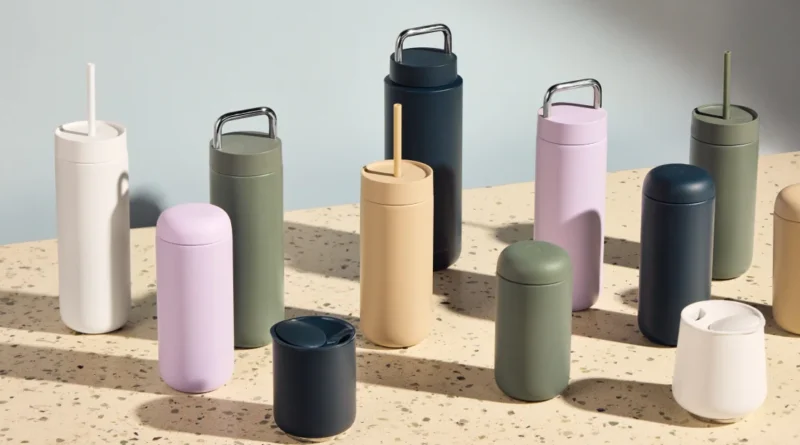
Best Practices for Ordering Drinkware Wholesale in Large Quantities
Ordering drinkware in large quantities can help retailers, distributors, promotional merchandise companies, and corporate buyers maintain inventory and manage purchasing costs. However, bulk purchasing also involves important decisions about product quality, supplier reliability, order specifications, production schedules, and shipping arrangements. Without proper planning, businesses may face unexpected expenses, delayed deliveries, or excess inventory.
A successful Drinkware Wholesale order starts with understanding customer requirements and selecting products that match the intended market. Buyers should evaluate manufacturers carefully, compare complete quotations, inspect samples, and establish clear expectations before production begins. Following a structured purchasing process can make large-volume orders easier to manage and help businesses build reliable supply relationships.
1. Determine Your Business Requirements Before Ordering
Before contacting manufacturers, identify exactly what your business needs. A clear purchasing plan helps prevent confusion and makes it easier to compare supplier offers.
Start by considering the following questions:
- Who will use the drinkware?
- Will the products be sold through retail stores or online?
- Are they intended for corporate gifts or promotional campaigns?
- Which materials and product styles are suitable?
- What quantity is required?
- Is customization necessary?
- When must the order arrive?
For example, a retailer selling everyday household products may prioritize reusable water bottles and ceramic mugs. A promotional merchandise company may focus more on customized tumblers and branded bottles.
Defining your requirements early helps manufacturers provide more accurate quotations and reduces the possibility of ordering unsuitable products.
2. Research Different Drinkware Product Categories
Large orders should be based on products that match customer preferences and market demand. Drinkware is available in numerous materials, shapes, capacities, and designs.
Common wholesale categories include:
Stainless steel bottles: Popular for reusable hydration products and everyday use.
Insulated tumblers: Suitable for customers who want containers designed to maintain beverage temperatures.
Plastic drinking bottles: Often selected for lightweight, practical, and cost-conscious applications.
Ceramic mugs: Commonly purchased for homes, offices, cafés, and gifting.
Travel mugs: Designed for customers who want convenient beverage containers while commuting.
Reusable cups: Useful for hospitality businesses, events, and everyday beverage service.
Rather than purchasing a large quantity of every available style, identify the categories most relevant to your customers. A focused product selection can make inventory management more efficient.
3. Research and Compare Wholesale Manufacturers
Choosing a suitable manufacturer is one of the most important steps in bulk purchasing. A supplier should be capable of meeting your product specifications, maintaining quality, and fulfilling the order within the agreed schedule.
Research several potential manufacturers and evaluate their:
- Manufacturing experience.
- Product range.
- Production capacity.
- Material specifications.
- Quality control procedures.
- Customization services.
- Minimum order quantities.
- Customer support.
- Export and shipping experience.
Ask for company information and examples of similar products they have manufactured. If possible, verify their business credentials and production facilities.
Avoid choosing a supplier based only on an attractive quotation. A lower price may involve different materials, reduced customization options, or less comprehensive quality control.
4. Request Samples Before Confirming a Large Order
Product samples provide an opportunity to examine quality before committing to substantial quantities. Photographs and catalog descriptions cannot always communicate the actual finish, weight, construction, or functionality of a drinkware item.
When evaluating samples, check:
- Material quality and consistency.
- Product dimensions and capacity.
- Surface finish and appearance.
- Lid construction and alignment.
- Sealing performance, where applicable.
- Ease of handling and cleaning.
- Printing or engraving quality.
- Packaging condition.
For insulated products, request information about temperature-retention performance and the testing conditions used to support any claims.
Once a sample is approved, keep it as a reference for the production order. Written specifications should also document important details so the manufacturer has a clear quality standard to follow.
5. Confirm Material Specifications and Product Safety
Material selection influences durability, functionality, appearance, and suitability for different applications. Buyers should request precise material information for every product included in a large order.
For stainless steel drinkware, confirm the grade and construction of the steel. For plastic products, identify the material type and request relevant food-contact documentation where applicable. Ceramic products should be checked for suitable finishes and coatings.
Important details include:
- Material composition.
- Capacity and dimensions.
- Product weight.
- Wall construction.
- Lid and seal materials.
- Surface coating.
- Cleaning instructions.
- Applicable safety and compliance information.
If products will be sold internationally, research the regulations that apply in the destination market. Request relevant test reports or declarations and confirm that they cover the exact product being ordered.
6. Calculate the Correct Order Quantity
Ordering in bulk can reduce the unit cost, but purchasing more than necessary can create storage expenses and tie up working capital.
To estimate an appropriate quantity, consider historical sales, current inventory, expected demand, and supplier lead times.
A simple planning method is:
Required order quantity = Expected sales during the replenishment period + Desired safety stock − Available inventory
For example, if a business expects to sell 1,000 bottles before its next replenishment, wants 200 additional units as safety stock, and already has 300 suitable bottles available, the estimated order quantity would be 900 units.
This is only a planning estimate. Buyers should adjust it according to demand uncertainty, product shelf life, storage capacity, and purchasing budgets.
For new products with limited sales history, consider starting with a smaller order before increasing quantities.
7. Compare Complete Quotations Instead of Unit Prices Alone
Wholesale quotations can vary significantly between manufacturers. Buyers should compare offers based on equivalent product specifications and the complete cost of purchasing.
A detailed quotation should identify:
- Product unit price.
- Minimum order quantity.
- Sample charges.
- Customization expenses.
- Packaging costs.
- Mold or tooling fees, if applicable.
- Inspection charges.
- Shipping costs.
- Payment terms.
- Estimated production time.
Also ask whether prices change at different order volumes.
A supplier offering a lower unit price may charge separately for printing, packaging, or other services. Comparing the complete order cost gives buyers a more accurate picture of the financial commitment.
8. Negotiate Minimum Order Quantities and Pricing
Minimum order quantities (MOQs) can influence which manufacturers are suitable for your business. Some suppliers may require large quantities for customized products, while others may offer more flexible options.
When discussing MOQs, consider:
- Whether the minimum applies to each product or the entire order.
- Whether different colors can be combined.
- Whether multiple designs can share the same production run.
- Whether a lower quantity is possible at a higher unit price.
- Whether repeat orders qualify for different terms.
For large purchases, buyers may also discuss volume-based pricing, packaging arrangements, and payment schedules.
Negotiations should focus on the overall value of the order rather than obtaining the lowest possible price at the expense of product quality or delivery reliability.
9. Plan Customization and Branding Carefully
Customized drinkware is frequently ordered in bulk for promotional campaigns, employee gifts, retail collections, and corporate events.
Common customization options include:
- Screen printing.
- Laser engraving.
- UV printing.
- Heat-transfer decoration.
- Custom colors.
- Branded packaging.
- Printed labels.
Before production, provide clear artwork files and confirm the exact logo placement, dimensions, colors, and printing method.
Ask the manufacturer to prepare a digital proof or physical sample for approval. Check spelling, alignment, logo proportions, and color accuracy before authorizing mass production.
Remember that customization may increase production time and cost. Include these requirements in the original order schedule rather than adding them after manufacturing has started.
10. Establish Clear Quality Control Standards
Quality control becomes especially important when purchasing hundreds or thousands of units. A small defect rate can affect a significant number of products in a large shipment.
Before production, agree on the quality standards the manufacturer must follow.
Depending on the product, inspection may cover:
- Material verification.
- Product dimensions and capacity.
- Surface defects.
- Color consistency.
- Lid and closure functionality.
- Leakage resistance, where relevant.
- Insulation performance, where specified.
- Printing and engraving accuracy.
- Packaging condition.
Ask whether the manufacturer conducts inspections during production and before shipment.
For substantial orders, consider arranging an independent pre-shipment inspection. Agree on the inspection criteria and sampling procedure in advance.
A written quality agreement can help clarify what constitutes an acceptable product and how defects will be handled.
11. Confirm Production Capacity and Delivery Schedules
Large orders may require additional manufacturing time, particularly when they involve multiple product styles, custom colors, or branding.
Before placing the order, request a realistic production schedule. Confirm the expected time required for:
- Sample development and approval.
- Artwork preparation.
- Material sourcing.
- Manufacturing.
- Quality inspection.
- Packaging.
- Shipment preparation.
Ask whether the manufacturer can handle the full quantity within the required timeframe.
If your business has a fixed sales launch or promotional event, allow a reasonable buffer for unexpected production or transportation delays.
It is also useful to agree on how the supplier will communicate changes to the schedule.
12. Use a Written Purchase Order
A written purchase order helps both parties understand exactly what has been agreed.
It should include:
- Buyer and manufacturer details.
- Product names and descriptions.
- Material specifications.
- Sizes and capacities.
- Quantities and colors.
- Approved customization designs.
- Packaging requirements.
- Unit prices and total order value.
- Production deadlines.
- Shipping arrangements.
- Inspection requirements.
- Payment conditions.
- Defect and replacement procedures.
Attach approved product specifications, artwork proofs, and sample references where appropriate.
Avoid relying solely on informal messages or verbal agreements for large purchases. A detailed purchase order provides a useful reference if questions arise during production or delivery.
13. Review Payment Terms and Financial Risks
Large wholesale orders can involve substantial financial commitments. Buyers should understand the payment schedule and verify the supplier’s payment details before transferring funds.
Common payment arrangements may include an initial deposit followed by a balance payment under agreed conditions. The exact structure depends on the supplier, transaction size, and commercial agreement.
Before making payment:
- Verify the manufacturer’s legal business information.
- Confirm that payment details match the contracted company.
- Review the deposit and balance conditions.
- Understand when the final payment becomes due.
- Clarify how rejected or defective goods will be handled.
- Keep invoices and transaction records.
For unfamiliar suppliers, consider using payment methods that offer appropriate transaction documentation and protection.
Never rely on sudden changes to payment instructions without independently verifying them through an established company contact.
14. Arrange Suitable Packaging and Shipping
Packaging protects drinkware during storage, handling, and transportation. Large shipments may contain products that require different levels of protection depending on their material and design.
Ceramic mugs and glass drinkware generally need additional cushioning to reduce breakage risks. Stainless steel bottles and tumblers should be protected against scratches, dents, and surface damage.
Discuss the following with your manufacturer:
- Individual product packaging.
- Inner cartons and outer shipping cartons.
- Protective inserts.
- Carton dimensions and weight.
- Product labeling.
- Pallet arrangements, if required.
- Shipping method.
- Transit time.
- Insurance arrangements.
For international orders, clarify the agreed shipping terms and responsibilities for freight, customs documentation, duties, and other import-related expenses.
Request packing information before shipment so you can plan warehouse space and receiving arrangements.
15. Prepare Your Warehouse and Inventory System
Receiving a large shipment requires more than having enough space. Businesses should prepare their storage and inventory processes before the goods arrive.
Useful preparations include:
Allocate storage space: Ensure there is sufficient room for the shipment without overcrowding existing inventory.
Organize product categories: Separate products by material, model, size, color, and SKU.
Create receiving procedures: Check delivered quantities against the purchase order and packing list.
Inspect incoming goods: Identify visible damage or inconsistencies before placing products into regular inventory.
Update inventory records: Record received quantities, product variations, and any damaged units.
Use appropriate storage conditions: Follow product-specific handling instructions to protect finishes and packaging.
An organized receiving process makes it easier to identify problems and prepare products for distribution.
16. Avoid Common Bulk Ordering Mistakes
Even experienced buyers can encounter problems when ordering large quantities. Many of these issues can be reduced through careful preparation.
Common mistakes include:
- Ordering without checking product samples.
- Choosing manufacturers based only on price.
- Overestimating customer demand.
- Failing to confirm material specifications.
- Approving production without checking artwork.
- Ignoring customization lead times.
- Not documenting quality requirements.
- Overlooking shipping and customs costs.
- Making payments before verifying supplier details.
- Failing to inspect goods upon arrival.
Taking time to review these areas can help businesses avoid costly mistakes and make bulk purchasing more predictable.
17. Build Long-Term Relationships with Reliable Manufacturers
A successful first order can create opportunities for a long-term manufacturing relationship. Consistent communication and clear expectations help both parties understand how to work together more efficiently.
After receiving an order, review the manufacturer’s performance. Consider product quality, delivery accuracy, communication, packaging, and how effectively any problems were resolved.
Share constructive feedback and document any changes required for future orders.
Long-term purchasing relationships may provide benefits such as:
- More consistent product specifications.
- Easier repeat ordering.
- Better production planning.
- Improved communication.
- Greater familiarity with customization requirements.
- Potentially more favorable commercial terms.
However, continue monitoring product quality and pricing even when working with an established supplier. Regular evaluation helps maintain purchasing standards.
18. Use a Final Checklist Before Confirming Your Order
A final review can help ensure that important details have not been overlooked.
| Checklist item | What to verify |
|---|---|
| Product selection | Products match customer requirements |
| Supplier verification | Manufacturer credentials have been checked |
| Samples | Samples have been inspected and approved |
| Materials | Specifications are documented |
| Quantity | Order volume matches demand forecasts |
| Pricing | All product and additional costs are included |
| Customization | Artwork and branding have been approved |
| Quality control | Inspection standards are agreed |
| Production | Lead times and capacity are confirmed |
| Payment | Terms and payment details are verified |
| Packaging | Protective requirements are documented |
| Shipping | Delivery arrangements and responsibilities are clear |
| Purchase order | All important conditions are recorded |
| Receiving | Warehouse and inspection procedures are ready |
Completing this checklist before making a financial commitment can help reduce misunderstandings and improve order management.
Conclusion
Ordering drinkware wholesale in large quantities requires careful planning, supplier research, and clear communication. Businesses should begin by identifying their product requirements, reviewing customer demand, and comparing manufacturers based on quality, production capacity, and reliability.
Requesting samples, confirming material specifications, negotiating transparent pricing, and establishing written quality standards are essential steps before production begins. Buyers should also plan customization, payment terms, packaging, shipping, and warehouse preparation to manage the entire purchasing process effectively.
By following these best practices, retailers, distributors, and corporate buyers can make more informed bulk purchasing decisions, reduce avoidable risks, and establish stronger relationships with manufacturers. A structured approach to large-volume ordering supports consistent product quality and more efficient inventory management over time.