
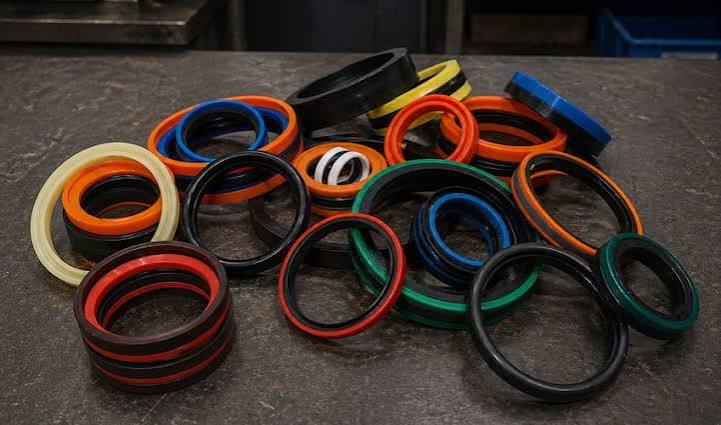
Custom Hydraulic Seal Manufacturing: Benefits and Important Considerations
Hydraulic seals are essential components in systems that rely on pressurized fluid to generate controlled movement and force. They help prevent leakage, maintain system pressure, and protect internal components from contamination. While standard seals are suitable for many applications, some hydraulic systems require components with specific dimensions, materials, and sealing profiles. Custom hydraulic seal manufacturing addresses these requirements by developing products that match the technical demands of individual applications.
Working with an experienced Hydraulic Seals Manufacturer can help equipment producers and maintenance teams identify suitable sealing solutions for specialized machinery. Custom manufacturing offers greater flexibility in product design, material selection, and dimensional requirements, but it also involves important considerations such as operating conditions, engineering specifications, production methods, and quality testing.
What Is Custom Hydraulic Seal Manufacturing?
Custom hydraulic seal manufacturing is the process of designing and producing sealing components according to specific application requirements rather than relying exclusively on standard catalog dimensions and profiles.
These products may be developed for new hydraulic equipment, specialized machinery, replacement applications, or systems with unusual operating conditions.
A custom seal may differ from a standard product in several ways:
- Inner and outer diameters.
- Cross-sectional dimensions.
- Seal lip geometry.
- Material composition.
- Pressure-handling requirements.
- Temperature resistance.
- Friction and wear characteristics.
- Installation and housing requirements.
The objective is to create a sealing component that fits the hydraulic system and performs reliably under its intended operating conditions.
Key Benefits of Custom Hydraulic Seal Manufacturing
1. Precise Fit for Specialized Equipment
One of the main benefits of custom manufacturing is the ability to produce seals that match specific equipment dimensions.
Hydraulic cylinders and assemblies may have unique grooves, housings, piston diameters, and rod dimensions. A standard seal may not fit correctly, particularly in older machinery or specialized industrial equipment.
Custom manufacturing allows engineers to work with detailed drawings, physical samples, or measured specifications to develop a suitable sealing profile.
A precise fit can help reduce installation problems and support effective sealing performance.
2. Better Material Selection
Different hydraulic systems operate under different environmental and mechanical conditions. A seal used in a construction excavator may require different material properties from one used in a manufacturing press.
Custom manufacturing provides an opportunity to select materials based on the actual application.
Common options include:
- Nitrile rubber (NBR): Commonly used with compatible petroleum-based hydraulic fluids.
- Polyurethane (PU): Offers strong abrasion resistance and mechanical durability.
- Polytetrafluoroethylene (PTFE): Provides low friction and broad chemical resistance.
- Fluorocarbon (FKM): Suitable for applications requiring resistance to elevated temperatures and certain chemicals.
- EPDM: Used in applications involving compatible water-based fluids.
The right material depends on fluid compatibility, pressure, temperature, movement, and environmental exposure.
3. Improved Performance in Demanding Conditions
Some hydraulic systems operate under high pressure, frequent movement, elevated temperatures, or exposure to abrasive contaminants.
Standard sealing components may not always provide the required performance under these conditions.
Custom seal design allows manufacturers to consider application-specific factors such as sealing lip geometry, material hardness, extrusion gaps, and contact pressure.
These design considerations can help improve resistance to leakage, deformation, and premature wear when the product is correctly manufactured and installed.
4. Support for Equipment Replacement and Repair
Custom hydraulic seals are particularly useful when replacement components are difficult to source.
Older machinery may use discontinued seal profiles or non-standard dimensions. In these situations, maintenance teams may need a replacement developed from an existing sample or technical drawing.
Custom manufacturing can help restore equipment functionality without requiring extensive modifications to the original hydraulic assembly.
Before production, however, the original seal should be examined carefully. Wear, deformation, and damage may affect its measured dimensions, so engineers should verify the intended specifications rather than simply copying an inaccurate sample.
5. Greater Design Flexibility
Custom manufacturing gives equipment designers more flexibility when developing hydraulic systems.
Engineers can specify sealing profiles according to available installation space, movement requirements, and mechanical design.
This flexibility is useful when developing:
- Specialized hydraulic cylinders.
- Compact hydraulic assemblies.
- Heavy-duty industrial equipment.
- Custom machinery.
- Hydraulic systems with unusual operating requirements.
It can also support the development of sealing arrangements that combine different components, such as piston seals, rod seals, backup rings, and wear rings.
Common Types of Custom Hydraulic Seals
<AsyncImage query=”assorted industrial hydraulic seals polyurethane rubber PTFE piston rod seals closeup” aspectRatio=”16:9″ width=”100%”/>
Custom manufacturing can cover several types of hydraulic sealing components. Each serves a different function within the system.
Custom Piston Seals
Piston seals prevent hydraulic fluid from passing between the piston and cylinder bore. They help maintain pressure on the appropriate side of the piston so that the cylinder can generate the required movement and force.
Their design depends on pressure, movement speed, cylinder dimensions, and the sealing arrangement.
Custom Rod Seals
Rod seals prevent hydraulic fluid from leaking along the piston rod as it moves in and out of the cylinder.
They must maintain effective contact with the rod while managing friction and resisting wear during repeated movement.
Custom Wiper Seals
Wiper seals remove dust, dirt, moisture, and other contaminants from the piston rod as it retracts into the cylinder.
They are especially important in construction, agricultural, mining, and other outdoor applications.
Custom Backup Rings
Backup rings support primary seals in applications where pressure and clearance conditions may create a risk of extrusion.
They help protect the main sealing element from being forced into the gap between mating components.
Custom Wear Rings
Wear rings guide the movement of pistons or rods and help prevent direct contact between metal surfaces.
They also help maintain appropriate alignment and reduce uneven loading on sealing components.
Important Considerations Before Ordering Custom Hydraulic Seals
Custom manufacturing can provide valuable advantages, but successful results depend on accurate information and careful planning.
1. Define the Operating Pressure
Pressure is one of the most important factors in hydraulic seal selection.
The manufacturer needs to understand the system’s normal operating pressure, peak pressure, and any pressure fluctuations that may occur during operation.
High-pressure applications may require specific seal profiles, suitable material properties, and backup components to reduce the risk of extrusion.
Buyers should provide actual system specifications rather than relying on general descriptions such as high-pressure or heavy-duty.
2. Identify the Operating Temperature Range
Temperature affects the physical properties of sealing materials.
Some materials may become less flexible at low temperatures, while excessive heat can accelerate aging or reduce mechanical strength.
When ordering custom seals, provide the expected minimum and maximum operating temperatures.
Also consider whether the hydraulic system experiences temporary temperature spikes during intensive work cycles.
3. Confirm Hydraulic Fluid Compatibility
A seal must remain compatible with the fluid used in the hydraulic system.
Different hydraulic fluids can affect elastomers and polymers in different ways. Incompatible materials may swell, shrink, harden, soften, or lose their mechanical properties.
Provide details about the hydraulic fluid type and any relevant additives.
This information helps engineers evaluate suitable material options and avoid unnecessary compatibility problems.
4. Provide Accurate Dimensions and Drawings
<AsyncImage query=”precision measurement industrial rubber hydraulic seal caliper engineering workshop” aspectRatio=”16:9″ width=”100%”/>
Accurate measurements are essential for custom seal production.
Important dimensions may include:
- Shaft or piston rod diameter.
- Cylinder bore diameter.
- Groove width and depth.
- Seal cross-section.
- Housing dimensions.
- Available installation clearance.
Technical drawings are particularly helpful because they show how the seal fits into the overall assembly.
If only a physical sample is available, the manufacturer may need to inspect it and confirm the original design dimensions before production begins.
5. Consider Movement Speed and Friction
Hydraulic seals may operate in reciprocating, rotary, or other movement arrangements, depending on the equipment design.
For reciprocating hydraulic cylinders, movement speed and surface conditions influence friction, heat generation, and wear.
Manufacturers should understand the expected operating speed and duty cycle when recommending seal geometry and materials.
The surface finish and condition of the mating components are also important because rough or damaged surfaces can shorten seal life.
6. Evaluate Environmental Conditions
External operating conditions can affect hydraulic seal performance.
Machinery used outdoors may encounter dust, mud, moisture, chemicals, and changing weather conditions. Industrial equipment may face heat, cleaning agents, or other contaminants.
The design should account for these conditions, particularly when selecting wiper seals and protective components.
The Custom Hydraulic Seal Manufacturing Process
<AsyncImage query=”industrial hydraulic seal manufacturing workshop CNC lathe rubber molding machinery” aspectRatio=”16:9″ width=”100%”/>
Custom seal production usually involves several stages, from initial technical evaluation to final inspection.
Step 1: Requirement Assessment
The process begins with collecting application information.
Manufacturers review dimensions, pressure, temperature, fluid type, movement, and environmental conditions. Drawings or physical samples may also be examined.
This stage helps establish the technical requirements before design work begins.
Step 2: Material and Design Selection
Engineers evaluate suitable materials and sealing profiles based on the supplied information.
They consider the material’s mechanical properties, fluid compatibility, temperature limits, and expected wear characteristics.
The seal geometry is then developed to match the intended housing and operating conditions.
Step 3: Prototype Development
Depending on the complexity of the product, a prototype may be produced to evaluate fit and design suitability.
Prototype development can help identify dimensional issues before full-scale manufacturing begins.
Step 4: Production
Once the design is approved, the manufacturer selects an appropriate production method.
Common processes include compression molding, injection molding, and CNC machining.
The choice depends on material type, seal geometry, production quantity, and required dimensional accuracy.
Step 5: Quality Inspection
Finished seals are checked against relevant specifications.
Inspection may include dimensional measurement, visual examination, hardness testing, and other material or performance evaluations.
Step 6: Packaging and Delivery
After inspection and approval, products are prepared for shipment.
Proper packaging helps protect sealing components from contamination, deformation, and damage during storage and transportation.
Custom vs. Standard Hydraulic Seals
Both standard and custom hydraulic seals have useful applications. The right choice depends on equipment requirements, availability, cost, and production needs.
| Comparison Factor | Standard Hydraulic Seals | Custom Hydraulic Seals |
|---|---|---|
| Dimensions | Predefined sizes | Application-specific sizes |
| Design | Existing profiles | Can be developed for specific requirements |
| Availability | Often readily available | May require development and production time |
| Initial Cost | Usually lower for common sizes | May involve design or tooling costs |
| Material Selection | Available standard compounds | Can be selected for specific operating conditions |
| Best Suited For | Common hydraulic applications | Specialized or non-standard systems |
For common equipment, standard seals may provide a practical and economical solution. Custom seals are more suitable when existing products cannot meet the required dimensions or performance specifications.
Industries That Benefit from Custom Hydraulic Seals
Custom sealing solutions are used across industries where hydraulic systems perform specialized or demanding tasks.
Construction and Earthmoving
Excavators, bulldozers, loaders, and cranes rely on hydraulic cylinders for lifting, digging, steering, and positioning.
Custom seals can support equipment with specialized cylinder dimensions and demanding operating conditions.
Mining
Mining machinery often operates in abrasive environments where dust, vibration, and heavy loads create additional challenges.
Suitable sealing arrangements help protect hydraulic systems from contamination and wear.
Agriculture
Tractors, harvesters, and other agricultural equipment use hydraulic systems for lifting implements, steering, and controlling attachments.
Custom seals may be required for specialized equipment or replacement applications.
Manufacturing
Industrial presses, injection molding machines, and production equipment use hydraulic systems to generate controlled force.
Their sealing requirements depend on pressure, movement frequency, temperature, and operating cycles.
Marine and Offshore Applications
Marine equipment may require sealing components that can operate under specific temperature, moisture, and fluid exposure conditions.
Material compatibility and environmental protection are particularly important in these applications.
Quality Control in Custom Seal Manufacturing
Quality control is essential because custom seals must match the specifications established during the design stage.
A manufacturer should use suitable inspection procedures to verify product consistency and identify defects before delivery.
Important quality control activities may include:
- Dimensional inspection against approved drawings.
- Material hardness measurement.
- Visual checks for surface defects.
- Evaluation of material properties.
- Batch identification and production traceability.
- Performance testing where required.
Buyers should ask what inspection records and technical documentation are available for their orders.
Clear quality requirements established before production can reduce misunderstandings and help ensure that delivered components meet the intended specifications.
Common Mistakes to Avoid When Ordering Custom Hydraulic Seals
Even when working with an experienced manufacturer, incomplete technical information can lead to unsuitable products.
Some common mistakes include:
Providing Inaccurate Measurements: Incorrect dimensions can cause poor fit, installation difficulties, or leakage.
Ignoring Fluid Compatibility: A material that performs well in one hydraulic fluid may not be suitable for another.
Focusing Only on Pressure: Temperature, movement speed, surface finish, and environmental exposure also influence seal performance.
Copying a Damaged Seal Without Verification: A worn or deformed sample may not represent the original dimensions.
Overlooking Installation Requirements: Seal geometry must be compatible with the available installation space and assembly method.
Choosing Only by Initial Price: Material quality, manufacturing consistency, expected service life, and delivery requirements should also be considered.
Providing complete technical information at the beginning of the process helps manufacturers recommend more appropriate solutions.
How to Choose the Right Custom Hydraulic Seal Manufacturer
Selecting a suitable manufacturing partner is important for achieving consistent product quality and dependable performance.
Consider the following factors when evaluating potential suppliers:
- Technical experience: Look for knowledge of hydraulic sealing applications, materials, and product designs.
- Material options: Confirm that the manufacturer can supply materials suitable for the required fluid and operating conditions.
- Engineering capabilities: Check whether the company can work with drawings, samples, and specialized dimensions.
- Manufacturing equipment: Ask about relevant molding, machining, and finishing capabilities.
- Quality assurance: Review inspection methods, testing procedures, and traceability practices.
- Production capacity: Confirm that the manufacturer can meet the required order volume and delivery schedule.
- Technical communication: Choose a supplier that can discuss specifications and clarify application requirements.
A detailed technical discussion before ordering can help prevent avoidable production and performance problems.
Conclusion
Custom hydraulic seal manufacturing provides a practical solution for equipment that requires specialized dimensions, materials, or sealing profiles. It offers greater design flexibility, supports replacement needs, and allows sealing components to be developed around specific operating conditions.
However, successful custom production depends on accurate measurements, suitable material selection, a clear understanding of pressure and temperature requirements, and reliable quality control. Buyers should also consider installation conditions, movement characteristics, and environmental exposure when defining their requirements.
By working with a technically capable manufacturer and providing complete application information, equipment producers and maintenance teams can obtain hydraulic seals that fit their systems and support dependable long-term operation.