
How Pool Equipment Manufacturers Support Residential and Commercial Pools
Swimming pools serve different purposes depending on where they are installed. Residential pools provide homeowners with a place to relax, exercise, and spend time with family, while commercial pools support hotels, fitness centers, schools, resorts, and public recreation facilities. Although these pools differ in size, usage, and maintenance requirements, both depend on reliable equipment to maintain water quality, circulation, safety, and overall performance.
Pool equipment manufacturers play an important role in meeting these needs. By developing pumps, filtration systems, heating solutions, and water management technologies, they help pool owners and operators maintain efficient and comfortable swimming environments.
Understanding the Needs of Residential Pools
Residential swimming pools are generally designed for private use. Their equipment requirements depend on factors such as pool size, installation type, frequency of use, and the preferences of the homeowner.
For example, a small backyard pool may require a compact filtration system and an appropriately sized pump, while a larger in-ground pool may need more advanced circulation and heating equipment.
Manufacturers support residential pool owners by providing equipment that balances performance, convenience, and operating costs. Energy-efficient pumps, straightforward controls, and durable filtration components can make routine pool maintenance easier and help reduce unnecessary energy consumption.
Equipment Requirements for Commercial Swimming Pools
Commercial pools often experience significantly higher usage than residential pools. Hotels, sports facilities, water parks, and community swimming centers may accommodate dozens or hundreds of swimmers throughout the day.
This increased demand places greater pressure on circulation systems, filters, and water treatment equipment. Commercial installations therefore require carefully selected components capable of supporting continuous or frequent operation.
A reliable commercial pool system may include high-capacity pumps, appropriately sized filtration equipment, automated monitoring systems, and heating solutions suited to the facility’s operating schedule. Manufacturers help pool operators identify equipment options that match the pool’s dimensions, expected bather load, and applicable local requirements.
How Manufacturers Support Water Circulation and Filtration
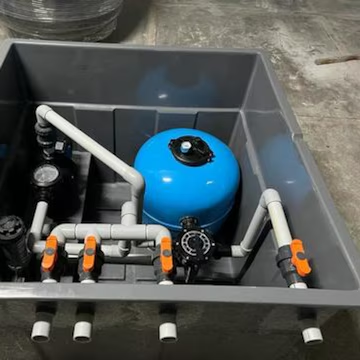
Effective circulation and filtration are essential for maintaining pool water quality. Pumps move water through the filtration system, where filters remove suspended particles and other impurities.
For residential pools, equipment must provide sufficient circulation without consuming excessive electricity or creating unnecessary noise. Commercial pools typically require greater capacity and more carefully planned circulation because of their higher usage levels.
Pool equipment manufacturers develop different pump and filtration configurations to accommodate these varying needs. Selecting the correct combination helps maintain consistent water movement, supports effective filtration, and reduces the risk of equipment being overloaded.
However, filtration equipment alone does not guarantee safe water. Proper disinfection, regular testing, balanced water chemistry, and appropriate maintenance remain necessary for both residential and commercial facilities.
Energy Efficiency and Operating Cost Management
Energy consumption is an important consideration for every pool owner. Pumps, heaters, and other equipment can contribute significantly to ongoing operating expenses, particularly when systems run for extended periods.
Manufacturers help address this challenge by developing energy-efficient motors, variable-speed pumps, improved heating technologies, and controls that allow equipment to operate according to actual demand.
Residential pool owners may benefit from lower electricity bills and quieter operation. Commercial facilities can potentially achieve greater savings because their equipment often operates for longer periods and serves larger pools.
When evaluating equipment, buyers should consider more than the initial purchase price. Energy consumption, maintenance requirements, replacement parts, expected service life, and compatibility with existing systems all affect the total cost of ownership.
Heating Solutions for Different Pool Environments
Pool heating requirements vary according to climate, pool size, indoor or outdoor installation, and the desired water temperature.
Residential pool owners may want heating equipment that extends the swimming season or makes the water more comfortable during cooler weather. Hotels, rehabilitation facilities, and indoor aquatic centers may need more consistent temperature control to support their services.
Manufacturers offer different heating options, including heat pumps and other heating technologies, depending on the application. Choosing the right system requires consideration of the local climate, energy source, operating schedule, and heating demand.
Proper sizing is especially important. An undersized heater may struggle to maintain the desired temperature, while an oversized system can increase upfront costs without providing meaningful additional benefits.
Automation and Smart Pool Management
Automation is becoming increasingly useful in both residential and commercial pool management. Automated controls can help coordinate pumps, heaters, lighting, and certain water treatment functions.
For homeowners, automation may simplify routine tasks by allowing equipment schedules and settings to be managed through a central control system. This can make pool ownership more convenient while helping prevent equipment from operating unnecessarily.
Commercial operators can use monitoring and control systems to manage multiple components more consistently. Depending on the system, monitoring tools may also help identify abnormal operating conditions before they lead to larger maintenance problems.
Manufacturers support these applications by offering compatible controls and equipment designed to work together. Buyers should confirm that components are compatible with their existing installations before investing in automation upgrades.
Durability, Reliability, and Maintenance Support
Pool equipment operates in an environment exposed to moisture, chemicals, temperature changes, and regular mechanical stress. Equipment used in commercial facilities may experience even greater wear because of extended operating hours and frequent use.
Manufacturers can support long-term reliability through suitable material selection, product testing, corrosion-resistant components, and designs intended for the equipment’s operating conditions.
Maintenance support is equally important. Clear installation instructions, maintenance schedules, troubleshooting information, and access to replacement parts can help owners and technicians keep systems operating properly.
Residential owners should follow recommended cleaning and inspection routines, while commercial operators generally benefit from documented preventive maintenance plans. Regular inspections can identify leaks, unusual noise, reduced flow, or other warning signs before they cause more extensive disruption.
Meeting Safety and Compliance Requirements
Safety is a central concern for both private and public swimming pools. Equipment must be suitable for the installation environment and used according to manufacturer instructions and applicable regulations.
Residential pool systems may need appropriate electrical protection, safe equipment placement, and secure access to mechanical components. Commercial facilities may face additional requirements involving circulation, water quality, accessibility, emergency procedures, and inspection.
Manufacturers contribute by providing product specifications, installation guidance, and documentation relevant to their equipment. Nevertheless, compliance depends on the complete pool installation, not just individual components. Pool designers, installers, operators, and owners must ensure that the finished system meets applicable local codes and health requirements.
Choosing the Right Pool Equipment Manufacturer
Selecting a suitable supplier or manufacturer requires evaluating the needs of the specific pool rather than choosing equipment based on price alone. Residential and commercial projects can have very different performance expectations, so the decision should account for both current requirements and future use.
Before making a purchase, consider the following factors:
- Product range: Check whether the manufacturer offers the pumps, filters, heaters, controls, and related components required for the project.
- Performance specifications: Review flow rates, pressure requirements, power consumption, and operating limits.
- Durability: Look for materials and designs suited to the pool’s environment and expected operating hours.
- Technical support: Confirm whether installation guidance, troubleshooting resources, and replacement parts are available.
- System compatibility: Make sure the selected equipment can integrate with existing plumbing, electrical systems, and controls.
- Warranty coverage: Understand the warranty period, exclusions, and maintenance conditions.
- Total operating costs: Compare energy use and expected maintenance expenses alongside the initial purchase price.
For buyers comparing available solutions, a reliable Pool Equipment Manufacturer can be a useful starting point for exploring pool-related equipment and understanding which options may suit a particular project. Final selections should still be based on technical specifications and the requirements of the planned installation.
Differences Between Residential and Commercial Equipment Selection
Although many equipment categories serve both types of pools, the selection process differs in several important ways.
Residential buyers often prioritize quiet operation, compact dimensions, ease of use, and reasonable ongoing costs. Their systems may operate according to a daily schedule and the household’s swimming habits.
Commercial buyers typically focus more heavily on capacity, operating reliability, serviceability, and the ability to handle changing levels of use. Downtime can affect customer satisfaction, facility operations, and maintenance budgets, making dependable performance particularly important.
These distinctions do not mean that residential equipment is always simple or that commercial equipment is always larger. A high-end residential pool may require sophisticated technology, while a small commercial therapy pool may have specialized temperature and water quality requirements. Equipment should always be matched to the actual application.
Planning for Long-Term Pool Performance
Good equipment selection begins with accurate planning. Pool owners and project managers should consider pool volume, expected usage, plumbing layout, climate, available space, and maintenance access before choosing a system.
It is also helpful to consider future changes. A residential owner may eventually add heating or automation, while a commercial facility may expand its services or increase pool usage. Selecting compatible equipment and allowing sufficient space for servicing can make future upgrades easier.
Working with qualified pool professionals helps ensure that pumps, filters, heaters, and controls are correctly sized and installed. Following manufacturer recommendations and maintaining appropriate water chemistry can further support dependable performance over time.
Conclusion
Pool equipment manufacturers support residential and commercial swimming pools by providing the technologies needed for circulation, filtration, heating, automation, and reliable daily operation. Their products help address the different priorities of homeowners and commercial operators, from quiet and convenient operation to higher capacity and consistent performance.
Choosing the right equipment involves evaluating the pool’s intended use, technical requirements, energy consumption, durability, maintenance needs, and applicable safety standards. With careful planning, suitable products, and regular maintenance, both residential and commercial pools can operate more efficiently and provide a better swimming experience over the long term.


