
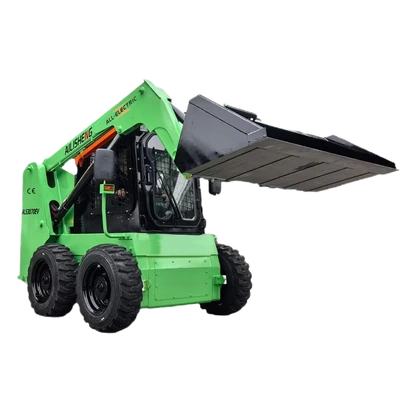
Electric Skid Steer vs. Traditional Skid Steer: Which Is Better?
Choosing the right skid steer loader can make a significant difference in construction productivity, operating expenses, and equipment reliability. Traditional diesel-powered skid steers have long been used for demanding construction, landscaping, agriculture, and material-handling tasks. However, electric alternatives are gaining attention as businesses look for quieter equipment and new ways to manage energy costs.
Both machine types offer important advantages, but neither is the best choice for every application. An Electric Skid Steer uses rechargeable batteries instead of a conventional combustion engine, while a traditional skid steer typically relies on diesel fuel. Comparing their performance, maintenance requirements, operating costs, and charging or refueling needs can help buyers determine which option better suits their projects.
What Is an Electric Skid Steer?
An electric skid steer is a compact loader powered by an onboard battery system. Electric motors provide the power needed for movement and, depending on the machine’s design, hydraulic functions.
Like traditional skid steers, electric models can turn within a relatively small space by controlling the movement of their left and right wheels or tracks. They can also use compatible attachments for tasks such as lifting materials, moving debris, and preparing work areas.
Because electric models do not produce tailpipe exhaust emissions during normal battery-powered operation, they can be useful in certain indoor and emission-sensitive environments. Their operating noise is also generally lower than that of comparable diesel machines.
What Is a Traditional Skid Steer?
A traditional skid steer commonly uses a diesel engine to power its drive system and hydraulic equipment. These machines are widely used on construction sites because they can handle a variety of materials and attachments.
Diesel skid steers are especially practical where fuel is readily available and machines must operate for extended periods. Refueling generally takes less time than recharging a large battery, making it easier to resume work during demanding schedules.
However, combustion-engine equipment requires regular engine servicing and produces exhaust emissions during operation. Noise, fuel consumption, and maintenance expenses can also affect overall operating costs.
1. Power and Performance Comparison
Performance is one of the most important factors when comparing electric and traditional skid steers. Both types can perform demanding work, but their capabilities depend on the specifications of the individual machine.
Electric motors can provide responsive power and precise control during repetitive material-handling operations. However, battery capacity, motor output, hydraulic performance, and thermal management determine how effectively an electric model handles sustained workloads.
Diesel machines provide established performance for a wide range of construction applications. Their ability to continue working with regular refueling can be an advantage during long shifts.
When comparing the two, examine rated operating capacity, tipping load, lift height, breakout force, hydraulic flow, and attachment requirements rather than assuming that one power source is automatically more powerful.
2. Operating Costs: Electricity vs. Diesel Fuel
Energy expenses can have a considerable effect on the cost of operating construction equipment. Diesel machines require regular fuel purchases, while electric skid steers draw energy from rechargeable batteries.
Electricity may cost less per operating hour than diesel fuel, depending on local energy prices and the machine’s consumption. Electric models may therefore offer meaningful savings for businesses with frequent equipment use and convenient charging access.
Nevertheless, energy costs should be calculated using realistic operating conditions. Heavy loads, continuous hydraulic work, rough terrain, and charging losses can influence electricity consumption.
A useful comparison includes:
- Diesel consumption or electricity use per operating hour.
- Local fuel and electricity prices.
- Expected annual operating hours.
- Charging losses and infrastructure costs.
- Maintenance and battery replacement expenses.
These figures provide a more accurate basis for estimating long-term savings than comparing fuel prices alone.
3. Maintenance Requirements
Maintenance is another important difference between electric and diesel skid steers.
Traditional models require routine combustion-engine servicing, including oil changes, filter replacements, and inspections of fuel-related components. Additional repairs may be necessary as the engine and its supporting systems age.
Electric models eliminate many of these engine-related tasks. This can reduce routine maintenance requirements and simplify certain service procedures.
However, electric equipment still requires inspections of hydraulic systems, tires or tracks, lift arms, electrical connections, batteries, and safety components. Battery condition and eventual replacement should also be included in long-term maintenance planning.
The actual maintenance advantage depends on machine design, usage intensity, service quality, and the availability of qualified technicians.
4. Environmental Impact and Operating Noise
Electric skid steers offer an advantage when reducing exhaust emissions at the point of use is important. During normal battery-powered operation, they produce no tailpipe emissions, which can make them suitable for certain indoor construction and industrial applications.
Traditional diesel skid steers release exhaust emissions while operating. Their use in enclosed spaces requires particular attention to ventilation and applicable workplace safety requirements.
Noise is another consideration. Electric models generally operate more quietly because they do not use a combustion engine, although hydraulic systems, tires or tracks, and attachments still generate sound.
The overall environmental impact of an electric machine also depends on how its electricity is generated, battery production, and battery disposal or recycling. Therefore, zero tailpipe emissions should not be confused with zero lifecycle emissions.
5. Operating Time and Refueling or Charging
The time needed to replenish energy can influence project productivity.
Diesel skid steers can typically return to work quickly after refueling, provided fuel is available. This is useful for remote projects, long shifts, and applications where equipment downtime must be minimized.
Electric skid steers require charging, and the duration depends on battery capacity, charger power, and the available electrical supply. Some operations can schedule charging overnight or during planned breaks, while others may require additional charging capacity.
Before selecting an electric model, determine whether its practical runtime matches the daily workload. For multi-shift operations, evaluate whether charging arrangements can support continuous productivity without creating delays.
6. Suitability for Different Work Environments
The working environment often determines which type of skid steer is more practical.
Indoor Construction and Warehousing
Electric skid steers can be advantageous in suitable indoor environments because they produce no tailpipe exhaust emissions during normal electric operation and generally generate less noise. Floor capacity, clearance, ventilation, and pedestrian safety must still be assessed.
Outdoor Construction Sites
Both electric and diesel skid steers can be suitable for outdoor construction. Buyers should evaluate terrain, lifting requirements, weather conditions, and the availability of energy infrastructure.
Remote and Rural Locations
Diesel models may be more convenient where electricity access is limited and fuel delivery is readily available. Electric machines can still be practical in remote locations if a suitable charging system is provided.
Landscaping and Property Maintenance
Both types can handle many landscaping tasks with compatible attachments. Electric models may be attractive for noise-sensitive areas, while diesel machines can be useful for extended outdoor work without convenient charging access.
7. Purchase Price and Total Cost of Ownership
The initial purchase price is only one part of the overall cost of owning construction equipment. Some electric models may have a higher upfront cost than comparable diesel machines, although pricing varies by manufacturer, capacity, and specification.
Electric equipment may offset some of this difference through lower energy costs and reduced engine-related servicing. However, battery replacement, charging infrastructure, and electrical upgrades can affect the financial outcome.
Diesel machines may offer established refueling arrangements and familiar maintenance procedures, but fuel and engine-service costs accumulate over time.
To compare ownership costs, include:
- Purchase price and financing.
- Energy consumption and operating hours.
- Routine servicing and repairs.
- Charging infrastructure or fuel-handling requirements.
- Battery replacement and warranty coverage.
- Expected service life and resale value.
A multi-year cost comparison is usually more informative than choosing a machine based only on its upfront price.
8. Attachment Compatibility and Versatility
Skid steer loaders are valuable because they can perform many tasks with compatible attachments. Both electric and traditional models may support buckets, pallet forks, augers, grapples, sweepers, and other specialized tools.
However, attachment compatibility depends on mounting standards, hydraulic flow, hydraulic pressure, electrical connections, and the machine’s rated capacity.
Some demanding attachments require high hydraulic output or sustained power. Buyers should confirm that the selected loader can operate the tools needed for their work without exceeding its specifications.
The ability to complete multiple tasks with one machine can improve equipment utilization regardless of the power source.
9. Reliability and Long-Term Durability
Reliability depends on machine design, operating conditions, maintenance practices, and access to service support.
Diesel skid steers have established maintenance and repair procedures in many markets. Their engines and fuel systems require regular attention, particularly under intensive workloads.
Electric skid steers have fewer conventional engine components, but their batteries, electrical systems, and hydraulic components still need proper care. Battery temperature management and protection against environmental exposure can be important for long-term performance.
When comparing models, review warranty terms, spare-parts availability, diagnostic support, and the manufacturer’s recommended service intervals.
Electric Skid Steer vs. Traditional Skid Steer: Quick Comparison
| Feature | Electric Skid Steer | Traditional Diesel Skid Steer |
|---|---|---|
| Energy source | Rechargeable battery | Diesel fuel |
| Tailpipe emissions | None during normal electric operation | Produces exhaust emissions |
| Operating noise | Generally lower | Generally higher |
| Routine engine servicing | Not required | Required |
| Energy replenishment | Requires charging | Usually quick refueling |
| Remote operation | Depends on charging access | Practical where fuel is available |
| Indoor applications | Often advantageous when appropriately specified | Requires careful exhaust and ventilation management |
| Long-term costs | Depend on electricity, battery, and maintenance expenses | Depend on fuel, engine servicing, and repair costs |
This comparison provides a general overview. Actual performance, purchase prices, and operating costs vary between models.
Which Skid Steer Is Better for Your Project?
The better choice depends on how, where, and how often the equipment will be used.
An electric skid steer may be the stronger option when:
- The work takes place in suitable indoor or noise-sensitive environments.
- Charging facilities are readily available.
- The daily workload fits the battery’s practical operating range.
- Reduced local exhaust emissions are an important requirement.
- Potential energy and maintenance savings justify the purchase cost.
A traditional diesel skid steer may be preferable when:
- The machine must operate for extended periods with minimal interruptions.
- The project is located far from reliable charging infrastructure.
- Quick refueling is important for maintaining productivity.
- The workload or attachment requirements favor a particular diesel model.
- Existing fuel and maintenance arrangements make diesel operation practical.
For some businesses, using both types across different projects may provide the most flexible solution.
Frequently Asked Questions
Is an electric skid steer as powerful as a diesel skid steer?
Some electric models can match diesel machines in specific performance categories, while others have different capacity or runtime limits. Compare the rated operating capacity, hydraulic performance, and duty-cycle specifications of the actual machines.
Are electric skid steers cheaper to operate?
They may have lower energy and certain maintenance costs, depending on local electricity prices, diesel costs, utilization, and battery expenses. A total cost of ownership analysis is necessary to determine actual savings.
Can electric skid steers handle heavy-duty construction work?
Yes, certain models are designed for demanding construction and material-handling applications. Suitability depends on lifting capacity, hydraulic output, battery endurance, and terrain requirements.
Are diesel skid steers better for outdoor construction?
Not necessarily. Both power types can work outdoors when designed for the conditions. Charging access, weather limits, terrain, workload, and operating duration should guide the decision.
Do electric skid steers require less maintenance?
They generally eliminate conventional combustion-engine servicing, but hydraulic systems, tires or tracks, batteries, electrical components, and safety systems still require regular maintenance.
Conclusion
Electric and traditional skid steers each offer practical advantages for construction and material-handling operations. Electric models provide reduced tailpipe emissions, generally lower operating noise, and the potential for lower energy and engine-related maintenance costs. Diesel machines offer rapid refueling and can be especially convenient for extended shifts and remote locations.
The right choice depends on machine specifications, charging or fuel availability, workload, maintenance support, and total ownership costs. By evaluating these factors against real project requirements, contractors can select the skid steer that best supports productivity, reliability, and long-term value.