
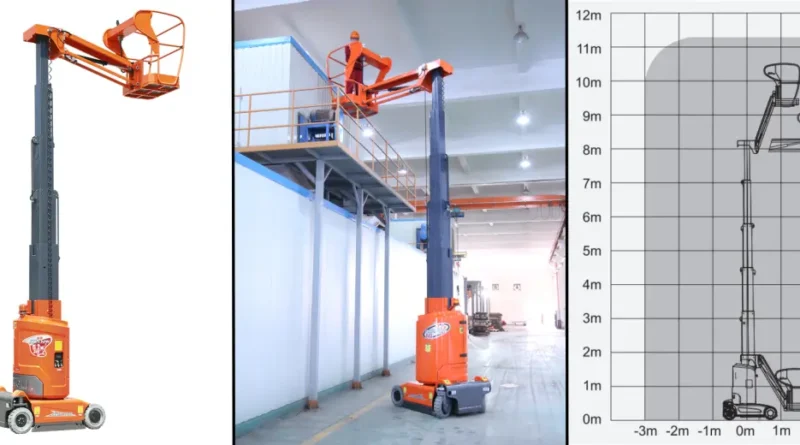
10 Key Features to Look for in a Vertical Mast Lifts Manufacturer
Vertical mast lifts are widely used in warehouses, commercial buildings, manufacturing facilities, maintenance operations, and construction projects where safe and efficient access to elevated work areas is essential. While selecting the right equipment is important, choosing the right manufacturer plays an even greater role in ensuring long-term performance, safety, and reliability.
A professional manufacturer delivers more than quality machinery. They provide technical expertise, ongoing customer support, and equipment designed to meet international safety standards. When evaluating a Vertical Mast Lifts Manufacturer, businesses should carefully assess their experience, product quality, innovation, and service capabilities before making a purchasing decision.
1. Proven Manufacturing Experience
Experience is one of the strongest indicators of a manufacturer’s reliability. Companies with many years in the industry have typically refined their engineering processes and developed products that meet the practical demands of various industries.
Experienced manufacturers are also more likely to provide valuable technical guidance and dependable customer support.
2. High Product Quality
The durability and performance of a vertical mast lift depend heavily on manufacturing quality. Reliable manufacturers use premium materials, precision engineering, and strict quality control throughout production.
High-quality equipment offers several advantages:
- Longer service life
- Reduced maintenance costs
- Improved operational efficiency
- Greater workplace safety
Investing in quality equipment often lowers the overall cost of ownership.
3. Compliance with Safety Standards
Safety should never be compromised when selecting lifting equipment. A reputable manufacturer designs products that comply with internationally recognized safety regulations and incorporates multiple protective features.
Important safety features include:
- Emergency stop systems
- Platform overload protection
- Automatic braking
- Stable mast construction
- Operator safety controls
Compliance demonstrates a strong commitment to producing dependable equipment.
4. Wide Product Selection
Different work environments require different lifting solutions. A professional manufacturer should offer a comprehensive range of vertical mast lifts to meet diverse operational requirements.
A broad product portfolio may include:
- Compact indoor models
- Electric-powered lifts
- Various working heights
- Different platform capacities
- Specialized industrial solutions
This flexibility allows businesses to select equipment that best fits their projects.
5. Advanced Technology
Leading manufacturers invest in research and development to continuously improve product performance and efficiency.
Modern technological features may include:
- Intelligent control systems
- Battery management technology
- Remote diagnostics
- Energy-efficient electric drives
- Advanced hydraulic systems
Innovative equipment improves productivity while reducing operating costs.
6. Reliable After-Sales Support
Quality customer support is essential throughout the equipment’s lifecycle. A dependable manufacturer provides ongoing assistance to help customers maintain optimal equipment performance.
Look for services such as:
- Technical support
- Maintenance guidance
- Warranty assistance
- Spare parts supply
- Operator training
Strong after-sales support minimizes downtime and increases equipment reliability.
7. Availability of Genuine Spare Parts
Timely access to replacement parts is crucial for keeping equipment operational. Professional manufacturers maintain organized inventories that allow customers to quickly obtain genuine components when repairs or routine maintenance are required.
Using original parts also helps preserve equipment performance and safety.
8. Strong Industry Reputation
A manufacturer’s reputation reflects the quality of its products and customer service. Businesses should research customer reviews, certifications, and industry recognition before making a purchasing decision.
Useful evaluation factors include:
- Customer testimonials
- Industry certifications
- Successful project history
- Global distribution network
- Long-term customer relationships
A strong reputation often indicates consistent quality and dependable support.
9. Focus on Innovation
The best manufacturers continuously improve their products to meet changing industry demands. Ongoing innovation results in safer, more efficient, and easier-to-operate lifting equipment.
Manufacturers that invest in innovation are better prepared to deliver solutions that support future workplace requirements.
10. Long-Term Value
The lowest purchase price does not always provide the best investment. Instead, businesses should evaluate the overall value the manufacturer offers throughout the equipment’s lifespan.
Consider factors such as:
- Product durability
- Maintenance expenses
- Energy efficiency
- Equipment lifespan
- Resale value
High-quality equipment typically delivers better financial returns through lower operating costs and greater reliability.
Questions to Ask Before Choosing a Manufacturer
Before selecting a vertical mast lifts manufacturer, ask these important questions:
- How long have you been manufacturing vertical mast lifts?
- What safety certifications do your products meet?
- Is technical support available after purchase?
- How quickly can replacement parts be supplied?
- What warranty coverage is included?
- Do you provide operator training resources?
These questions help identify manufacturers that are committed to quality, safety, and long-term customer satisfaction.
Final Thoughts
Choosing the right vertical mast lifts manufacturer is an important decision that directly affects workplace safety, equipment reliability, and operational efficiency. By focusing on manufacturing experience, product quality, safety standards, innovation, after-sales support, and long-term value, businesses can confidently select a partner that meets their operational needs.
A careful evaluation of these key features helps ensure dependable equipment, lower maintenance costs, and improved productivity for years to come.