
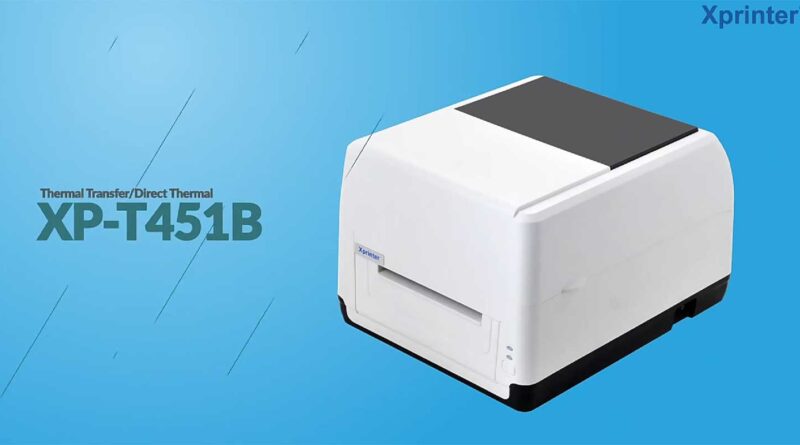
Why Xprinter Thermal Printers Are Popular in Retail and Warehousing
Retail stores and warehouses depend on efficient printing systems to manage daily operations smoothly. From customer receipts to inventory labels and shipping documents, accurate printing plays an important role in improving productivity and reducing errors.
Businesses in these industries require printers that can handle frequent use while maintaining consistent performance. A reliable Xprinter Thermal Printer provides solutions that support fast printing, accurate labeling, and efficient workflow management, making thermal printing technology a common choice for retail and warehousing applications.
The Importance of Efficient Printing in Retail and Warehousing
Printing is a critical part of many business processes. In retail environments, printers support checkout operations, while warehouses rely on them for product tracking and inventory control.
Effective printing solutions help businesses:
- Process transactions faster
- Improve inventory accuracy
- Reduce manual errors
- Organize products efficiently
- Maintain better records
Reliable printing equipment allows employees to complete tasks more quickly and maintain smooth operations.
Fast Receipt Printing for Retail Businesses
Retail stores often experience busy periods where quick customer service is essential. Slow receipt printing can create delays at checkout counters and negatively affect the shopping experience.
Thermal printers are popular in retail because they provide:
- High-speed receipt printing
- Clear transaction records
- Simple operation
- Low maintenance requirements
These features help stores manage customer transactions efficiently during peak hours.
Accurate Barcode Label Printing
Barcode labels are essential for both retail and warehouse operations. Clear and accurate labels improve scanning reliability and reduce mistakes during product handling.
Thermal printers help businesses produce:
- Product labels
- Price tags
- Inventory labels
- Tracking codes
- Shelf labels
Accurate barcode printing supports better inventory management and faster product identification.
Reliable Performance for High-Volume Operations
Retail stores and warehouses often require printers to operate for extended periods. Equipment reliability is important because printing interruptions can slow down business activities.
Thermal printers are suitable for high-volume environments because they offer:
- Consistent printing performance
- Reduced maintenance needs
- Fast processing
- Durable operation
Reliable performance helps businesses maintain productivity throughout the day.
Lower Maintenance Requirements
One reason thermal printers are widely used in business environments is their simple maintenance needs. Unlike traditional printers, thermal models do not require ink cartridges for direct thermal printing.
Benefits include:
- Fewer consumable replacements
- Reduced maintenance costs
- Less downtime
- Easier management
Lower maintenance requirements make thermal printers practical for businesses that depend on continuous operation.
Supporting Warehouse Inventory Management
Warehouses rely on accurate labeling systems to track products throughout the supply chain. Mistakes in labeling can lead to misplaced items, shipping delays, and inventory issues.
Thermal printers support warehouse operations through:
- Shipping labels
- Storage labels
- Product identification
- Inventory tracking
- Order processing
Better labeling improves organization and reduces operational errors.
Compact Designs for Different Workspaces
Retail counters and warehouse workstations often have limited space. Compact thermal printers can fit easily into different environments without affecting performance.
Small designs provide advantages such as:
- Easy installation
- Flexible placement
- Better workspace organization
- Convenient operation
This makes them suitable for both small retail stores and large warehouse facilities.
Flexible Connectivity Options
Modern business environments require printers that can connect with various systems. Thermal printers often support multiple connectivity options to improve integration.
Common options include:
- USB
- Ethernet
- Wi-Fi
- Bluetooth
- Serial interfaces
Flexible connections allow printers to work with point-of-sale systems, computers, mobile devices, and inventory software.
Cost Efficiency for Businesses
Managing operational costs is important for both retailers and warehouse operators. Thermal printing helps control expenses by reducing maintenance requirements and improving efficiency.
Cost advantages include:
- Lower operating expenses
- Reduced printer downtime
- Efficient use of printing materials
- Longer equipment lifespan
These benefits make thermal printing a practical investment for businesses of different sizes.
Easy Integration with Business Systems
Retail and warehouse operations often depend on software platforms for sales, inventory, and order management. Printer compatibility with these systems is essential for smooth workflows.
Thermal printers can often integrate with:
- Point-of-sale systems
- Inventory management software
- Shipping platforms
- Business applications
Easy integration helps businesses improve automation and reduce manual work.
Conclusion
Thermal printers have become popular in retail and warehousing because they provide fast, reliable, and accurate printing solutions. Their ability to handle receipts, labels, barcodes, and inventory documents makes them valuable tools for businesses that require efficient daily operations.
By offering advantages such as low maintenance, flexible connectivity, and consistent performance, thermal printing technology helps retailers and warehouse operators improve productivity, reduce errors, and maintain organized workflows.