How Outdoor Boiler Water Treatment Helps Extend the Life of Your Heating System
Treating the water inside your outdoor boiler protects the steel, pipes, and heat exchangers from rust and scale, which is the single biggest factor in how many years of reliable service you get out of your system.
If you own an outdoor wood boiler, you already know how much it does for your home. It heats your living space, your hot water, and sometimes even your garage or shop, all while burning a renewable fuel source you may be cutting and stacking yourself. What a lot of owners do not realize, until they run into a problem, is that the water sitting inside that boiler is doing just as much work as the fire underneath it. If that water is not treated properly, it slowly turns from a helpful heat transfer medium into the very thing that wears the system down.
What Is Actually Happening Inside the Water Jacket
An outdoor boiler works by heating water (or a water and antifreeze mixture) and circulating it through pipes to provide heat and hot water to your home, barn, or greenhouse, a setup the U.S. Environmental Protection Agency describes in detail when explaining how hydronic heaters transfer heat to either water or a water and antifreeze solution that is then piped to the area being heated. That water sits inside a steel tank, surrounded by metal surfaces, for months or even years at a time. Plain water is not chemically inert. It carries dissolved oxygen, minerals, and whatever was already present in your fill source, and all of that interacts with the metal it touches.
Over time, untreated water leads to three main problems. The first is corrosion, where dissolved oxygen reacts with the steel and slowly eats away at the tank wall and internal components. The second is scale buildup, where minerals in hard water precipitate out and coat the heat exchange surfaces, reducing how efficiently heat moves from the fire to your home. The third is sludge and sediment, which settle at the bottom of the tank and can clog pumps, valves, and circulation lines.
Why This Matters for the Lifespan of Your System
None of these issues happen overnight, which is part of why they are so easy to ignore. A boiler with corroded internal surfaces will still heat your home today. The damage shows up gradually, in the form of reduced efficiency, more frequent repairs, and eventually a tank that develops leaks or fails outright. Replacing an outdoor boiler is a significant expense, and the timeline for that replacement is largely determined by how well the water inside it has been maintained.
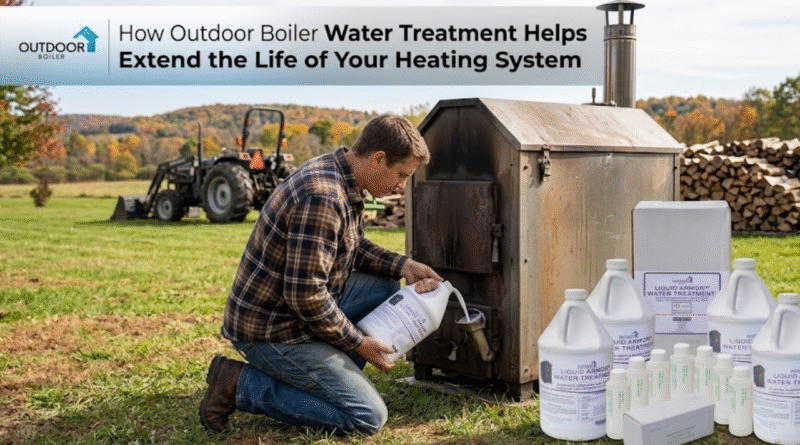
Properly treated water keeps the pH balanced, controls dissolved oxygen, and inhibits the chemical reactions that cause rust and scale. A product like the Certified Liquid Armor Water Treatment is built specifically to address these issues in outdoor boiler systems, giving the water inside the tank the chemistry it needs to protect rather than attack the metal around it. The goal is not just to make the water look clean; it is to change its chemical behavior so it stops corroding the system from the inside out.
Signs Your Boiler Water Needs Attention
A few warning signs tend to show up before a bigger problem develops. Discolored or rust-tinted water when you check the tank is one of the clearest indicators of corrosion already in progress. A noticeable drop in heating efficiency, where the boiler seems to run longer to produce the same amount of heat, often points to scale buildup on the heat exchange surfaces. Sediment or sludge at the bottom of the tank, visible cloudiness, or an unusual odor are also worth investigating. Catching these signs early, before they turn into pump failures or pinhole leaks, is one of the most cost-effective things an owner can do for their system.
Building a Routine Around Water Treatment
Water treatment is not a one-time task you complete when the boiler is installed and then forget about. Water chemistry shifts over time as fresh water is added, as the system heats and cools repeatedly, and as the existing additives get used up doing their job. Testing the water periodically and topping up or adjusting treatment as needed keeps the chemistry in the right range throughout the heating season. Owners who want a clear walkthrough of how to approach this the right way, rather than guessing, can find a detailed breakdown of the process in this guide on doing outdoor boiler water treatment correctly. Pairing a consistent testing schedule with the right product is what actually protects the investment you made in your heating system.
Other Factors That Influence How Long Your System Lasts
Water treatment is the biggest lever most owners can pull, but it is not the only one. Burning seasoned, properly dried wood reduces creosote buildup and unnecessary strain on the firebox. Keeping the firebox and chimney clean improves combustion efficiency and reduces soot-related wear. Inspecting gaskets, door seals, and insulation each season catches small issues before they become expensive ones. None of these replace water treatment, but together they round out a maintenance routine that keeps an outdoor boiler running well for many heating seasons.
Frequently Asked Questions
How often should I treat the water in my outdoor boiler? Most manufacturers recommend testing the water at the start of each heating season and checking it periodically throughout the year, since water chemistry changes as fresh water is added or as additives get depleted.
Can I just use plain tap water without any treatment? You can fill the system with tap water, but leaving it untreated allows dissolved oxygen and minerals in that water to corrode metal surfaces and form scale over time, which shortens the life of the system.
What actually happens if I skip water treatment entirely? Skipping treatment does not cause an immediate failure, but it allows corrosion, scale, and sediment to build up gradually, which eventually shows up as reduced efficiency, leaks, or component failure.
Does water treatment work the same way for wood and coal outdoor boilers? The core chemistry concerns, corrosion, scale, and oxygen control, apply to outdoor boilers regardless of fuel type, though specific product recommendations can vary, so it is worth checking what is suited to your particular system.
How do I know if my current water treatment is still working? Testing the water for pH and corrosion inhibitor levels is the most reliable way to know, since visual changes like discoloration or sediment often mean the treatment has already broken down.
Conclusion
An outdoor boiler is a long-term investment, and the water inside it plays a much bigger role in that investment than most people expect. Treating that water properly protects the tank, the heat exchanger, and every component the water touches, which translates directly into fewer repairs and more years of dependable heat. If you want to learn more about keeping your system protected, you can browse the full range of resources and products at Outdoor Boiler, and if you have questions specific to your setup, feel free to contact us so we can point you toward the right approach for your system.