
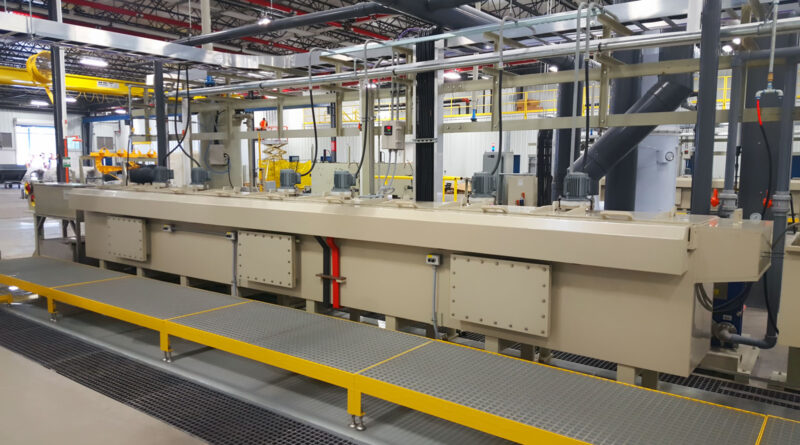
Zinc Bath Technology in Modern Hot Dip Galvanizing Lines
Steel is one of the most essential materials in modern infrastructure, but its natural tendency to corrode limits its durability in harsh environments. To overcome this challenge, industries use galvanizing techniques that apply a protective zinc coating to steel surfaces. Among these methods, the zinc bath stage plays the most critical role in determining coating quality and long-term performance.
A modern hot dip galvanizing line depends heavily on advanced zinc bath technology to ensure consistent coating thickness, strong adhesion, and reliable corrosion resistance across different steel products.
The Role of the Zinc Bath in Galvanizing
The zinc bath is the core section of the galvanizing process where steel is coated with molten zinc. Once the steel is properly cleaned and pretreated, it is immersed into a bath maintained at a controlled temperature, usually around 450°C.
At this stage, a metallurgical reaction occurs between iron in the steel and molten zinc. This reaction forms a series of zinc-iron alloy layers that become the protective barrier against corrosion.
The quality of this step directly determines how long the galvanized steel will last in real-world applications.
Temperature Control and Its Importance
One of the most important aspects of zinc bath technology is temperature regulation. If the temperature is too low, zinc may not properly bond with the steel surface. If it is too high, excessive alloy growth can lead to brittle coatings.
Modern galvanizing systems use automated sensors and heating controls to maintain stable bath conditions. This ensures that the zinc remains in an optimal liquid state, allowing smooth and uniform coating formation.
Stable temperature control also improves energy efficiency and reduces material waste.
Alloy Formation and Coating Structure
When steel enters the molten zinc bath, a layered structure begins to form. This structure typically consists of several zinc-iron alloy phases, each contributing to the coating’s strength and durability.
These layers include:
- Gamma layer (closest to steel surface)
- Delta layer
- Zeta layer
- Eta layer (outer pure zinc layer)
Each layer has a specific hardness and corrosion resistance characteristic. Together, they create a coating that is both protective and mechanically durable.
Bath Composition and Additives
The composition of the zinc bath is not purely zinc. Small amounts of other elements are often added to improve performance and coating quality.
Common additives include:
- Aluminum, to improve surface finish and reduce oxidation
- Lead (in controlled amounts), to improve fluidity in older systems
- Nickel, used in some cases to control coating thickness on reactive steels
These elements help stabilize the bath and enhance the final coating appearance and consistency.
Dross Formation and Management
During continuous operation, impurities and iron reactions can lead to the formation of dross in the zinc bath. Dross consists of zinc-iron compounds that settle at the bottom of the tank or float on the surface.
If not properly managed, dross can affect coating quality and increase material loss. Modern galvanizing lines use filtration systems, skimming techniques, and controlled maintenance schedules to minimize dross formation.
Efficient dross management helps maintain a clean bath environment and consistent production quality.
Immersion Time and Coating Thickness
The duration of steel immersion in the zinc bath plays a key role in determining coating thickness. Longer immersion times typically result in thicker coatings, while shorter times produce thinner layers.
However, immersion time must be carefully controlled. Excessive exposure can lead to overly thick coatings that may crack or become uneven. Automated control systems in a hot dip galvanizing line help maintain precise timing for each steel product.
This ensures uniform coating across different production batches.
Cooling and Solidification After the Zinc Bath
Once steel exits the zinc bath, it carries a layer of molten zinc that must be carefully controlled during cooling. Air knives or wiping systems remove excess zinc to achieve the desired coating thickness.
Controlled cooling then solidifies the coating and stabilizes the alloy layers. This step is important for achieving a smooth surface finish and strong adhesion.
Proper cooling also helps prevent defects such as spangle irregularities or surface roughness.
Quality Monitoring in Zinc Bath Operations
To ensure consistent coating quality, modern galvanizing plants use advanced monitoring systems. These systems track:
- Bath temperature stability
- Zinc purity levels
- Coating thickness distribution
- Alloy composition balance
Regular monitoring ensures that the zinc bath remains in optimal condition throughout continuous operation.
Conclusion
Zinc bath technology is the heart of modern galvanizing processes, directly influencing the strength, durability, and corrosion resistance of steel products. Precise control of temperature, composition, and immersion time ensures high-quality coating formation.
In a well-designed hot dip galvanizing line, advanced zinc bath management systems play a vital role in delivering reliable and long-lasting steel protection for industrial and infrastructure applications.